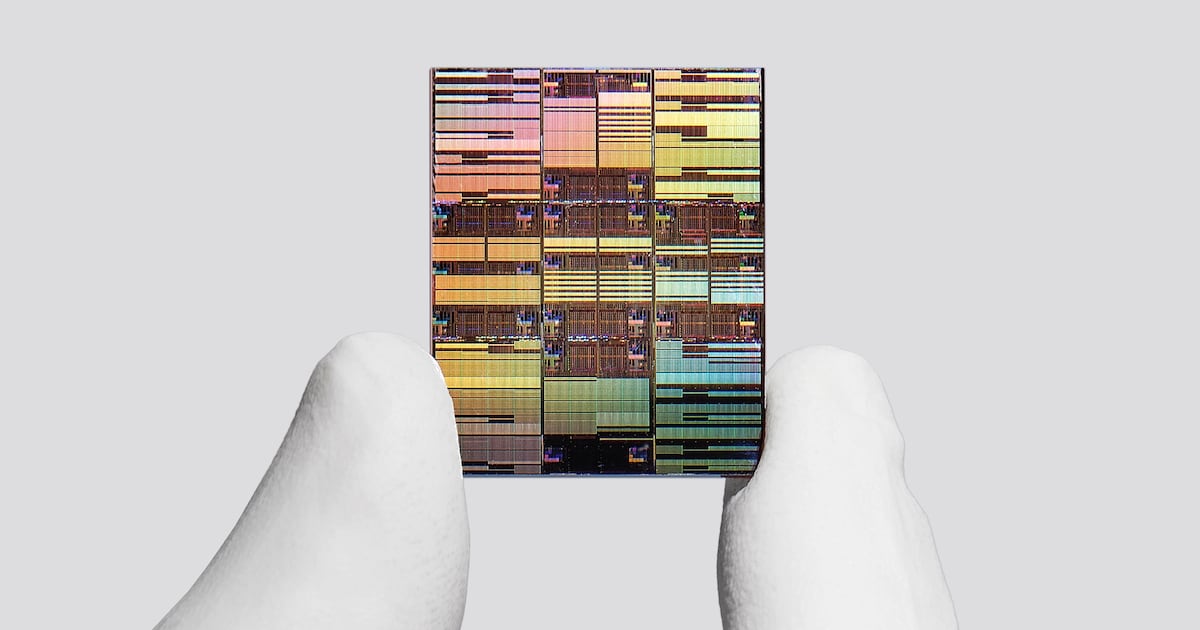
IBM has unveiled what it calls the world's first sub-1 nanometre chip technology, a breakthrough the company says packs nearly 100 billion transistors onto a chip the size of a fingernail and sets the foundation for the next era of computing as the artificial intelligence boom strains global data centres.
Beyond the nanometre era
Announced on June 26, 2026, the technology relies on what IBM calls a new "nanostack" architecture that builds transistors vertically rather than simply shrinking them further on a flat plane. "It marks a landmark moment in computing, pushing technology beyond the nanometre era to the scale of atoms," said Jay Gambetta, director of IBM Research. "With our new nanostack architecture, we're not just making smaller transistors, we're reinventing how chips are built to deliver dramatically more power and energy efficiency."
Built for the AI power crunch
The push for efficiency comes as the data centres central to AI expansion place an enormous burden on energy grids worldwide. IBM said the advance was made possible by a series of structural and material innovations, and it expects the sub-1 nanometre technology to enter production within the next five years.

Big Blue returns to the silicon frontier
Headquartered in Armonk, New York, and now 115 years old, IBM long ago sold its personal-computer assets to Lenovo and refocused on hybrid cloud, enterprise AI, quantum hardware and research. The chip news lands weeks after the company outlined a multibillion-dollar quantum roadmap, and it underscores that IBM intends to compete at the leading edge of semiconductors rather than cede the field to rivals such as Nvidia. Investors responded quickly: IBM shares rose about 4 per cent to $268.85 the day after the announcement.
The development sits alongside a wave of custom-silicon activity across the industry, from OpenAI and Broadcom's Jalapeño inference chip to Qualcomm's push into AI software stacks, as well as IBM's own $10 billion quantum programme.
Reporting based on coverage from The National.