IBM on July 31, 2026 said it and a group of partners — Qedma, Algorithmiq, RIKEN, BlueQubit and the University of Chicago — have hit multiple trusted quantum-computing breakthroughs on Heron-generation systems, claiming quantum advantage on complex physics problems that classical supercomputers cannot reliably reproduce. What makes the batch different from earlier “quantum supremacy” claims: every result was paired with a built-in way to verify the answer, not just prove it was fast.
Verification, Not Just Speed
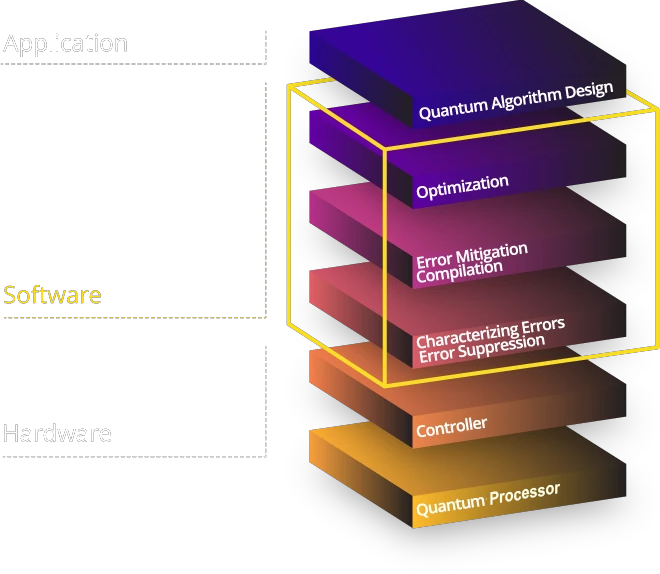
Each project combined a difficult computation with a verification framework, an important shift from prior demonstrations that produced hard-to-check outputs on random circuits. The University of Chicago work focused on trusted computations enabled by error-mitigation techniques. Israel-based Qedma contributed its QESEM error-suppression and mitigation stack, which is already available through IBM's Qiskit Functions. Italian-Finnish quantum software house Algorithmiq targeted difficult chemistry and life-sciences workloads and open-sourced tooling such as its monoprop package.
The results were benchmarked against classical systems including Japan's Fugaku supercomputer at RIKEN, IBM's long-time quantum-assisted supercomputing partner. RIKEN also worked directly with IBM on the underlying error-suppression and verification stack.
Why This Matters For Commercial Quantum
The announcement lands as IBM tries to convert quantum from a research showcase into an enterprise service line alongside hybrid cloud, AI and consulting. IBM CEO Arvind Krishna has publicly guided that quantum should start making a measurable contribution to revenue and profit by 2028 or 2029, calling the sector “a trillion dollars of value” by the end of the 2030s. IBM committed more than $10 billion to its quantum roadmap in June and moved to acquire HRL Laboratories to add silicon-spin qubits to its Anderon foundry the following month.
Ecosystem Signals
The breadth of collaborators — a hardware vendor, an error-mitigation startup, a quantum-chemistry software house, a national research supercomputing centre and a top research university — is meant to underline that IBM's platform is where third-party researchers are hitting these milestones. Whether trusted quantum workloads translate into paying customer contracts — and how quickly — remains the open question analysts flagged after the release.
See related coverage: IBM To Acquire HRL Laboratories To Add Silicon-Spin Qubits and IBM Q2 2026 Earnings: $17.2B Revenue.
Reporting based on coverage from IBM, Simply Wall St via Yahoo Finance, CoinDesk and Seeking Alpha.