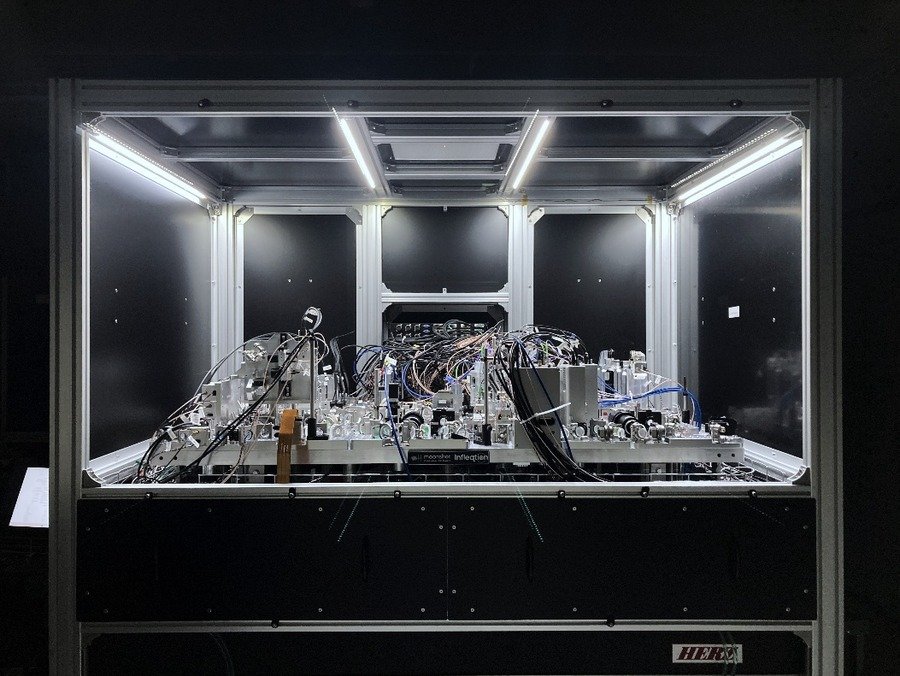
Japan has switched on its first full-stack neutral-atom quantum computer, a milestone that puts the country in the top tier of a modality now attracting the world's most ambitious quantum programmes. The system, named "Shunkai" and operated by the Institute for Molecular Science (IMS) in Okazaki, is running the quantum processing unit built by U.S.-listed Infleqtion, with Hitachi supplying the full software stack.
Shunkai starts at 50 qubits, targets 500 next
IMS confirmed the machine is operational as of 24 August 2026 under the Cabinet Office / JST Moonshot R&D Program Goal 6, led by Professor Kenji Ohmori. Shunkai initially operates with roughly 50 neutral-atom qubits captured in optical tweezers, with a near-term scale-up plan to about 500 qubits. The IMS team will now open Shunkai to external users for applications development, algorithm work and quantum-error-correction research.
Only foreign quantum partner in Japan's Moonshot
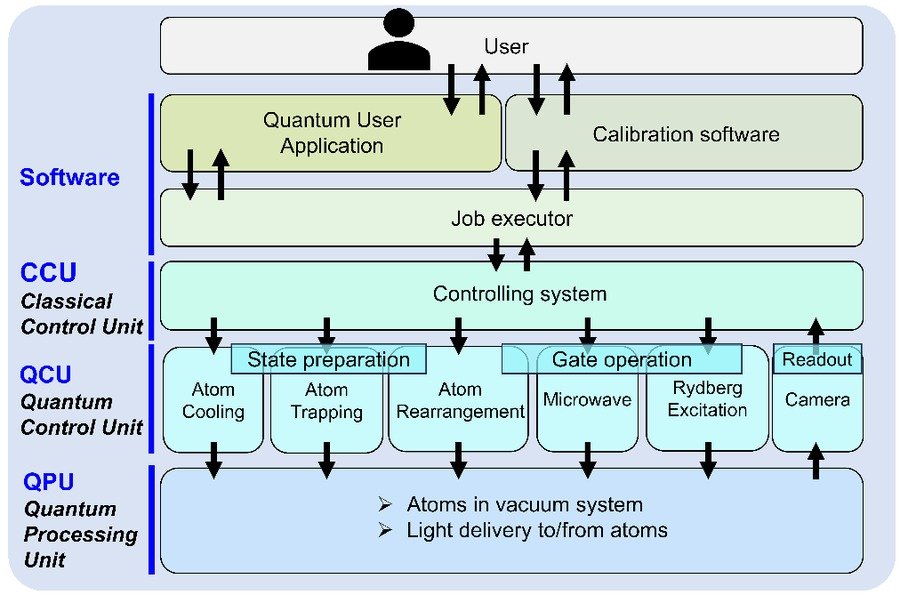
Infleqtion (NYSE: INFQ) says it was the only overseas quantum hardware partner selected by the Japan Science and Technology Agency for the Moonshot programme, contributing the QPU that sits at the heart of Shunkai. Hitachi provided the control and software stack, while IMS integrated the full-stack system, following a similar architecture to Infleqtion's Illinois microelectronics-park deployment.
The roadmap: 10,000 physical qubits by 2031
The second stage of Ohmori's Moonshot project, launched in April 2026, will chase a 10,000 physical-qubit fault-tolerant neutral-atom machine with quantum error detection and correction by March 2031. Shunkai is also expected to be linked into IMS's existing shared supercomputer facility to create a quantum-GPU hybrid computing centre, echoing the direction taken by U.S. DOE Genesis Mission projects.
Why neutral atoms suddenly matter
Neutral-atom systems run at room temperature, allow flexible qubit connectivity and scale relatively easily — a very different value proposition to the superconducting hardware that dominated the last decade. That mix of properties has drawn hundreds of millions in fresh capital to peers such as Pasqal and driven Infleqtion's post-IPO earnings higher.
Reporting based on coverage from Infleqtion, IMS, The Quantum Insider and PR Newswire.