Pentagon Awards $86M Laser Weapon Deals To Lockheed And nLIGHT

The Department of War handed nLIGHT Defense and Lockheed Martin Aculight two OTA deals worth $86M under a $847M ceiling to build 150 kW containerized laser weapons for drone and cruise-missile defense.

Key Takeaways

  • The Pentagon awarded nLIGHT Defense and Lockheed Martin Aculight two OTA agreements worth a combined $86 million under the Joint Laser Weapon System (JLWS) program, with an overall ceiling of $847 million.
  • Initial JLWS prototypes will be containerized 150 kW lasers for counter-drone defense, scaling to 300-500 kW variants for cruise-missile defense, with a parallel 500 kW system using a HELSI laser source.
  • Fiscal 2027 budget documents earmark about $675.93 million in JLWS R&D funding over the next five years, and JLWS sits within R&E's Scaled Directed Energy (SCADE) portfolio.
  • Both contractors have deep directed-energy pedigrees: Lockheed was prime on the Navy's HELIOS aboard USS Preble and the Army's IFPC-HEL, while nLIGHT demonstrated a 300 kW coherent beam combining laser under HELSI.
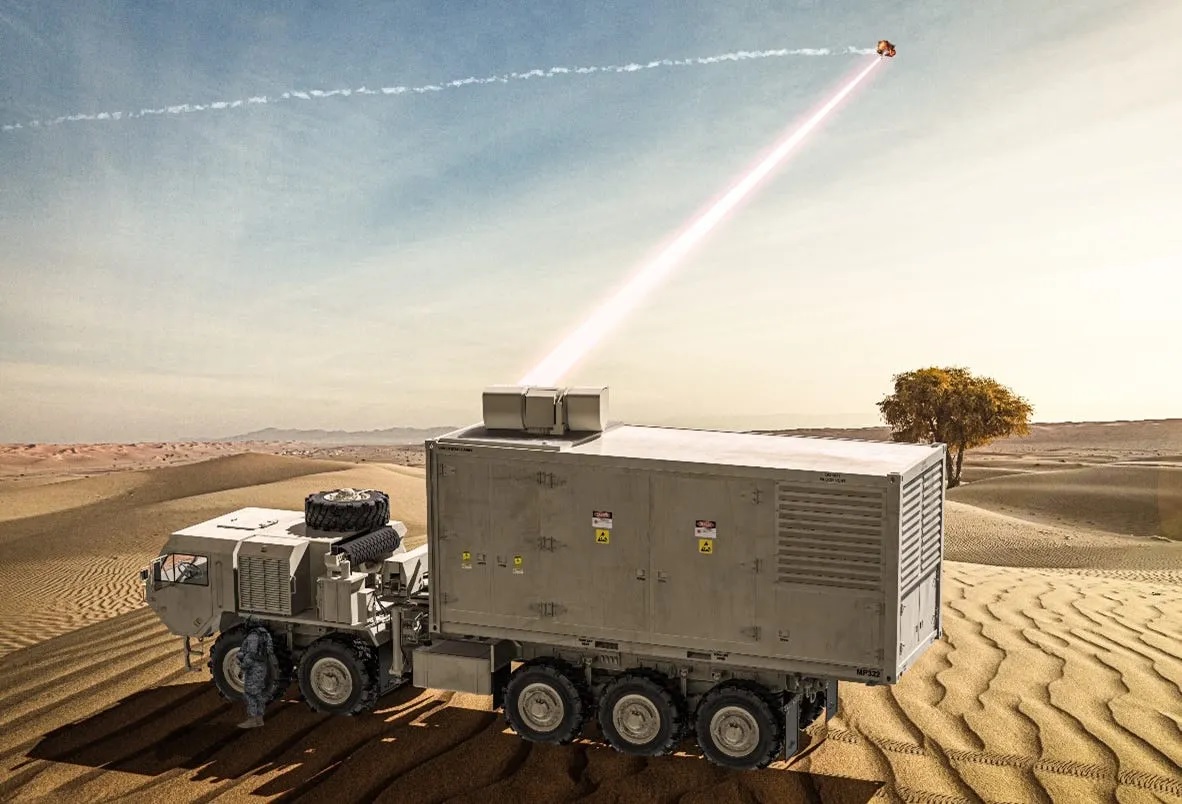
  • The containerized form factor lets the lasers be mounted on ground vehicles or Navy hulls without redesign, and the OTA path was chosen to compress procurement timelines through rapid prototyping.

Pentagon Awards $86M Laser Weapon Deals To Lockheed And nLIGHT

The US Department of War has awarded two Other Transaction Authority (OTA) agreements worth a combined $86 million to nLIGHT Defense and Lockheed Martin Aculight under the Joint Laser Weapon System (JLWS) program, kicking off a $847 million ceiling effort to field containerized high-energy lasers against drone swarms and cruise missiles.

Containerized 150 kW Lasers, Scaling To 500 kW

The first JLWS prototypes will fire at roughly 150 kilowatts to address urgent counter-UAS demands. Subsequent iterations are planned at 300–500 kW for cruise-missile defense, and a parallel 500 kW integrated system will use a laser source from the R&E directorate's High Energy Laser Scaling Initiative (HELSI). All variants use containerized form factors so they can be dropped onto ground vehicles or Navy hulls without redesign.

Fiscal 2027 budget documents earmark roughly $675.93 million in JLWS research and development funding over the next five years, keeping directed energy at the center of the Pentagon's homeland-defense modernization.

Why OTA And Why Now

High-energy laser weapon firing at a target during a live-fire test

The Department chose the OTA acquisition path to compress traditional procurement timelines, allowing rapid prototyping and iteration alongside industry. "We must actively defend the homeland against emerging threats," said Emil Michael, Under Secretary of War for Research and Engineering, framing the awards as a way to "rapidly deliver deep magazine directed energy capabilities to the Joint Force." JLWS is one of six Critical Technology Areas managed under R&E's Scaled Directed Energy (SCADE) portfolio.

Industrial Base: HELIOS, IFPC-HEL And Beyond

Both winners bring a decade of directed energy pedigree. Lockheed Martin has been prime contractor on the Navy's HELIOS laser aboard the destroyer USS Preble and on the Army's IFPC-HEL prototype. nLIGHT has led on HELSI, previously demonstrating a 300 kW coherent beam combining laser and receiving expanded funding to advance sources beyond the megawatt class.

The JLWS awards land the same week the Pentagon expanded AeroVironment's Titan counter-drone footprint and pushed further on the NATO Drone Edge counter-drone initiative. Together they signal a coordinated shift from kinetic-only interceptors toward a multi-tiered defense that mixes lasers, missiles, and cyber effects.

What Comes Next

Under the OTAs, nLIGHT and Lockheed will move quickly from prototype to demonstrator hardware, with the goal of transitioning JLWS into a production-ready platform that combatant commands can field. If the technology holds, the $847 million ceiling suggests the Pentagon expects laser weapons to become a routine base-defense capability rather than a one-off science project.

Reporting based on coverage from the US Department of War, DefenseScoop, and The Defense News.

Category: Defense Systems

Tags: Defense Systems Defense Technology Partnership Government Contracts Counter-Drone

Related Articles

Frequently Asked Questions

What is the Joint Laser Weapon System (JLWS) program?

JLWS is a Pentagon directed-energy program to field containerized high-energy lasers against drone swarms and cruise missiles. First prototypes will fire at roughly 150 kW, with later iterations planned at 300-500 kW, all in containerized form factors deployable on ground vehicles or Navy ships without redesign.

How much are the JLWS contracts worth?

nLIGHT Defense and Lockheed Martin Aculight received two OTA agreements worth a combined $86 million under an $847 million program ceiling, with roughly $675.93 million in R&D funding earmarked over the next five years in fiscal 2027 budget documents.

Why did the Pentagon use OTA agreements for these awards?

The Other Transaction Authority path compresses traditional procurement timelines, allowing rapid prototyping and iteration alongside industry so directed-energy capabilities can be delivered quickly to the Joint Force.

What prior laser weapon experience do nLIGHT and Lockheed Martin bring?

Lockheed Martin was prime contractor on the Navy's HELIOS laser aboard the destroyer USS Preble and the Army's IFPC-HEL prototype. nLIGHT led the HELSI effort, demonstrating a 300 kW coherent beam combining laser and receiving expanded funding to push laser sources beyond the megawatt class.