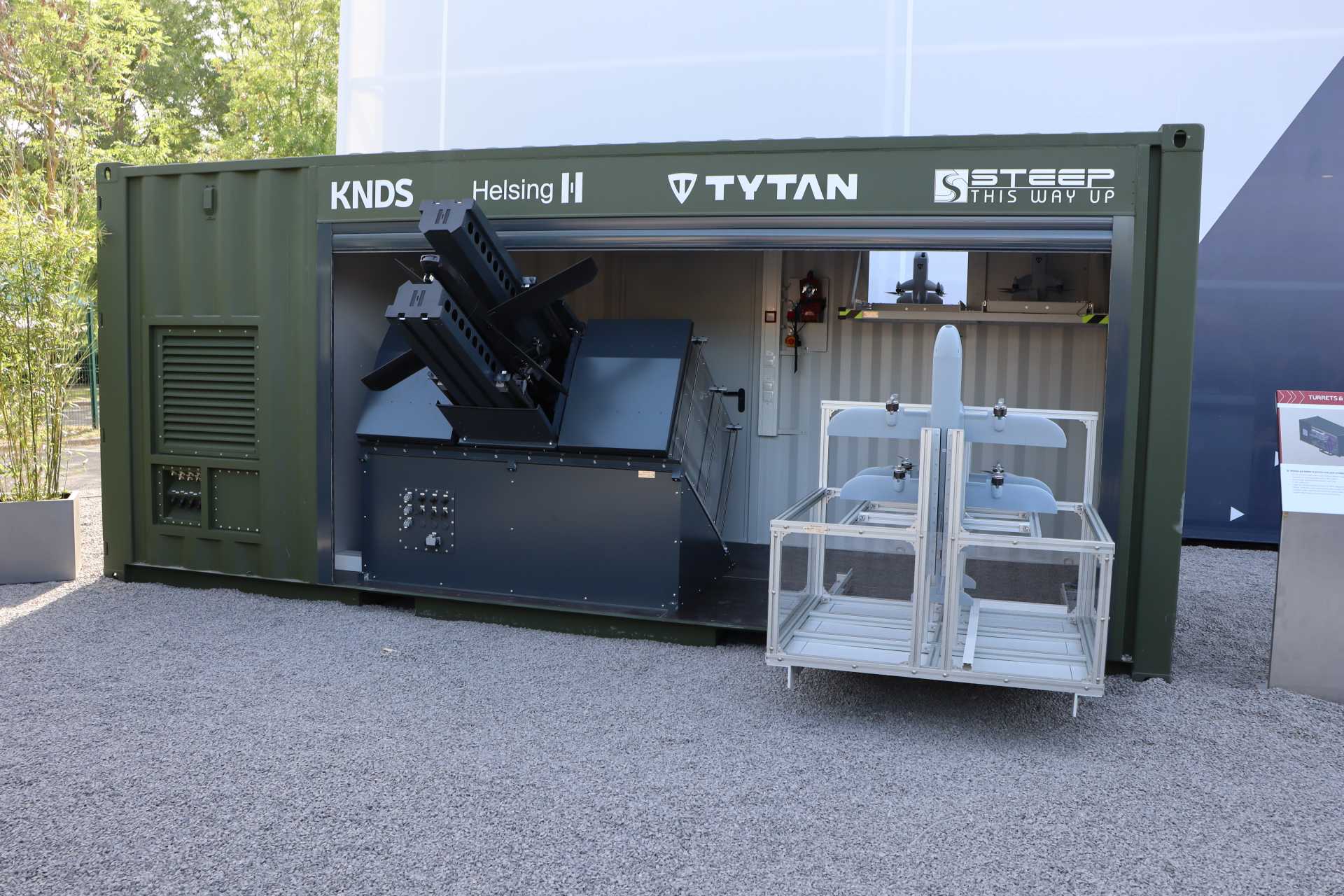
KNDS has unveiled a containerized drone launcher concept at Eurosatory 2026, packing both strike drones and counter-UAV interceptors into a standard 20-foot shipping container. Revealed on June 15, exactly one year after Ukraine's Operation Spiderweb, the mock-up demonstrator combines Helsing HX-2 loitering munitions with Tytan TI-1 METIS interceptors to merge offense and local air defense into a single, hard-to-find node.
A shipping container that fights back
The concept is built around a self-contained 20-foot ISO container with its own power generation, environmental control, networking and launch hardware. Because it looks like ordinary cargo, it can move by truck, rail, ship or depot handling system and sit among thousands of commercial containers, forcing an adversary to work out which box is actually a weapon. KNDS says the module can hold dozens to more than one hundred small effectors, separating the launcher from its operators so that destroying a command vehicle does not eliminate the launch asset.
Strike and intercept from one node
The offensive punch comes from Helsing's HX-2, a 12 kg X-wing loitering munition with a 100 km range, top speed of around 220-250 km/h and warheads for anti-tank, anti-structure or multipurpose missions. Running on Helsing's Altra software, the HX-2 keeps searching and engaging even when electronic warfare degrades its links. Defense is handled by the Tytan TI-1 METIS interceptor, which uses AI-supported thermal detection and autonomous navigation to knock down hostile drones, letting one operator manage multiple engagements at once.

Lessons from Operation Spiderweb
The timing is deliberate. During Operation Spiderweb on June 1, 2025, Ukraine launched 117 FPV drones from concealed truck-carried containers near Russian airfields, reportedly damaging or destroying strategic bombers and early-warning aircraft. The lesson, KNDS argues, is that the location of the launcher can matter more than the range of the drone. By multiplying firing positions, deepening magazines and shrinking the launch signature, the container concept aims to make a drone salvo far harder to pre-empt.
The system reflects a wider convergence on display in Paris between strike and counter-drone roles, echoing European C2 counter-drone hubs, the U.S. Army's expanding counter-drone marketplace, and fresh investment such as Alta Ares' counter-drone funding round.
Reporting based on coverage from Army Recognition, European Security & Defence and Shephard Media.