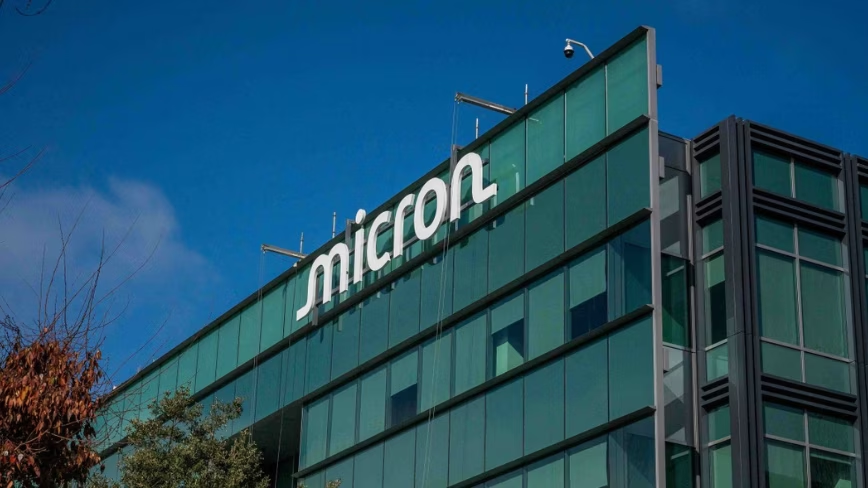
Micron Breaks Ground On 9.3B HBM Plant Expansion In Hiroshima
Micron Technology has broken ground on a $9.3 billion next-generation memory plant in Hiroshima, doubling down on high-bandwidth memory for AI as SK hynix and Samsung race to expand capacity.
Key Takeaways
Micron has broken ground on a $9.3 billion next-generation memory plant in Hiroshima, Japan, focused on high-bandwidth memory (HBM) for AI workloads.
Japan's METI is subsidizing up to Y500 billion (about one-third of capital cost), bringing Tokyo's total pledged support for Micron's Hiroshima DRAM operations to Y774.5 billion.
Mass production of HBM at the new line is slated for summer 2028; Micron currently fills only half to two-thirds of HBM orders and its entire 2026 output is sold out under multi-year contracts.
Micron remains third in HBM behind SK hynix and Samsung, but the Hiroshima investment diversifies geopolitical risk and taps Japan's leading-edge equipment ecosystem.
The Hiroshima campus came from Micron's 2013 acquisition of bankrupt DRAM maker Elpida Memory and is now central to its AI-memory roadmap.
Kaan Tınmaz
Micron Technology has broken ground on a $9.3 billion next-generation memory semiconductor plant in Hiroshima, Japan, throwing its weight behind high-bandwidth memory as demand from AI training and inference customers continues to run past global supply.
Government-Backed Megaproject
Japan's Ministry of Economy, Trade and Industry has committed up to Y500 billion in subsidies, roughly one-third of the project's capital cost. Combined with earlier support for the existing Hiroshima fab, Tokyo has now pledged Y774.5 billion to keep Micron's DRAM footprint anchored in Japan. Officials framed the deal as strategic memory sovereignty for the AI era, echoing recent semiconductor manufacturing pushes in the US and Taiwan.
HBM Is Sold Out
Micron plans to bring mass production of HBM online at the new Hiroshima line from summer 2028. The urgency is straightforward: Micron's own most recent quarterly numbers showed it can fill only half to two-thirds of customer HBM orders, and its entire 2026 output is already sold out under multi-year contracts to accelerator vendors that ship parts for training NVIDIA Vera Rubin AI racks and other hyperscaler platforms.
Catching Up To SK Hynix And Samsung
Even after the expansion, Micron will remain third among HBM suppliers, trailing SK hynix - which locked in the lion's share of recent hyperscaler contracts - and Samsung Electronics. But by pouring capital into Hiroshima instead of only Idaho or New York, Micron is diversifying against geopolitical risk while tapping Japan's leading-edge equipment ecosystem. The company took over the Hiroshima campus when it acquired the bankrupt Japanese DRAM maker Elpida Memory in 2013; a decade later it is now the linchpin of its AI-memory roadmap.
Reporting based on coverage from The Next Web, Taipei Times, Digital Today, UPI and AI Weekly.
How much is Micron investing in the new Hiroshima plant?
Micron is investing $9.3 billion in a next-generation memory semiconductor plant in Hiroshima, Japan, targeting high-bandwidth memory for AI.
When will the new Hiroshima fab start producing HBM?
Mass production of HBM at the new Hiroshima line is planned to begin in summer 2028.
How much is the Japanese government contributing?
Japan's Ministry of Economy, Trade and Industry committed up to Y500 billion in subsidies, roughly one-third of the project's cost, bringing total pledged support for Micron's Hiroshima operations to Y774.5 billion.
Why is Micron expanding HBM capacity now?
AI demand is outrunning supply: Micron can fill only half to two-thirds of customer HBM orders, and its entire 2026 output is already sold out under multi-year contracts, while rivals SK hynix and Samsung race to expand capacity.