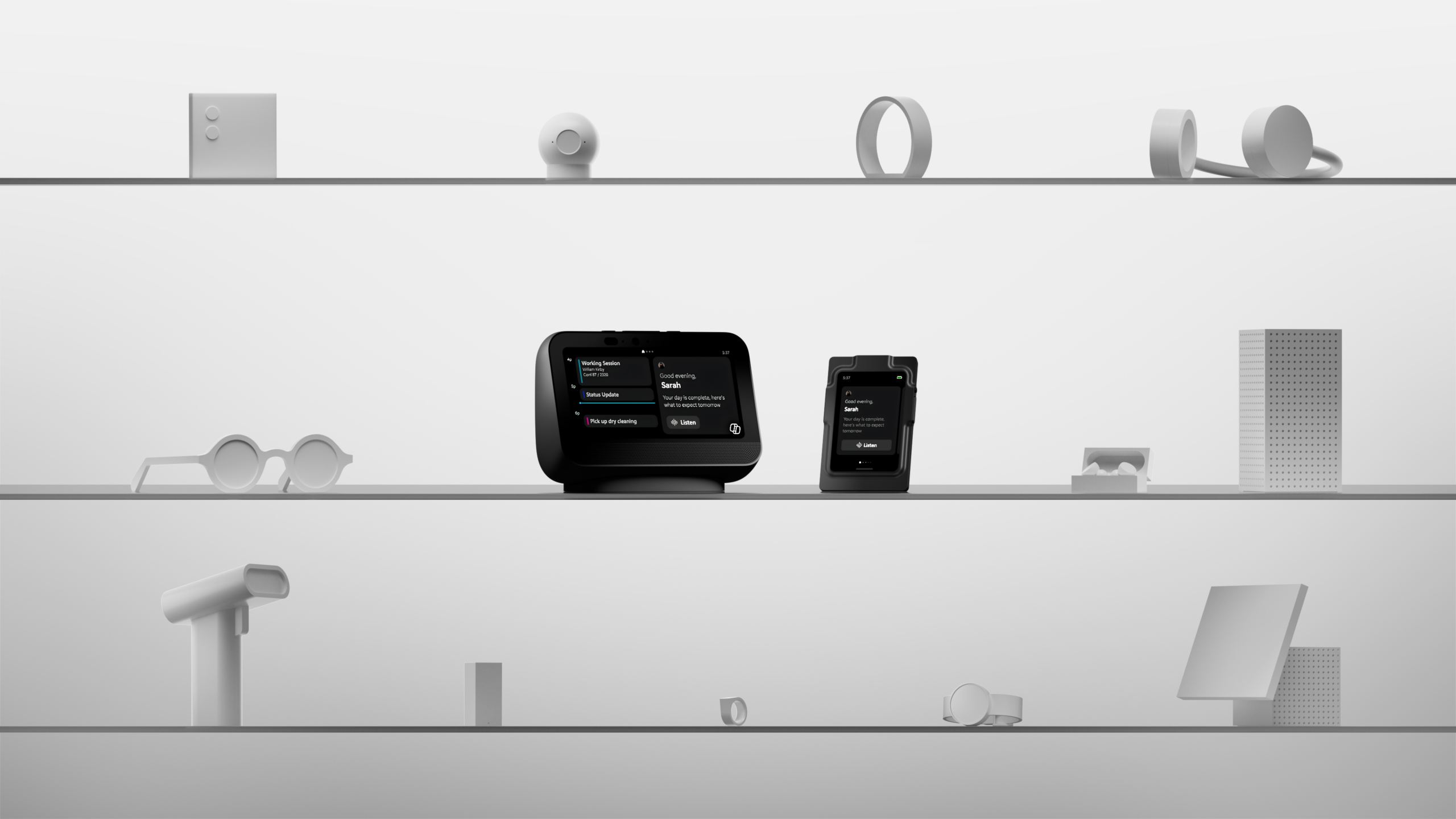
Microsoft used Build 2026 to introduce Project Solara, a new chip-to-cloud platform designed for agent-first devices that the company says will sit alongside Windows and Surface rather than replace them. Disclosed by Applied Sciences CVP Steven Bathiche on June 2, 2026, the project pairs a lightweight enterprise operating system built on AOSP with reference designs for two purpose-built form factors and lays out Microsoft's bet that agents will become the next major interaction model in computing.
Why Build A New OS For Agents
Bathiche framed Project Solara as a response to a structural shift: as AI models keep absorbing complexity, agents become both the new unit of programming and the new unit of human-to-machine interaction. Traditional devices have been built around apps, screens and input methods that require an entire stack to be re-engineered with each new form factor. Solara strips down that stack so a single platform can host many specialised agents across mobile, wearable, desk and field hardware without forcing developers to rebuild their UIs for each one.
Inside The Platform Stack
On the device side, Project Solara includes the Microsoft Device Ecosystem Platform (MDEP), an enterprise-grade operating system built on AOSP. It adds an Agent Shell that dynamically loads cloud-based agents, Microsoft Intune for device management, Entra ID for identity, Windows Hello for Business for biometrics, and what Microsoft calls just-in-time UI so a single agent experience can adapt across screen sizes and modalities. Developers can target Solara through Microsoft 365 Copilot extensibility, Copilot Studio, the Microsoft 365 Agents SDK and the Microsoft Agent Framework.
Two Reference Devices And Two Silicon Partners
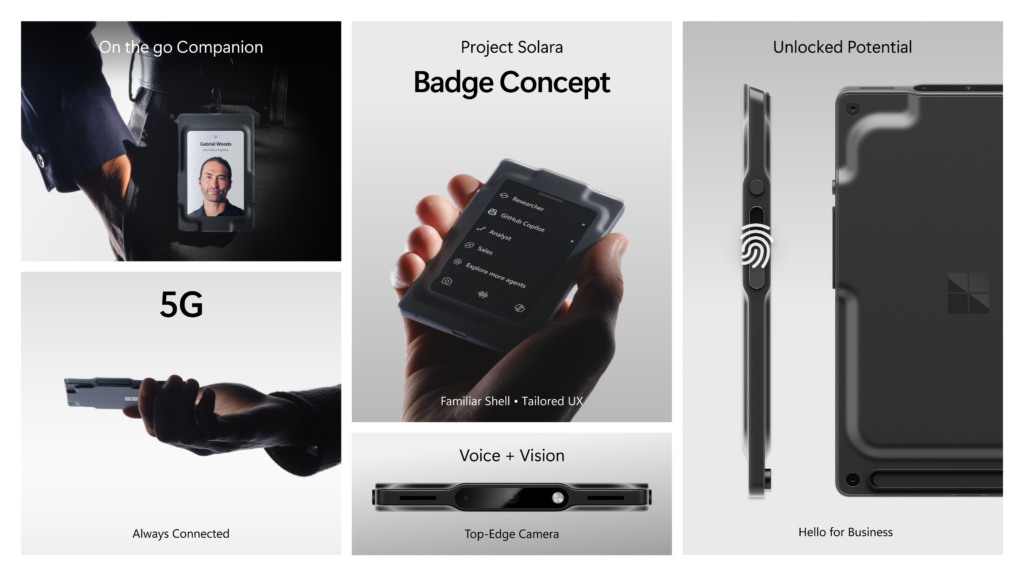
Microsoft showed two concept designs to seed the ecosystem. The first is a wearable smart badge with a touchscreen, fingerprint reader, a far-field microphone array, 5G, GNSS and a side camera, running on Qualcomm Snapdragon wearable silicon. The second is a desk companion with face recognition, dual far-field mics, UWB presence sensing, dual USB-C and MediaTek IoT silicon. The desk unit can act as a standalone agent device, as a Windows companion, or as a Windows 365 cloud PC client. Microsoft said pilots will begin with AccuWeather, Best Buy, CVS Health, Levi's and Target. The disclosure builds on the wider AI-first wave Microsoft unveiled at Build 2026 alongside the MAI model family and joins industry-wide announcements such as NVIDIA's Nemotron 3 Ultra.
Reporting based on coverage from Microsoft Command Line, Stuff, AnalyticsInsight and TheNextWeb.