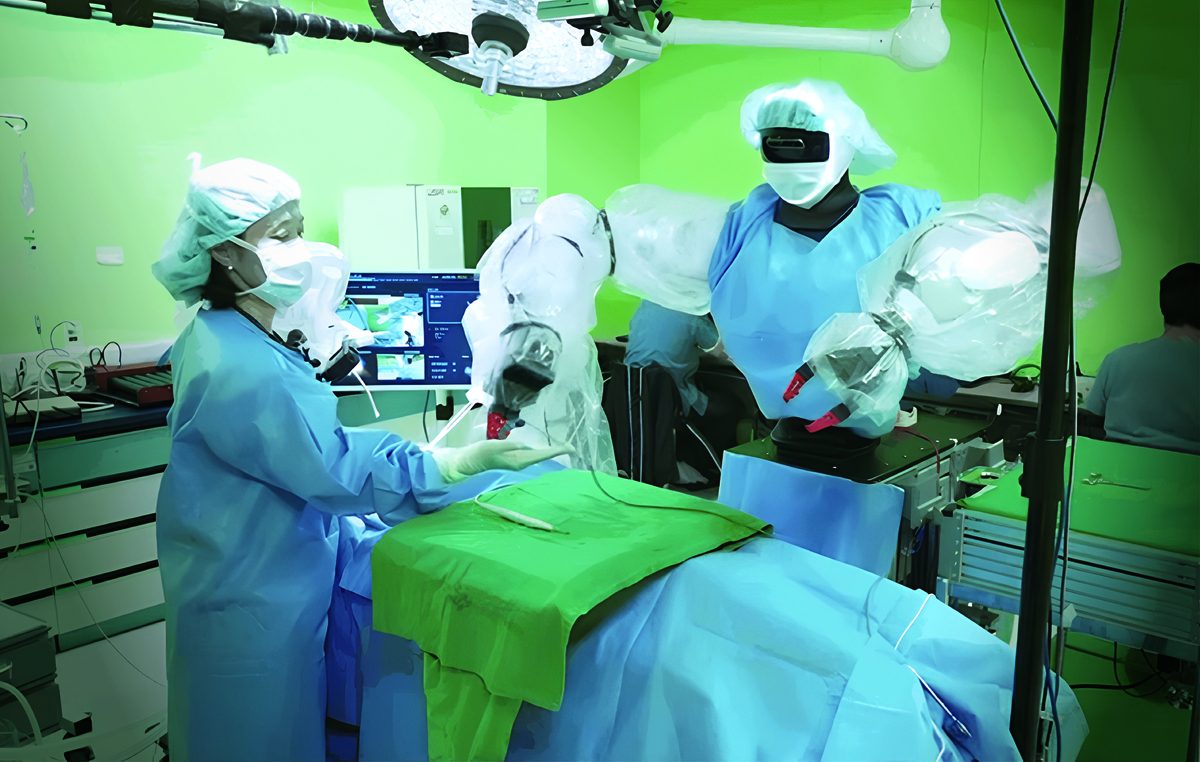
A humanoid robot stood at the operating table, listening. When the surgeon called out an instruction, the machine retracted tissue, cleared suction, and passed over a surgical tool — no human hand guiding it in that moment. The procedure, a thyroidectomy performed on a live animal on November 25, 2026 at Pusan National University Yangsan Hospital, marked the first time a humanoid robot has assisted surgery on a living organism in South Korea.
The robot, called Aire, is built by Seoul-based Neuromeka and was running its SARAM-H surgical assistant platform. According to Seoul Economic Daily, Aire processed voice commands, video feed and motion data from the operating room in real time, then handled tissue retraction, suction and instrument handover using precision control technology built into the platform.
A Neuromeka representative said the company "will continue to expand the use of the Aire platform in medical robot research and development and create new business opportunities, building on advances in the platform's technology and our capabilities in medical device quality management."
A different approach from dedicated surgical robots
Most surgical robotics on the market today, including Intuitive Surgical's da Vinci and Medtronic's Hugo, are purpose-built arms mounted on carts or operating tables, not general-purpose humanoids. Johnson & Johnson's OTTAVA follows the same table-integrated-arm logic. Those systems are designed around a single surgeon console controlling dedicated instrument arms, with no attempt at voice-driven autonomy for support tasks.
Aire's pitch is different: rather than replacing the primary surgical arms, it takes over supporting jobs — handing instruments, holding tissue, managing suction — that are currently done by human surgical techs and nurses. That positions the robot as an assistant inside the sterile field rather than the primary operator, a role humanoid robots have not previously held in a live-animal trial in South Korea.
The thyroidectomy trial builds on broader momentum in South Korean hospital robotics. Earlier in November, a South Korean hospital began testing a humanoid robot for ward deliveries, and Nvidia has been working with Naver to push Korean students toward training humanoid robots with reinforcement learning. Neuromeka's trial extends that national push directly into the operating room.
What has to happen before human trials
Live-animal testing is a standard, required step before any surgical device can move toward human clinical trials in South Korea, and Neuromeka has not announced a timeline for that next phase. The company will need to demonstrate repeatable, reliable voice-command recognition under the noise and stress of a real operating room, along with regulatory clearance from South Korean medical device authorities.
Competing approaches to surgical automation, including Apricity Robotics' autonomous cardiac ultrasound arm and MedInTech's AI robotic endoscope, are pursuing narrower, single-task autonomy rather than a general-purpose humanoid form factor. Neuromeka's bet is that a humanoid body, capable of working inside existing operating rooms designed for human staff, will prove more adaptable across different procedure types than a fixed-purpose arm. Whether hospitals accept a general-purpose robot moving around a sterile field, instead of a dedicated cart-mounted system, is likely to shape how quickly Aire advances toward clinical use.