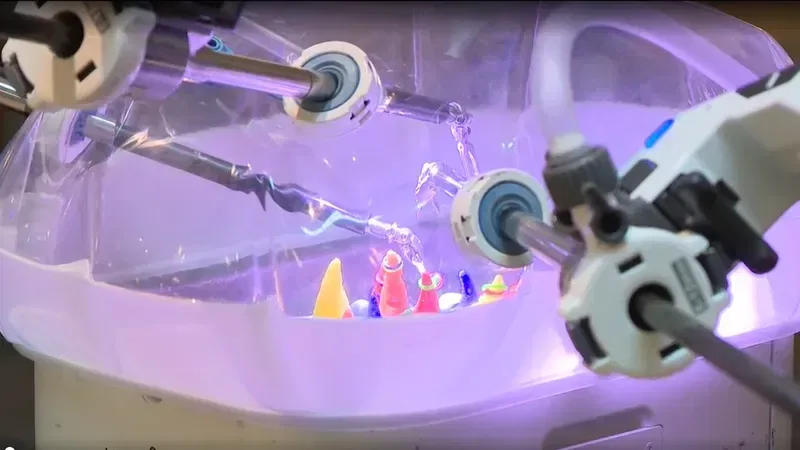
Seventeen years after a single surgeon sat down at a console with a proctor watching over her shoulder, PeaceHealth RiverBend Medical Center has logged its 20,000th robotic surgery. The Springfield, Oregon hospital confirmed the milestone this week, according to a report from NBC16, marking it as the top hospital in Oregon for robotic surgery volume.
Dr. Catherine York performed the hospital's first robotic case on the da Vinci system in 2009, with a proctor and her own physician father present for the procedure. The program has since scaled sharply: RiverBend has averaged roughly 2,500 robotic procedures a year since 2022, a pace that accounts for a substantial share of its lifetime total.
From One Surgeon to a Standard Tool
Dr. Audrey Garrett, who now performs many of the hospital's robotic cases, described the shift in practice as much about surgeon experience as about the machine itself. "The more we did, the more we could do," Garrett told NBC16, describing how comfort with the console grew the range of procedures surgeons were willing to attempt robotically. RiverBend's robotic caseload now spans hysterectomies, endometriosis treatment, gallbladder removal and lymph node procedures, moving well beyond the gynecologic focus that defined the program's earliest years.
Garrett also pointed to the ergonomic case for robotic platforms, noting that operating from a seated console is "a completely different relaxing experience" compared with standing through a traditional open or laparoscopic case. That comfort factor has become part of the pitch hospital systems use to recruit and retain surgeons, particularly in specialties with long, physically demanding procedures.
Why a Single Hospital's Tally Matters
RiverBend's 20,000-case mark lands at a moment when robotic surgery adoption is accelerating across US community hospitals, not just flagship academic centers. Da Vinci maker Intuitive Surgical has spent two decades building a base of trained surgeons system by system, and milestones like RiverBend's illustrate how that installed base compounds: once a hospital clears the early learning curve, case volume tends to climb steadily rather than plateau.
Garrett framed the program's growth partly in terms of access, saying robotic capacity helps the hospital "continue to provide surgical services" to underserved populations in the region, a reference to the broader surgeon shortage affecting rural and semi-rural health systems in Oregon and elsewhere. As more procedure types move onto robotic platforms, and as newer systems from Intuitive, CMR Surgical, Medtronic and others compete for hospital contracts, individual case-volume milestones like RiverBend's offer one of the few concrete, publicly reported measures of how deeply the technology has embedded itself in routine surgical care.