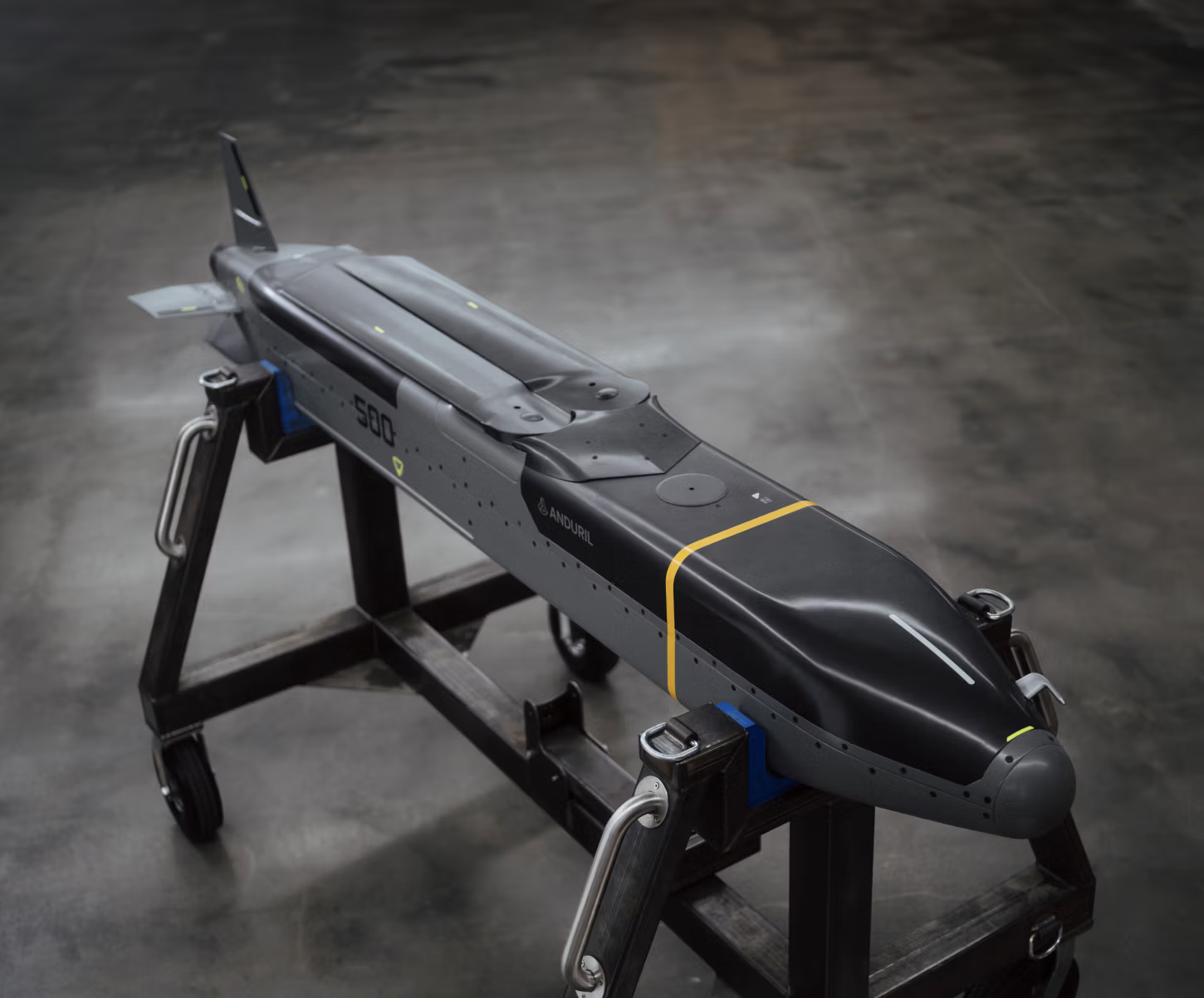
The Pentagon has signed new multiyear production frameworks with Anduril Industries, CoAspire and Zone 5 Technologies under the US Air Force's Family of Affordable Mass Missiles (FAMM) program, Defense Daily first reported on July 15, 2026. The agreements do not yet carry contract awards but give the three suppliers a stable demand signal to line up production capacity with their supply base, part of a stated Air Force plan to procure roughly 8,000 low-cost cruise missiles a year at maturity.
Three missiles, one design brief: cheap and many
The frameworks cover Anduril's Barracuda-500 long-range autonomous air vehicle, CoAspire's Rapidly Adaptable Affordable Cruise Missile (RAACM) and Zone 5 Technologies' Rusty Dagger. All three are designed for high-volume production and modular payloads, and several can be shoved out the back of an ordinary cargo aircraft using palletised weapons modules that release the missiles in flight — the same "Rapid Dragon" launch concept US Air Force Special Operations Command has been developing since 2020. Rusty Dagger has already reportedly been used in combat, according to Russian reports of a June 2026 strike inside Russia.

Locking in industrial base
DoD received five-year FAMM contracting authority in the fiscal 2026 NDAA and is now using multiyear frameworks to convince private suppliers that the demand signal is durable enough to justify tooling investment. The Air Force is targeting a family of interchangeable, sub-$150,000-class weapons capable of overwhelming Chinese and Russian integrated air defences with mass. The FAMM push slots alongside the Pentagon's expanding Anduril Arsenal-1 combat drone factory in Ohio, its CCA drone selections and its recent $500M AeroVironment counter-drone deal, all aimed at hollowing out the traditional exquisite-weapon procurement model.
Politics and follow-on funding
The FAMM frameworks land as Congress is still fighting over the FY27 defence bill: Senate Democrats blocked cloture on the $1.14T FY27 NDAA on July 14, and House leaders left for recess without moving their $1.15T companion. That means whatever contracts eventually flow to Barracuda-500, RAACM and Rusty Dagger will depend on how the reconciliation and NDAA fights play out this fall. Even so, three separate multiyear frameworks in a single week is a strong signal that the Air Force wants to buy affordable cruise missiles from a broad and non-traditional supplier base for years to come.
Reporting based on coverage from Defense Daily, Air & Space Forces Magazine, The War Zone and The Washington Times.