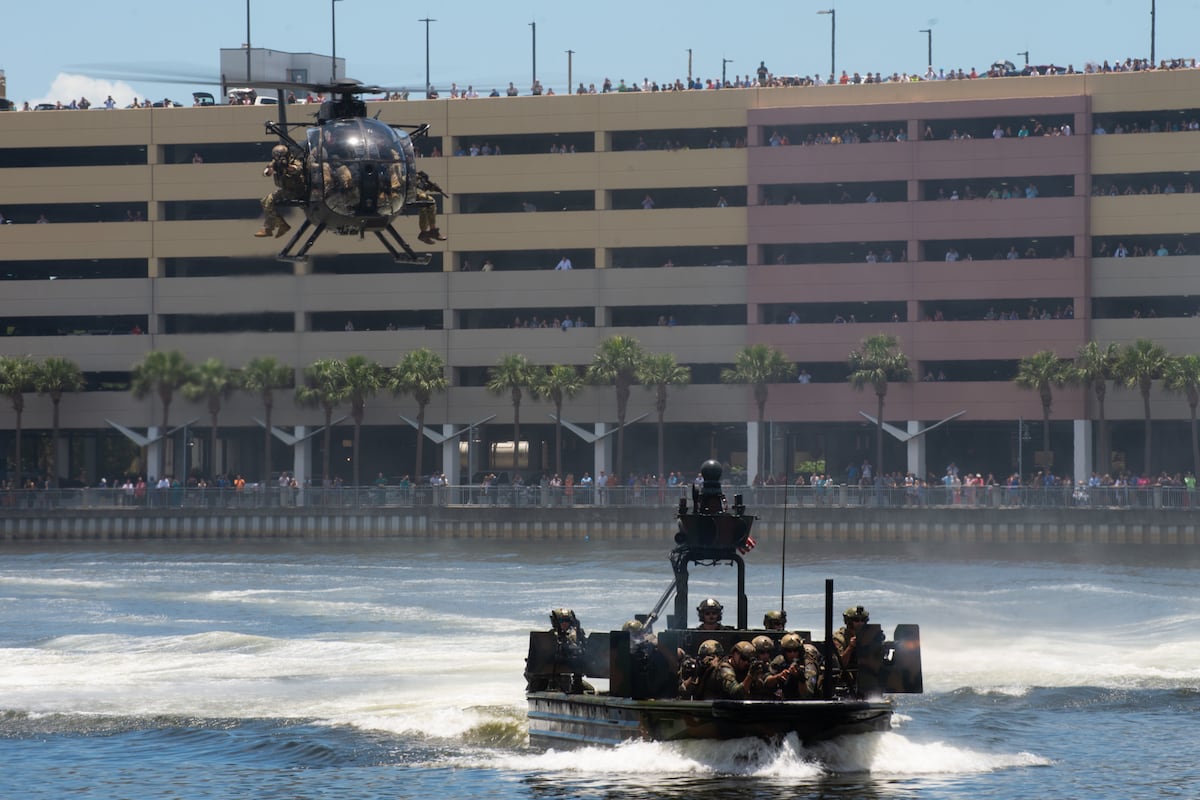
U.S. Special Operations Command is moving to stand up a new drone testing ground at NASA's Stennis Space Center in Mississippi, in what would become one of the Pentagon's most ambitious autonomous-warfare proving grounds to date. The plan, disclosed in a solicitation notice posted this month and reported by Defense News on May 27, asks industry, academia and national laboratories to help build an environment where air, sea and ground-based drones can be tested together.
An Autonomous Warfare Proving Ground
The notice calls the planned facility an "Autonomous Warfare Proving Ground," and it is aimed at preparing the U.S. military for missions that the document says could one day stretch from "seabed to low Earth orbit." The range would also include electromagnetic capabilities, reflecting how electronic warfare and autonomy have become tightly linked in recent conflicts. SOCOM and the defense innovation outfit SOFWERX plan to host a collaboration event in July, after which selected participants could be invited to compete for prototype and production agreements.
Stennis was chosen because the site already supports rocket testing and military research thanks to its large restricted airspace, direct access to waterways and relative isolation along the Mississippi Gulf Coast. Those attributes make it one of the few U.S. locations that can host simultaneous air, surface and underwater autonomous experiments without coordinating around civilian traffic.
Why now: lessons from Ukraine and the Gulf
The announcement lands as the Pentagon scrambles to keep pace with autonomous-weapons innovation driven by the wars in Ukraine and the Middle East. Senators have warned that policy is not moving fast enough to match the technology, and the Defense Department has acknowledged that gaps in counter-drone capabilities exposed U.S. troops during fighting with Iran, where attritable, low-cost unmanned systems struck soldiers, vehicles and infrastructure.
The Stennis range is being framed as part of a broader push that began with the Trump administration's June 2025 executive order "Unleashing American Drone Dominance," which directed the Pentagon to procure, integrate and train with low-cost, high-performing U.S.-built drones. In July 2025, Defense Secretary Pete Hegseth signed a follow-on memorandum to expand the domestic drone industry and streamline acquisition. SOCOM, the notice says, was "specifically called upon to path find and shepherd the development of technologies" that would secure a U.S. autonomous-warfare edge and allow allies to learn alongside the United States.
How it ties into the Pentagon's wider drone surge
The proposed range fits into a rapid scale-up of unmanned programs across the department. This week, the DoD said AI users have grown from about 80,000 to 1.5 million and laid out plans to buy 200,000 small drones, a story we covered in Pentagon AI Use Jumps 1,775% as DoD Orders 200,000 Drones. Industrial programs continue to ramp as well, including the Navy's selection of multiple unmanned surface vessel designs detailed in US Navy Picks 7 MUSV Designs to Enter Prototype Phase, and the Army's loitering-munitions modernization captured in Teledyne Rogue 1 Block 2 Drone Doubles Range to 12 Miles.
What to watch next
The Stennis solicitation is open to a broad set of partners and explicitly contemplates downstream prototype and production work for the firms that perform well at the July SOFWERX event. That structure mirrors how SOCOM has previously turned proving-ground evaluations into early-stage production contracts and could pull a wave of small drone makers, counter-UAS firms and autonomy software vendors into the proving ground's roadmap. The key question is how quickly the range can move from notice to operational testing, given the pace at which adversary autonomous systems are evolving in active conflicts.
Reporting based on coverage from Defense News, Military Times and the Federal Register.