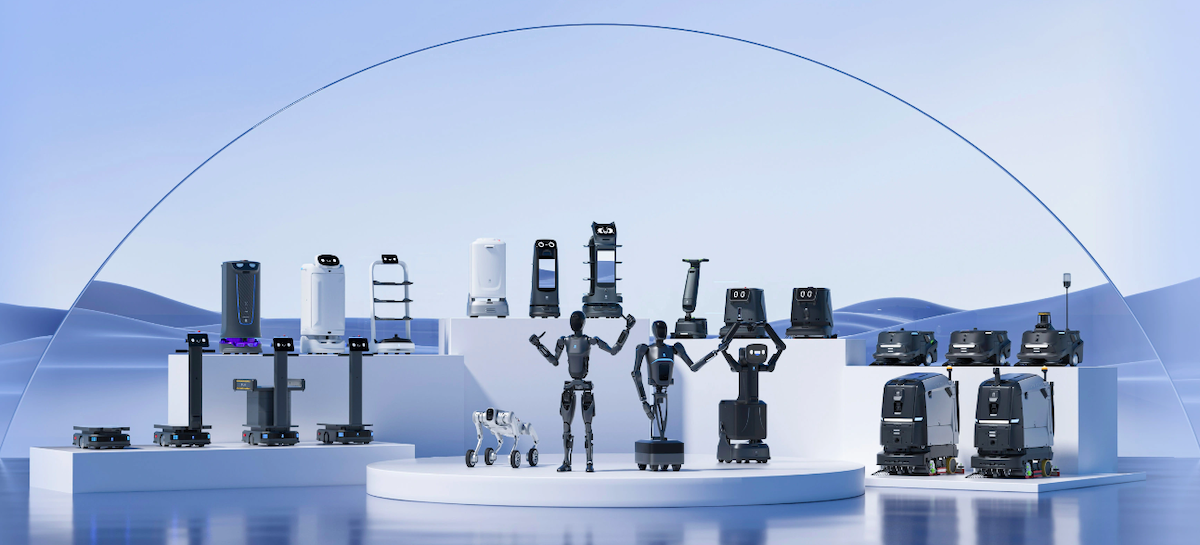

Shenzhen-based Pudu Robotics has raised nearly $150 million in a new funding round that values the company at more than $1.5 billion, the firm announced. The round lifts Pudu's cumulative funding past $300 million and arrives after a year in which the company says revenue more than doubled, on the back of strong commercial-cleaning sales and a rapid ramp of its industrial delivery robots.
From restaurants to factories
Founded in 2016, Pudu started out shipping front-of-house delivery robots into restaurants and hospitality and now spans cleaning robots, hospital logistics units and humanoid prototypes. Its commercial cleaning segment has grown to represent more than 70% of total revenue, while the industrial delivery line has shipped over 4,000 units in its first year on the market, the company says. Frost & Sullivan rankings cited by Pudu put it at roughly a 23% share of the global commercial-service-robot market.
Use of proceeds
Pudu says the capital will go to expanding embodied-AI software, broadening its product portfolio, scaling manufacturing capacity and deepening supply-chain partnerships. The financing is also earmarked for global market expansion, with the company in the middle of relocating its US headquarters from California to North Texas to be closer to logistics customers and component suppliers.
A noisy service-robot field
The raise lands as Chinese embodied-AI players push hard into US and European markets, competing with incumbents like ABB's robotics unit, Locus Robotics and fellow Chinese service-robot maker Keenon. Pudu's pitch — one embodied-AI stack, multiple form factors and verticals — is increasingly common across the category, but its commercial traction and double-digit market share give it an unusually concrete revenue base.
What's next
The company's near-term roadmap focuses on humanoid prototypes and an expanded family of industrial mobile manipulators, while sustaining the cleaning and delivery lines that drive today's revenue. The new financing gives it breathing room to scale those bets without immediately raising again in a tightening late-stage market.
Reporting based on coverage from PR Newswire, SiliconANGLE, The Robot Report and Morningstar.