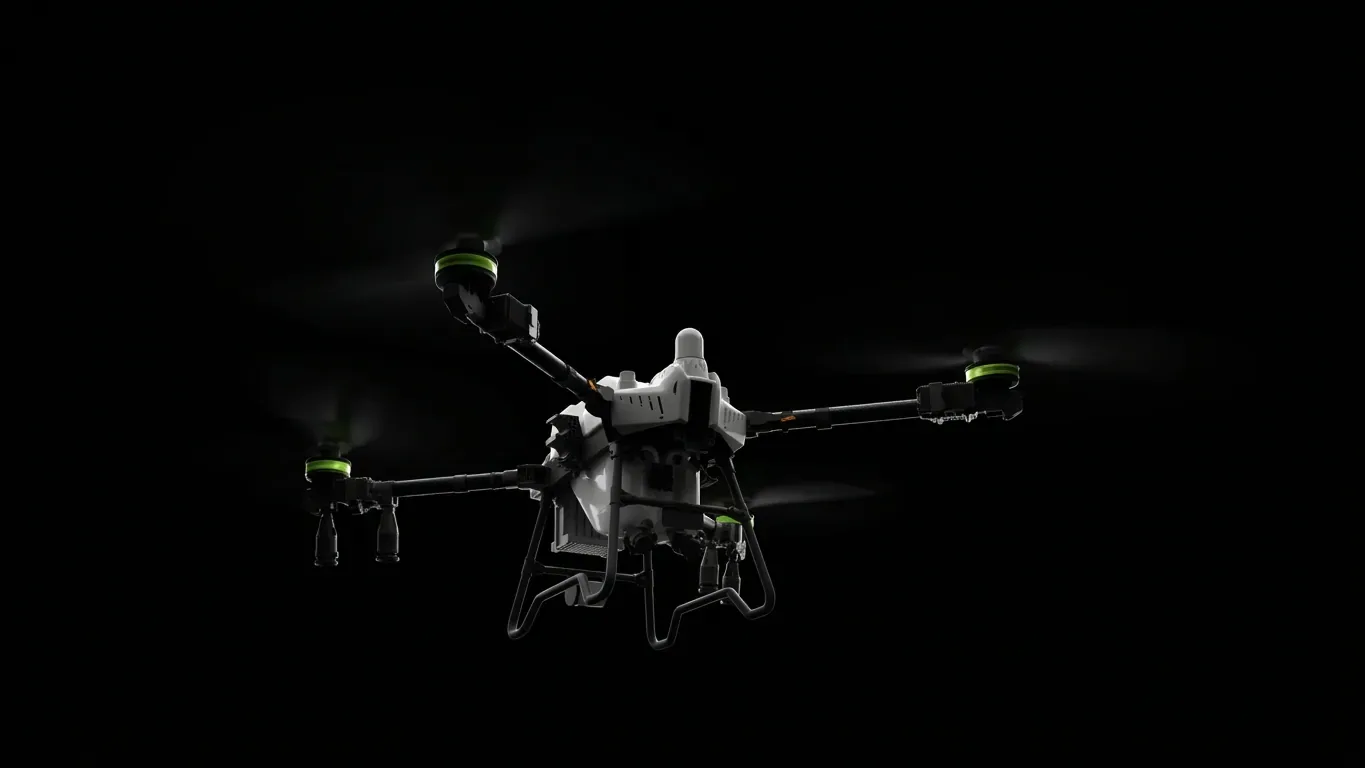
Agri Spray Drones, based in Boonville, Missouri, released the AGRI 225 on November 17, a new agricultural spray drone built around a 22-gallon tank, dual impeller pumps and a maximum application flow rate of 15.8 gallons per minute. The aircraft runs two or four nozzles, with four as standard, and can vary droplet size from 10 to 500 micrometers depending on the job, according to DroneXL. The company also added enlarged plumbing, quick-release nozzle mounts, an updated atomizer disc and solenoid design, and an electromagnetic flowmeter for more precise rate control.
Agri Spray Drones built its business spraying fields for farmers before it ever sold a drone, and CEO Taylor Moreland said that operating history \"still shapes how we\" approach equipment design — informing choices like the battery's new locking terminal mechanism and revised power management, both aimed at problems that show up after months of field use rather than in a showroom demo.
A Crowded, Fast-Growing Category
Spray drones have become one of the fastest-moving corners of agricultural robotics over the past three years, led by DJI's Agras line and a growing field of US and Chinese challengers competing on tank size, flow rate and battery swap speed. A 22-gallon tank puts the AGRI 225 in the mid-to-large range for the category — bigger than entry-level spray drones built for small specialty farms, but still well below the 40-plus-gallon payloads some manufacturers are pushing for row-crop operators trying to match ground-rig acreage per day.
The pitch for spray drones generally is lower input cost per acre than manned aircraft, no need for a runway, and the ability to treat wet or steep fields ground rigs can't reach. The trade-off is flight time and tank capacity: drones still cover far fewer acres per battery cycle than a crop duster or a self-propelled sprayer, which keeps adoption concentrated among smaller operations, specialty crops and spot-treatment work rather than large-scale row-crop acreage.
Why the Operator Pedigree Matters
Agri Spray Drones' custom-applicator background is a differentiator worth weighing against the hardware specs alone. Many spray drone makers are primarily electronics or aviation companies adding an agricultural payload; Agri Spray Drones started on the other side of the nozzle, which shows up in details like quick-release mounts meant to cut field downtime during a spray window, rather than simply chasing a bigger tank number.
The company has also built its own software stack for flight operations, fleet management and dealer diagnostics on US-based cloud infrastructure — a choice that matters commercially given recent scrutiny of Chinese-made agricultural drones and cloud dependencies in the US market. Whether that domestic-infrastructure pitch translates into sales will depend on price, which Agri Spray Drones has not yet disclosed, and on how the AGRI 225 performs against DJI's established Agras line once it reaches customers' fields next season.