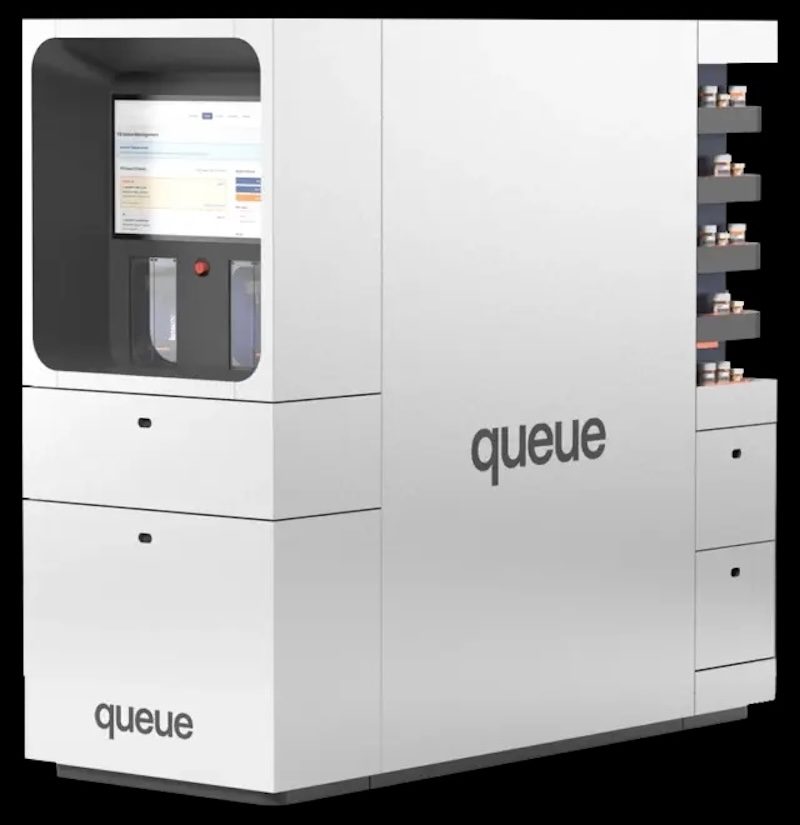
A patient walks up to a kiosk no bigger than a vending machine, scans a code sent to their phone, and walks away with a filled, verified prescription less than a minute later. That is the pitch behind Queue, a California startup that has built an autonomous robotic pharmacy kiosk designed to dispense medications in about 30 seconds, according to Robotics & Automation News.
The kiosk holds up to 340 different medications and uses machine vision to verify each pill before it is dispensed, a dual-stage check the company says creates an auditable chain of custody and prevents tampering. Installation takes less than a day. When a provider submits a prescription, Queue's software handles insurance and payment processing while the kiosk prepares the order; the patient receives a pickup code by text, scans it at the machine, and can reach a pharmacist by phone or text if questions come up.
Targeting a Real Pharmacy Access Gap
Queue is pitching the kiosk at community pharmacies, retail chains, urgent care centers and outpatient clinics, framing it as a way to add dispensing capacity without adding pharmacist headcount or floor space. The company cites research showing roughly 18% of Americans live in areas with limited pharmacy access, a gap that has widened in recent years as retail pharmacy chains have closed thousands of locations. For clinics and urgent care centers that do not operate a pharmacy counter at all, a self-contained kiosk offers same-visit dispensing rather than sending patients elsewhere to fill a prescription.
Founded in 2025 by chief executive Nick Desai and cofounder Josh Liu, Queue has raised $18.6 million from investors including AlleyCorp, Riot Ventures, Ubiquity Ventures and House Capital. The company plans to show the kiosk publicly at the J.P. Morgan Healthcare Conference in San Francisco in January 2027, a venue typically used by health technology companies to court hospital systems and pharmacy chains as customers.
Part of a Broader Push to Automate Dispensing
Queue's kiosk fits into a wider trend of hospitals and health systems automating routine pharmacy tasks, from robotic arms that fill hospital medication carts to centralized dispensing robots used by large retail chains. What differentiates a kiosk model is that it puts the automation directly in front of the patient rather than behind a pharmacy counter, compressing what is often a 15-to-20-minute wait into a 30-second pickup. That also shifts where liability and verification happen: the machine vision check has to catch dispensing errors without a pharmacist physically handling each pill.
The bigger test for Queue will be winning regulatory sign-off and insurance integration state by state, since pharmacy dispensing rules vary significantly across jurisdictions. If the kiosk performs as described at scale, it could appeal most to primary care clinics and urgent care chains looking to add pharmacy revenue without hiring a full-time pharmacist, rather than to large retail chains that already run centralized fulfillment.