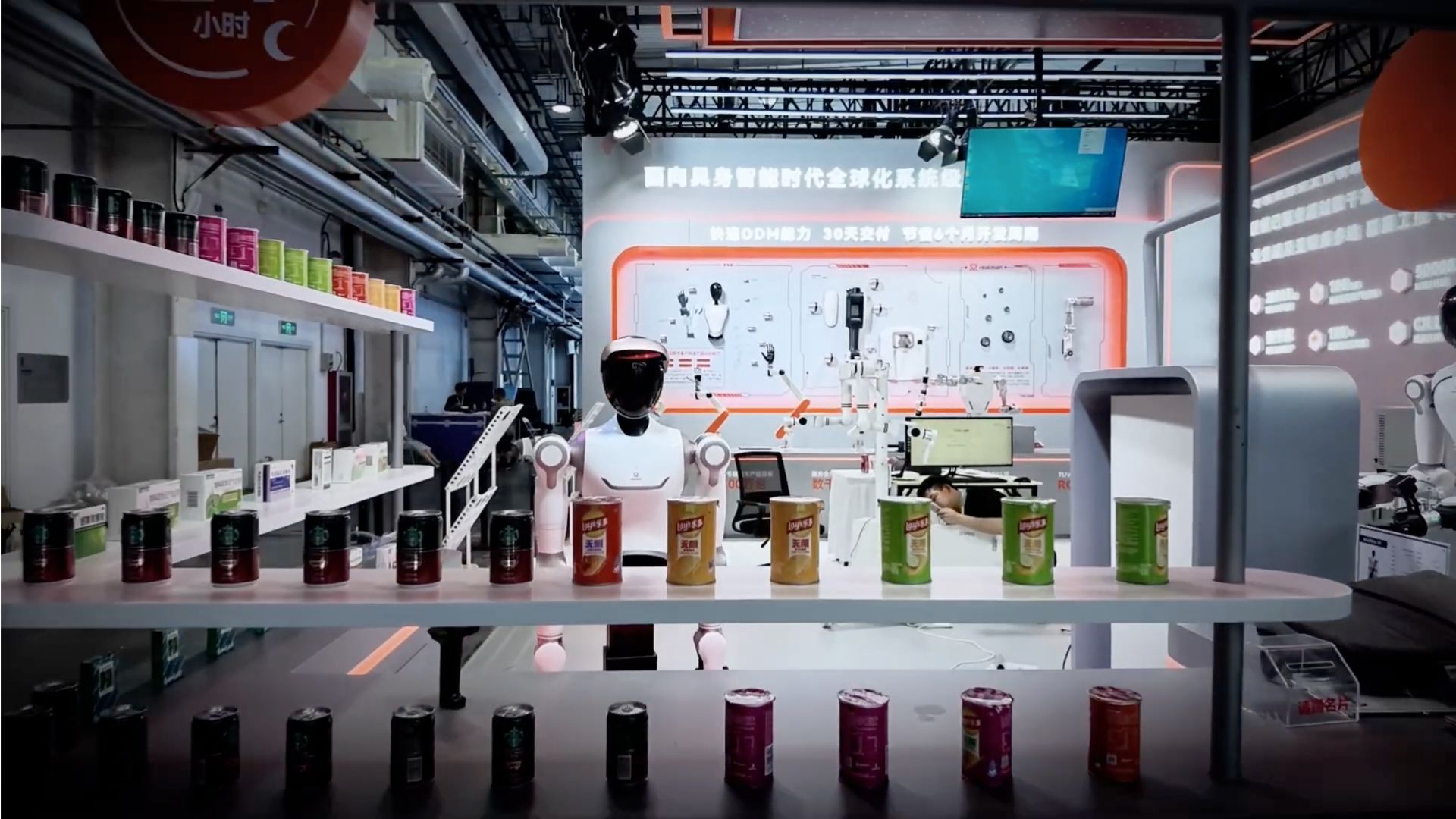
Beijing-based RealMan Robotics used the 2026 World Robot Conference (WRC) in Beijing this week to unveil a real-world deployment initiative that will put nearly 1,000 of its RealBOT wheeled humanoids into pharmacies, power stations, kitchens and factories through its Global Link Network (GLN) teleoperation cloud during 2026.
GLN turns humanoids into a distributed workforce
Under its GLN real-world deployment plan, RealMan will pipe live control of its RealBOT robots through a remote-operation network that the company says delivers millisecond-level latency across thousands of miles. Each remote task also feeds structured perception, manipulation and decision-making data back into RealMan's training loop, so operators can improve robot skills across environments as robots log real hours on the job. The initiative extends the humanoid data-collection strategy behind the company's Beijing rivals X-Humanoid and echoes deployment plays such as Serve Robotics' expanding restaurant delivery fleet.
Pharmacy, power plant and kitchen demos at WRC 2026
On the WRC show floor RealMan's RealBOT-S2 and RealBOT-L2 wheeled humanoids restocked and picked medicine at a 24-hour smart pharmacy, ran patrol and inspection tasks in a power distribution room, folded five-nut mooncakes with a master chef and remotely commissioned equipment at RealMan's own embodied-intelligence factory in Changzhou. The company said its lightweight humanoid arms have now reached a mean time between failures of 50,000 hours and received CR L3 certification from the Shanghai Robot Industry Technology Research Institute at WRC 2026, a reliability threshold aimed at long-duration commercial operation.
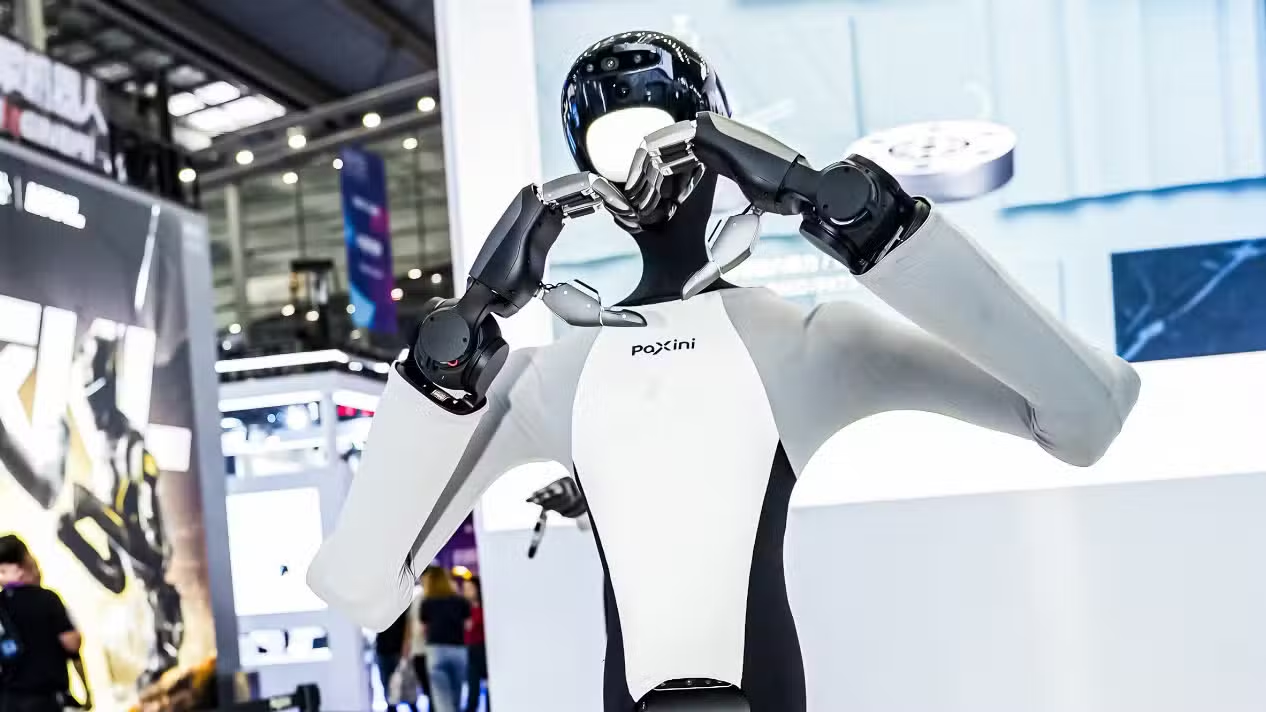
PaXini teams up on tactile sensing
Alongside the deployment plan RealMan showcased a perception stack co-developed with Shenzhen tactile-sensing specialist PaXini Tech. The demo paired RealMan's seven-degree-of-freedom RM75 arm with PaXini's multidimensional force sensors, a six-axis force sensor and joint-torque feedback to allow closer physical human-robot collaboration. PaXini, which recently weighed a Hong Kong IPO after raising USD 145 million at a $1.4 billion valuation, has been building tactile-sensing hardware for humanoids since 2021 and licenses similar modules to Chinese and Japanese robot makers. The initiative underlines a broader industry pivot at this year's WRC away from stage demos towards continuous, task-focused deployments.
Reporting based on coverage from Interesting Engineering, BigGo Finance and RealMan Robotics.