
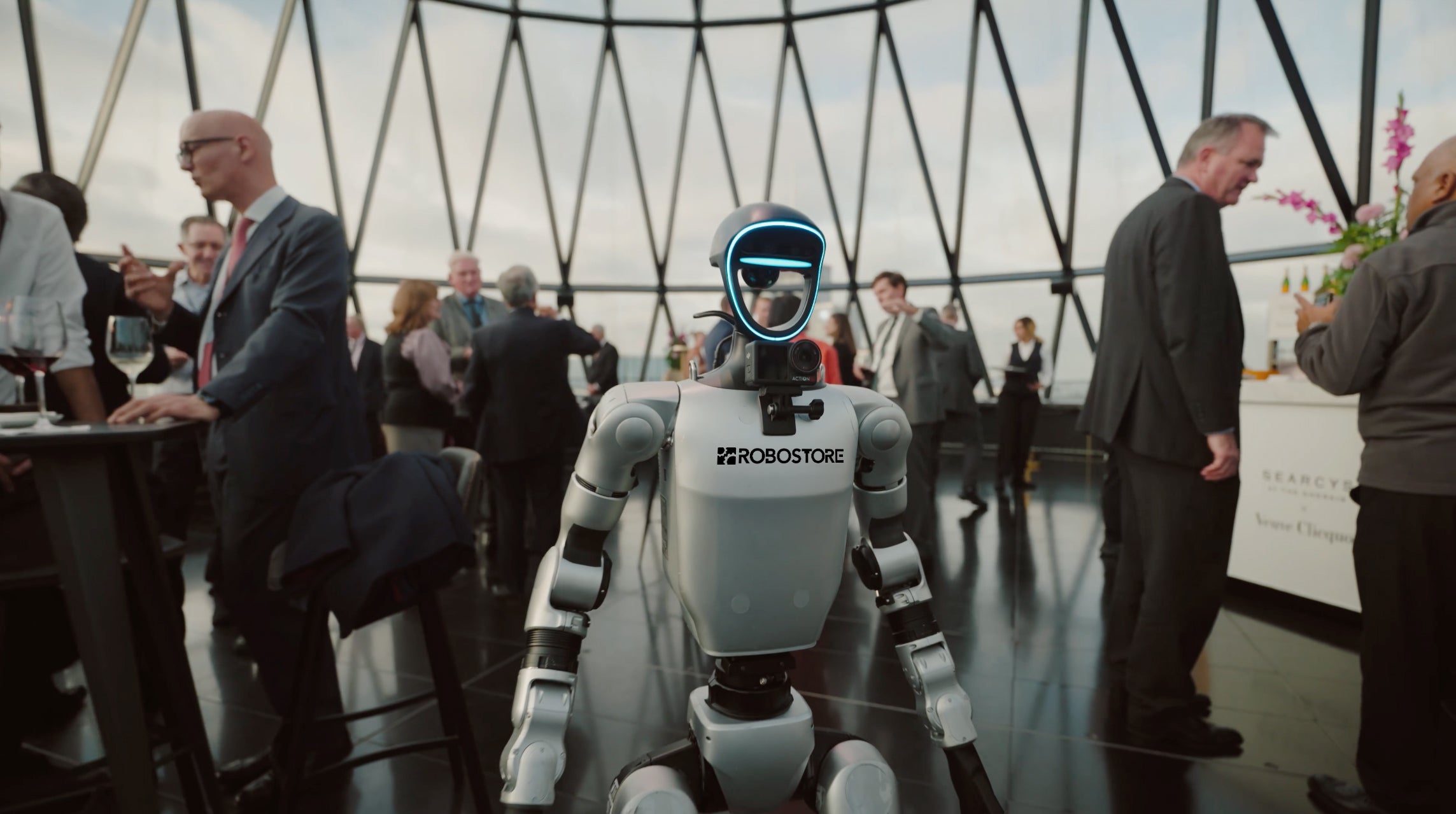
RoboStore, North America's largest distributor of Unitree humanoids and quadrupeds, publicly launched a US manufacturing and systems-integration subsidiary named Robo Inc. on Monday, staking out a 66,000-square-foot Long Island facility that will be operational by Q1 2027 and pitching itself as the bridge between Chinese-priced hardware and American compliance requirements.
Why The FCC Made This Business Model Necessary
The FCC's July 28 Covered List designation blocked new advanced Chinese-origin robots — humanoids, quadrupeds and connected AMRs over 4.4 lbs — from receiving equipment authorisation. Existing pre-ban authorised models like Unitree's Go1 and G1 stay in service; new SKUs do not. That leaves RoboStore's inventory saleable but its future pipeline exposed unless a US-side integration story exists. Robo Inc. is that story.
What Robo Inc. Will Actually Do
The company describes itself as hardware-agnostic: source competitive robotic platforms globally, then perform US-based assembly, software integration, security review of network calls, firmware audit and per-deployment risk evaluation before shipping. RoboStore CEO Teddy Haggerty, who will also lead Robo Inc., says the 4,000-member Roboverse developer community and RoboUniversity curriculum come along. The company claims more than 1,500 robots deployed to over 4,500 organisations including Harvard, MIT, Amazon and Nvidia.
The Price Gap Nobody Has Closed
Chinese humanoids like Unitree's G1 start under $18,000; Agility Robotics' Digit is priced at roughly $8,500/month on a service model — a purchase equivalent well north of $250,000. Morgan Stanley has estimated that stripping Chinese-sourced components from Tesla's Optimus Gen 2 would nearly triple its bill of materials. Robo Inc.'s bet is that the integration layer, not the actuator or the reducer, is where American value can be captured in the meantime.
Where The Model Runs Out Of Runway
Integration-layer hardening addresses IT-level risk — data flow, firmware, network segmentation. What it cannot address is Article 7 of China's 2017 National Intelligence Law, which legally binds Chinese firms to cooperate with state intelligence requests. For enterprise IT buyers that is a survivable trade-off; for ITAR shops, DoD contractors and classified environments it is not. Robo Inc.'s challenge over the next year is to name the compliance framework, the certifying body and the documentation deliverables that its model will actually satisfy. Until then, its Long Island facility is a bet on how long the transition period from Chinese-priced hardware to domestic manufacturing actually lasts.
Reporting based on coverage from Tech Times, RoboticsTomorrow and RoboStore.