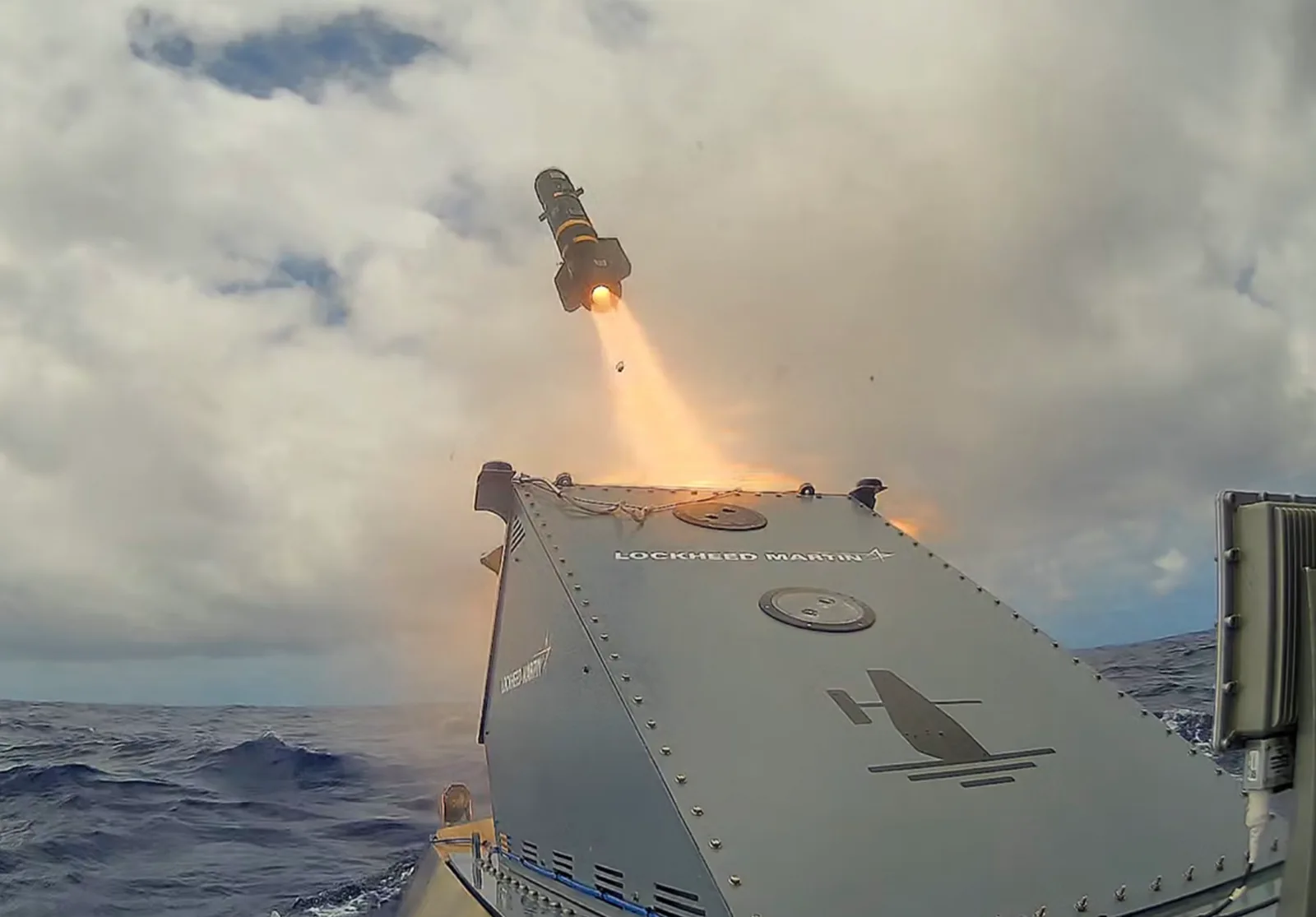
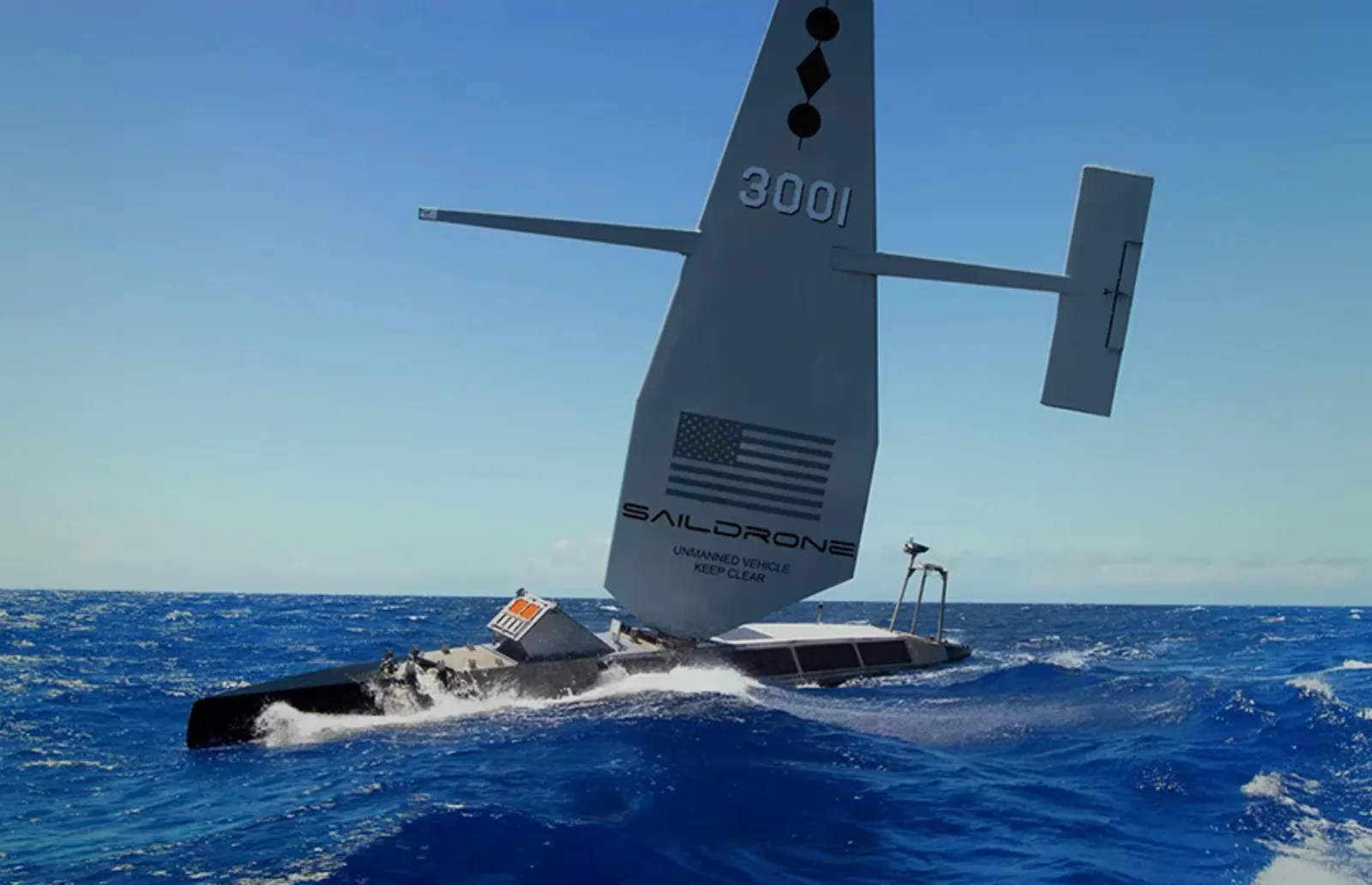
A Saildrone Surveyor uncrewed surface vessel fired two Lockheed Martin Joint Air-to-Ground Missiles off the coast of Hawaii during the U.S. Navy's Rim of the Pacific 2026 exercise, the first live missile launch ever conducted from one of the wind-powered robot ships. Saildrone disclosed the demonstration on Aug. 20, roughly three weeks after RIMPAC wrapped up on July 31.
The kill chain still ran through Navy hands
The 66-foot Surveyor engaged a surrogate high-speed surface craft while the Navy's Adjunct Remote Engagement System handled weapons control, meaning a human operator, not the vessel, made the shoot decision. The event was staged in coordination with the USS Theodore Roosevelt Carrier Strike Group and sponsored by the U.S. Navy Fleet Experimentation Program, the service's fast lane for testing new technology inside real exercises.
Lockheed's Joint Air-to-Ground Missile is the in-production successor to the Longbow Hellfire. What changed at RIMPAC is not the munition but its platform: a hull family Saildrone says has logged more than two million autonomous nautical miles, from NOAA hurricane runs to GPS-denied patrols in the Middle East.
A $50M check turned into live rounds in six months
Lockheed Martin invested $50 million in Saildrone in October 2025 and became lead mission integrator while Saildrone kept the shipbuilding. Six months of joint engineering later, an integrated launcher was firing live rounds. Richard Jenkins, Saildrone's founder and CEO, said the test paired a trusted munition with "the most operationally deployed class of USV on the planet." Paul Lemmo, Lockheed's Vice President and General Manager of Sensors, Effectors and Mission Systems, said the companies will keep investing "in new capabilities ahead of need." The Surveyor also deployed a passive electronic-warfare sensor during the same exercise, identifying a surrogate threat radar while working with an MH-60 helicopter.
Bigger hulls, containerized launchers next
Saildrone's 170-foot Spectre, the 52-meter anti-submarine variant unveiled with Lockheed Martin, is designed to carry the containerized Mk 70 launcher and towed sonar arrays and can accommodate up to five 20-foot containers on a concealed deck. The first Spectre is under construction. Saildrone was already testing the JAGM launcher at RIMPAC in July and has previously trialed towed sonar with Thales. If a Mk 70 shot leaves a Spectre deck before RIMPAC 2028, a wind-powered robot ship will be carrying the same missile cells as an Arleigh Burke destroyer.
Reporting based on Saildrone, Lockheed Martin and DroneXL coverage.