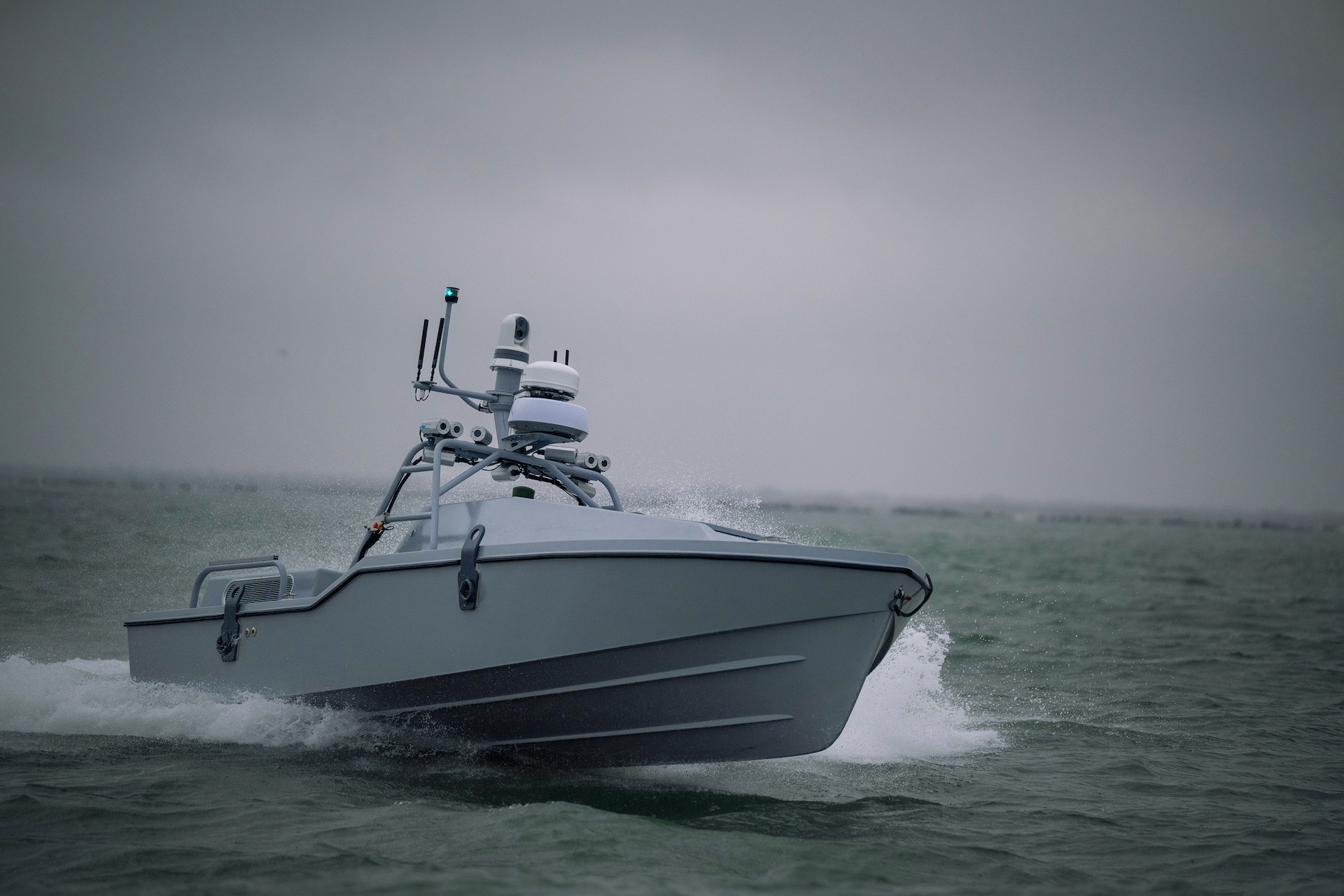
The U.S. military deployed a Saronic-built Corsair autonomous surface vessel to find and recover two U.S. Army Apache aviators near the Strait of Hormuz on Monday, June 8, 2026, after their AH-64 helicopter crashed during a patrol over the Strait, U.S. Central Command spokesperson Capt. Tim Hawkins confirmed to DefenseScoop. It marks the U.S. military's first publicly acknowledged use of an unmanned surface vessel to recover aircrew in real-world warfare.
Task Force 59 puts unmanned vessels into combat operations
The Corsair belonged to U.S. 5th Fleet's Task Force 59, the Navy's unmanned systems and AI integration unit based in Bahrain. Hawkins said the surface drone picked the two pilots up out of the water and ferried them to a separate location where a helicopter hoisted them up for further transport. Task Force 59 began fielding Corsair vessels in theater in late March, deploying them for patrol, watercraft inspection and maritime domain awareness as tensions with Iran escalate.
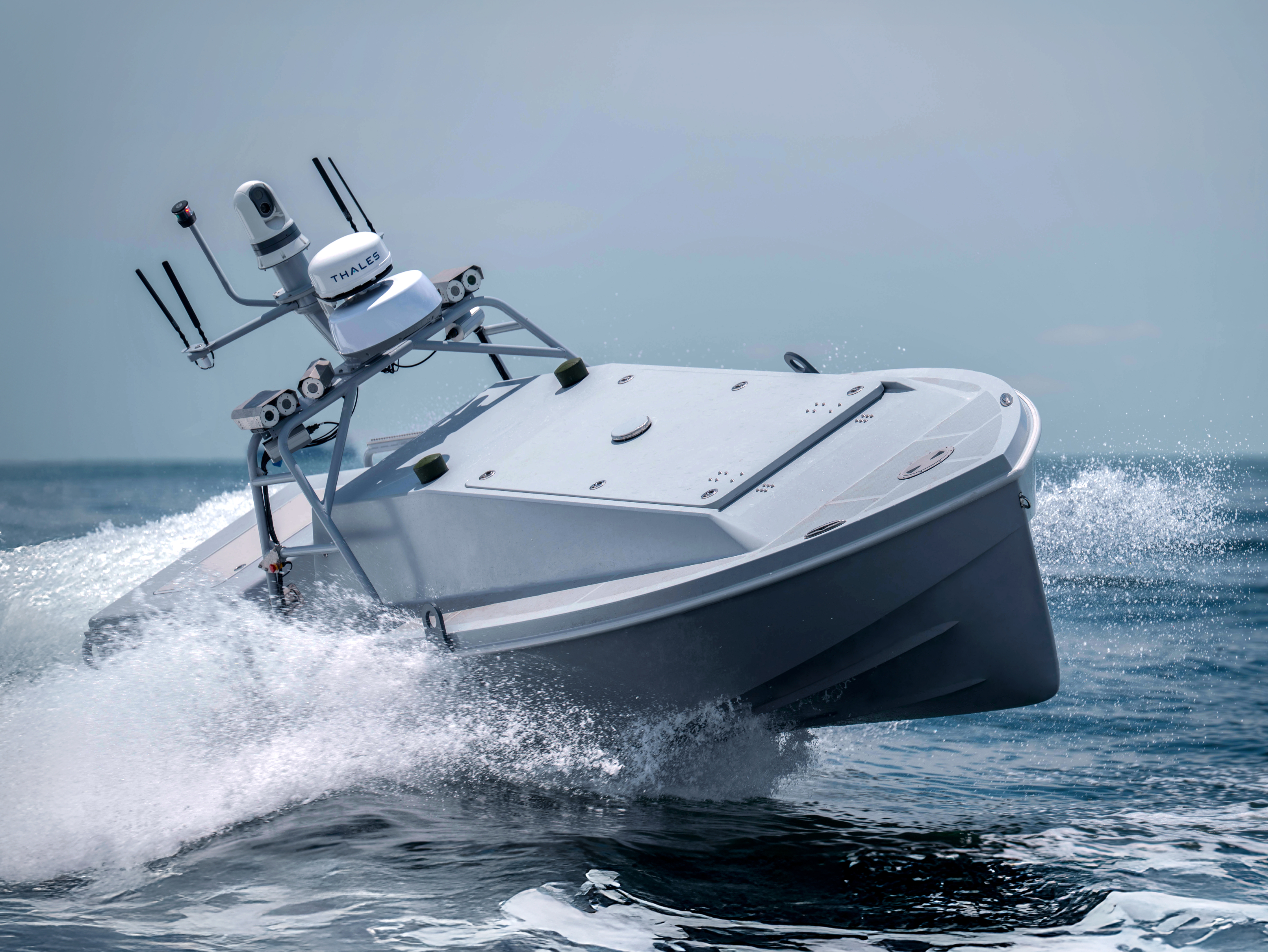
A 24-foot ASV with 360-degree passive sensing
The Corsair is a 24-foot autonomous surface vessel (ASV) designed for rugged, long-duration missions. It can operate at speeds greater than 35 knots and carry up to 1,000 lbs over 1,000 nautical miles, with 360-degree passive sensors providing day and night surveillance. Texas-based Saronic builds the platform alongside its larger 52-foot Mirage and 180-foot Marauder vessels, with full production secured under a Navy other transaction agreement worth more than $392 million signed in 2025.
Saronic's escalating role in U.S. naval operations
Saronic raised $1.75 billion in a Series D round earlier this year at a $9.25 billion valuation to scale autonomous warship production. The company recently launched the 180-foot Marauder MUSV from its Franklin shipyard in Louisiana and is one of the firms competing in the U.S. Navy's MUSV marketplace demos alongside Leidos and HII.
What it signals
President Donald Trump confirmed in a social media post that both pilots were uninjured and said Iran had shot down the Apache. Centcom said the soldiers were safely rescued within roughly two hours of the incident. The successful recovery is likely to accelerate Pentagon procurement of attritable, AI-enabled surface drones for personnel recovery and contested patrol missions, expanding a role that has traditionally fallen to crewed search-and-rescue helicopters.
Reporting based on coverage from DefenseScoop, Reuters and U.S. Central Command.