Munich-based SE3 Labs has raised $30 million in a Series A round led by Accel, with Keen, Lakestar and Seedcamp also participating, the company said on November 12, 2026. The round arrives less than five months after SE3's €5.5 million ($6.1 million) seed round, according to Fortune. The company has not disclosed a valuation.
What does SE3's software actually do?
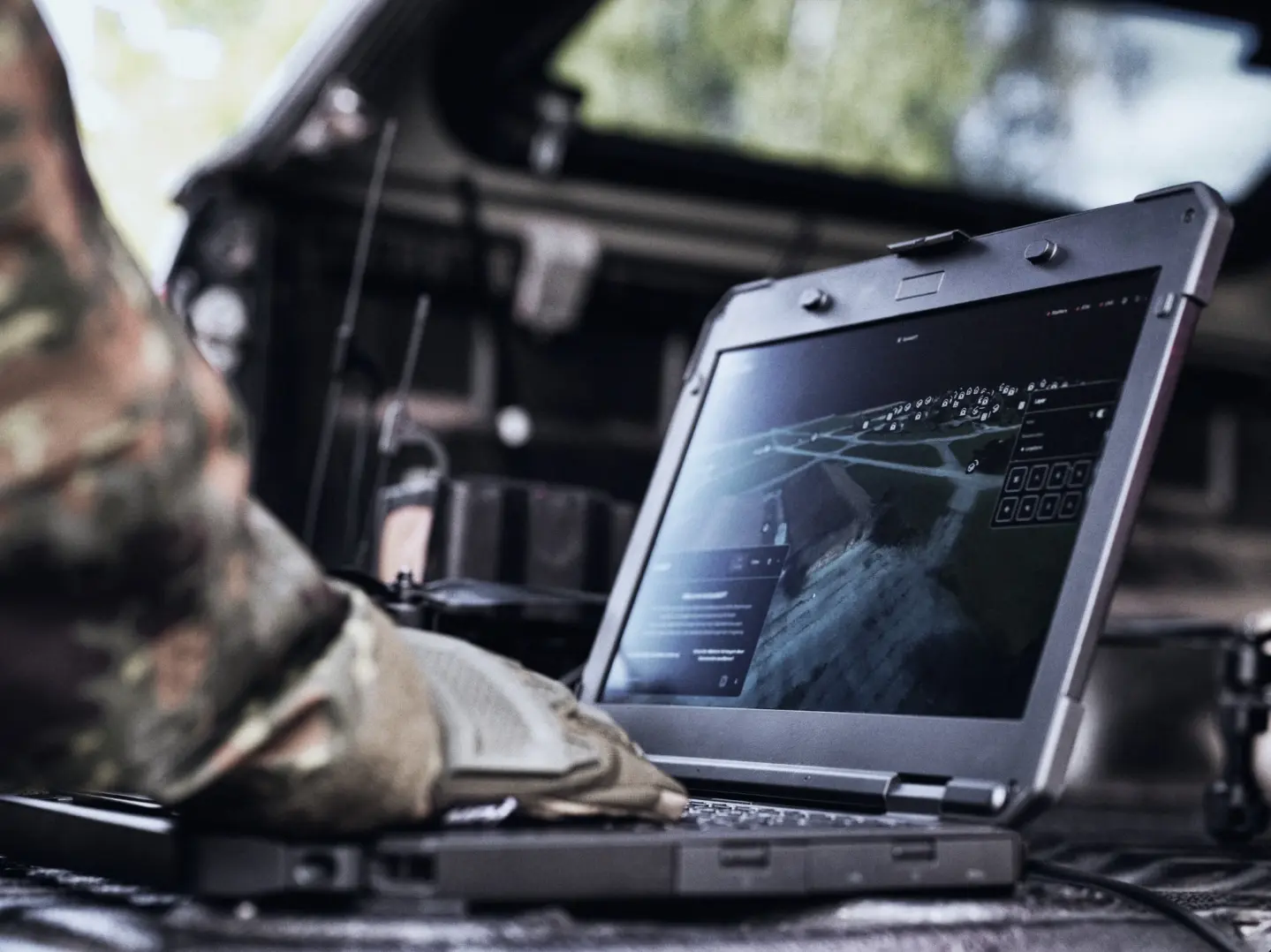
SE3 builds what it calls spatial intelligence software: AI that lets machines understand where things are in three-dimensional space. In practice, that means fusing live video and sensor data from multiple drones and ground vehicles into one shared 3D model of a battlefield, instead of leaving each operator staring at a single narrow camera feed.
The system automatically detects and labels objects like vehicles, people and buildings, and lets a soldier type or speak a plain-language question — something like "show every vehicle within 500 meters of the bridge" — and get an answer instantly rather than manually scanning footage. Drones running SE3's software can also be controlled by voice and can navigate without GPS, a critical feature on battlefields where satellite positioning is routinely jammed or spoofed. The platform further supports swarm coordination, letting several unmanned systems work from the same spatial map at once.
SE3 was spun out of the computer vision laboratory at the Technical University of Munich. Co-founders Lukas Köstler, chief executive, and Simon Klenk, chief technology officer, lead the company, with TUM professor Daniel Cremers serving as chief science officer. The software is already used by Germany's armed forces, the Bundeswehr, and has been deployed in Ukraine, with partners including defense electronics maker Hensoldt, drone-software firm Auterion and ERC.
Why is this round happening now, and what will the money fund?
GPS denial has become routine rather than exceptional on modern battlefields, which makes autonomous navigation without satellite positioning a baseline requirement instead of a nice-to-have feature. That shift is a big part of why investors moved fast on a second round so soon after SE3's seed. The company plans to roughly triple its headcount, from about 40 employees to around 120, and will use the new funding to build out its engineering team and expand sales to NATO militaries beyond Germany.
Who competes with SE3, and what comes next?
Germany's defense-tech sector has grown quickly, with Munich emerging as a hub alongside Berlin-based Helsing. SE3's closest comparisons are companies building AI-driven battlefield awareness, such as Palantir's military AI tools and Anduril's Lattice operating system, though SE3 is narrower in scope, focused specifically on fusing drone and ground-vehicle sensor data into 3D maps rather than full weapons targeting or command systems.
Expect SE3 to pursue additional NATO contracts, extend its swarm-coordination tools to larger numbers of drones, and likely raise a Series B once it can point to measurable gains in reconnaissance speed or decision-making on the ground.