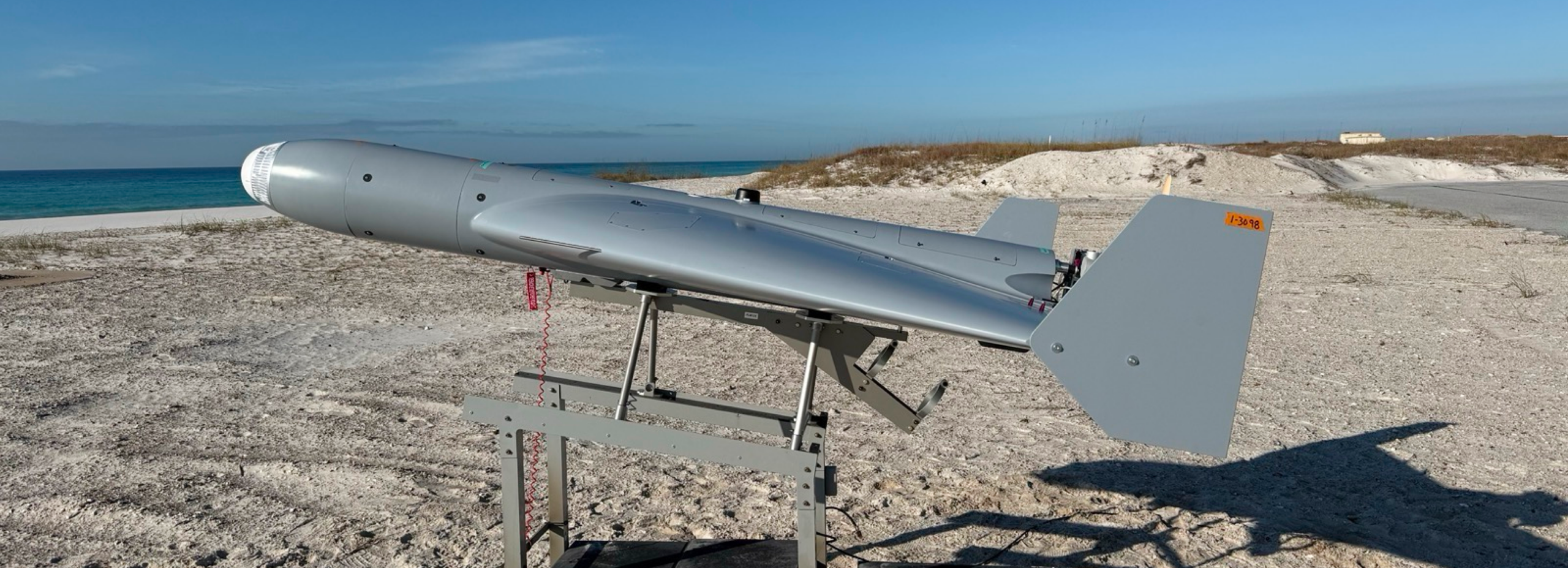
The Office of the Under Secretary of War for Research and Engineering has selected Shield AI to integrate its Hivemind autonomy software onto the Low-Cost Uncrewed Combat Attack System (LUCAS), the U.S. military's new family of cheap one-way attack drones. The award, announced May 19, 2026, makes Hivemind the AI pilot of a program designed to give warfighters "affordable mass" against modern air defenses.
What LUCAS Is And Why It Matters
LUCAS is a roughly 10-foot, $35,000 one-way attack drone reverse-engineered in part from the Iranian Shahed-136 family that Russia has launched in salvos over Ukraine. It is run by the Office of the Deputy Assistant Secretary of War for Prototyping and Experimentation under OUSW R&E, and its purpose is mass over exquisiteness — deploying enough low-cost systems together to overwhelm adversary defenses and stretch enemy interceptor inventories. The contract sits inside a broader drone procurement push that the Department of War has framed as a 30,000-unit, $1.1 billion campaign across the Drone Dominance program.

How Hivemind Changes The Mission
Hivemind will let a single operator command groups of LUCAS drones that coordinate, maneuver and reroute autonomously based on warfighter input, while humans retain the strike-decision authority. "LUCAS is about delivering affordable mass, but mass without coordination is limited in value," said Brandon Tseng, Shield AI president and co-founder. "Hivemind is the AI pilot that makes that mass intelligent." Unlike traditional autopilots that follow preplanned routes, Hivemind reroutes mission plans dynamically, responds to unexpected conditions and avoids obstacles in flight — capabilities the company has already flown on the U.S. Air Force's Collaborative Combat Aircraft program aboard Anduril's YFQ-44A, the Navy's BQM-177 target drone and Airbus's UH-72B Lakota helicopter.
A Fall Demo And A Larger Autonomy Bet
The integration will culminate in an operational demonstration later this year in which a single operator will command a swarm of ten or more LUCAS drones in coordinated flight. That maps directly to the Pentagon's wider experimentation calendar: the CDAO's Crucible 2 Swarm Forge event runs June 22–26 at Camp Blanding, Florida, where industry teams must demonstrate end-to-end autonomous mission completion across intelligence, surveillance, reconnaissance and targeting tasks. We covered the selection of the 25 companies invited to Crucible 2 and the recent $500M Perennial Autonomy counter-drone IDIQ, both pieces of the same autonomous-warfare buildout. For deeper context on the Drone Dominance program, see our earlier piece on Drone Dominance Phase II at Camp Grayling.
Where The Money Is Going
Shield AI sits at the center of the Pentagon's pivot toward collaborative autonomy. The company's broader contract base — Hivemind on the YFQ-44A, on Destinus Hornet, on Thunder Tiger maritime platforms — gives it one of the largest installed autonomy footprints among defense-tech startups. With the LUCAS award now public, the path is clearer from one-off integrations to platform-agnostic mission autonomy across the U.S. inventory.
Reporting based on coverage from Shield AI, Breaking Defense, Inside Unmanned Systems and Defence Industry Europe.