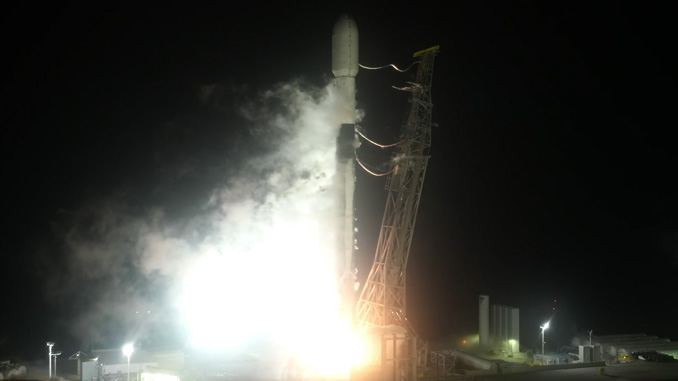
A SpaceX Falcon 9 lifted off from Vandenberg Space Force Base at 1:42 a.m. PDT on September 1, 2026 with 27 Starlink V2 Mini satellites bound for low Earth orbit — the company's 104th orbital launch of the year and its 79th dedicated Starlink mission of 2026.
B1063 flies for a 35th time
Booster B1063, one of SpaceX's most heavily-used first stages, made its 35th flight on the Starlink 15-23 mission after taking a south-easterly trajectory out of Space Launch Complex 4-East. Following stage separation the booster landed on the drone ship "Of Course I Still Love You," stationed in the Pacific Ocean off Baja California. SpaceX confirmed successful deployment of the 27 V2 Mini satellites from the Falcon 9 upper stage just over an hour into flight.
West Coast becomes the Starlink workhorse
SpaceX is now basing its Starlink launch operations on the West Coast as it focuses Cape Canaveral efforts on preparing for the East Coast debut of its Starship vehicle. That leaves Vandenberg's SLC-4E carrying most of the constellation's growth cadence, with Falcon 9 boosters cycling back through droneships almost every week.

2026 is already SpaceX's biggest launch year ever
The Starlink 15-23 mission comes just days after SpaceX hit 100 orbital launches in 2026 and one week after the Roman Space Telescope launch aboard Falcon Heavy. Starlink now has more than 11,000 active satellites in low Earth orbit — a constellation growing faster than any operator in history.
SpaceX's Vandenberg cadence is also benefiting from booster reuse records: Falcon 9 first stages routinely fly 30+ missions each, dropping per-launch costs and keeping the East Coast pads free for Starship, Dragon, and national-security payloads. The company aims to close 2026 with well over 140 orbital launches, extending its lead over every other launch provider combined.
Reporting based on coverage from Spaceflight Now.