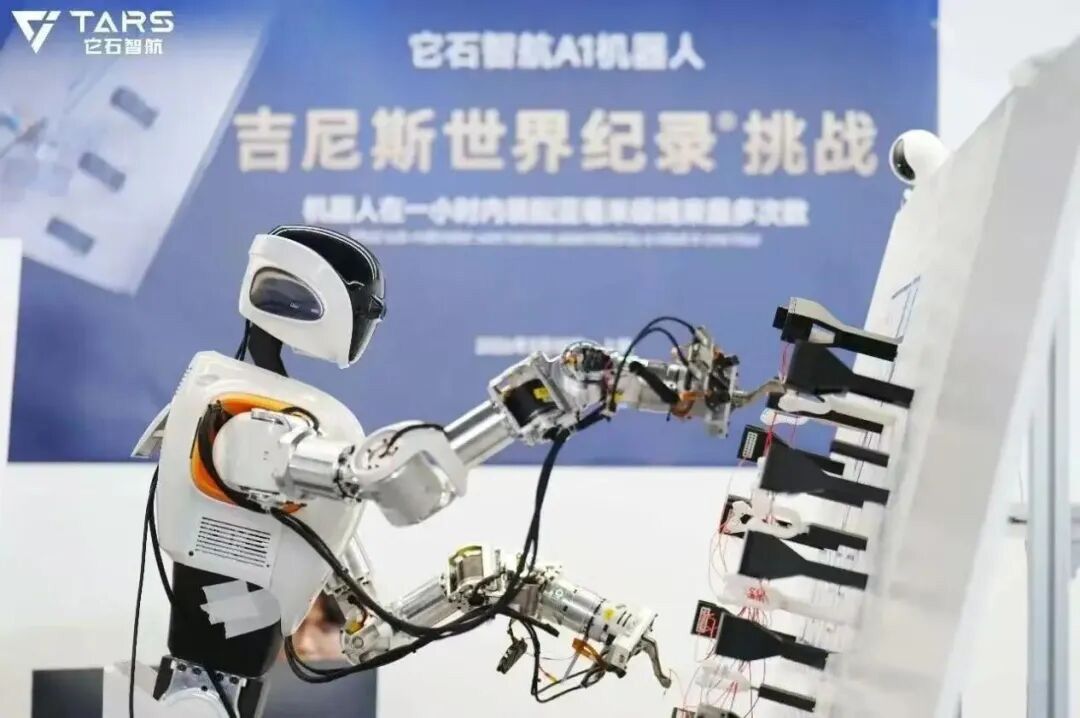
Tars Robotics Breaks Precision Assembly Record with Revolutionary AWE 3.0 System
Tars Robotics has unveiled its groundbreaking AWE 3.0 robotic system, setting new industry standards for precision assembly tasks. The advanced platform demonstrates unprecedented accuracy in manufacturing applications.
Key Takeaways
Tars Robotics launched its Advanced Work Environment (AWE) 3.0 system, setting a new industry record for precision assembly operations.
AWE 3.0 combines cutting-edge sensor technology with advanced AI algorithms to achieve assembly tolerances previously thought impossible for automated systems.
Electronics, automotive, and aerospace manufacturers are expected to benefit most, given their need for extreme precision in component assembly.
The system performs intricate assembly tasks with minimal human intervention, promising higher production efficiency and lower manufacturing costs.
The record positions Tars Robotics as a leading innovator in the competitive industrial automation market.
The Robotics Media Editorial
Tars Robotics has achieved a significant milestone in industrial automation with the launch of its Advanced Work Environment (AWE) 3.0 system, which has simultaneously set a new industry record for precision assembly operations. This breakthrough represents a major leap forward in robotic manufacturing capabilities, potentially transforming how complex assembly tasks are performed across various industries.
Revolutionary Precision Capabilities
The AWE 3.0 system showcases remarkable advancements in robotic dexterity and accuracy, addressing longstanding challenges in precision manufacturing. The platform integrates cutting-edge sensor technology with advanced AI algorithms to achieve assembly tolerances previously thought impossible for automated systems. This development positions Tars Robotics at the forefront of the competitive industrial robotics market, where precision and reliability are paramount.
Industry Impact and Applications
The record-breaking performance of the AWE 3.0 has significant implications for manufacturers seeking to automate complex assembly processes. Industries such as electronics, automotive, and aerospace, which require extreme precision in component assembly, stand to benefit substantially from this technological advancement. The system's ability to handle intricate tasks with minimal human intervention could lead to increased production efficiency and reduced manufacturing costs.
Market Positioning and Future Outlook
This achievement solidifies Tars Robotics' position as an innovator in the rapidly evolving industrial automation sector. The AWE 3.0's record-setting capabilities demonstrate the company's commitment to pushing technological boundaries and meeting the growing demand for sophisticated manufacturing solutions. As industries continue to embrace automation, systems like the AWE 3.0 are likely to become essential tools for maintaining competitive advantages in global markets.
AWE 3.0, short for Advanced Work Environment 3.0, is Tars Robotics' new robotic platform for precision assembly that integrates advanced sensor technology with AI algorithms to achieve record-setting assembly tolerances.
What record did the AWE 3.0 set?
The AWE 3.0 set a new industry record for precision assembly operations, achieving accuracy levels previously thought impossible for automated systems.
Which industries stand to benefit from the AWE 3.0?
Industries requiring extreme precision in component assembly, such as electronics, automotive, and aerospace, are expected to benefit through increased production efficiency and reduced manufacturing costs.
How does the AWE 3.0 reduce manufacturing costs?
By handling intricate assembly tasks with minimal human intervention, the system can boost production efficiency and lower overall manufacturing costs.