AI infrastructure startup Tensormesh announced on May 27 that it has raised $20 million in new funding and launched the general availability of its inference platform, taking direct aim at one of the most expensive and least visible problems in production AI: repeatedly recomputing the same context every time a model is queried.
The new round, an extension of the company's seed financing, brings Tensormesh's total raised to $24.5 million. AMD Ventures, CoreWeave, NVentures (NVIDIA's venture arm), Valley Capital Partners and Laude Ventures all participated, according to coverage from Tech Startups and an announcement carried by Business Wire.
What Tensormesh Inference does
Tensormesh Inference is built around KV caching, a technique that stores the key-value tensors a model produces while processing a prompt so they can be reused on later requests rather than recomputed from scratch. When system prompts, chat history, tool definitions and document context repeat across calls — a common pattern in agentic workflows — the savings compound quickly.
The company claims its platform can cut latency and GPU spend by up to 10x compared with running the same workloads without cache reuse. To make the savings auditable, Tensormesh exposes cache hit rates, GPU utilization, token-level costs and savings in real time through a dashboard, contrasting itself with inference providers that quietly cache tokens without showing customers what is being reused.
A research project turned infrastructure layer
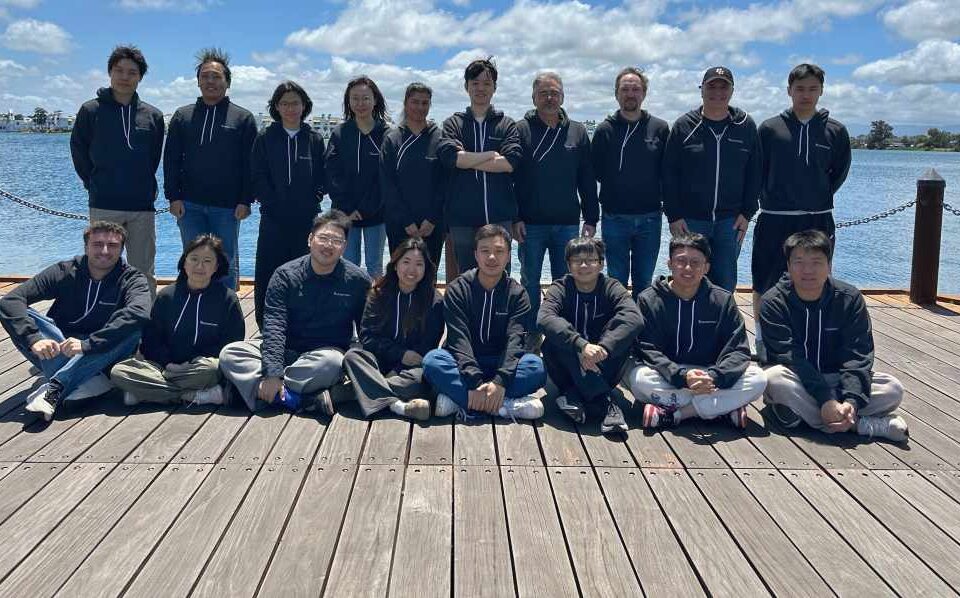
Tensormesh was founded by faculty, PhD researchers and alumni from the University of Chicago, UC Berkeley and Carnegie Mellon. CEO Junchen Jiang is a University of Chicago faculty member and a co-creator of LMCache, the open-source KV caching project the company commercializes. Tensormesh says LMCache now has more than 8,000 GitHub stars and integrates with vLLM, NVIDIA TensorRT and Dynamo, AWS SageMaker, Oracle OCI Data Science and SGLang.
Aggressive pricing reinforces the message. Tensormesh says cached input tokens served from KV storage will carry a permanent $0 cost across its serverless deployments, while reserved deployments target enterprises that need dedicated capacity and custom service-level agreements.
Why hyperscaler money is flowing in
The investor list is unusual: AMD, CoreWeave and NVIDIA all back a startup whose product reduces the number of GPU cycles their hardware needs to consume. Each has framed the bet as complementary rather than cannibalistic.
"As enterprises scale AI workloads, maximizing every GPU cycle is critical. Software innovations like KV caching are a powerful complement to raw accelerator performance," said Ramine Roane, corporate vice president of AI at AMD, in the company's announcement. CoreWeave co-founder Brannin McBee called the work "the kind of foundational innovation" his fund is committed to backing.
Samsung Electronics is also working with Tensormesh on storage optimization tied to next-generation AI infrastructure, with Samsung NAND vice president Leno Park citing "intelligent reuse of cached state" as a major lever for cost efficiency.
Where it fits in the wider inference race
The deal lands in a busy month for AI infrastructure financing. Last week, OpenRouter raised $113 million to build out its model routing layer, while Broadcom unveiled a 50G PON gateway chip with edge AI and NVIDIA's Vera Rubin ramp continued to strain TSMC's Taiwan supply chain. Funding is increasingly flowing not just to model labs but to the software layers that make inference cheaper.
For Tensormesh, the longer-term bet is that as enterprises move AI applications from pilots into production, inference efficiency becomes one of the defining battles in the stack. The $20 million round is the down payment on that thesis.
Reporting based on coverage from Tech Startups, Business Wire and HPCwire.