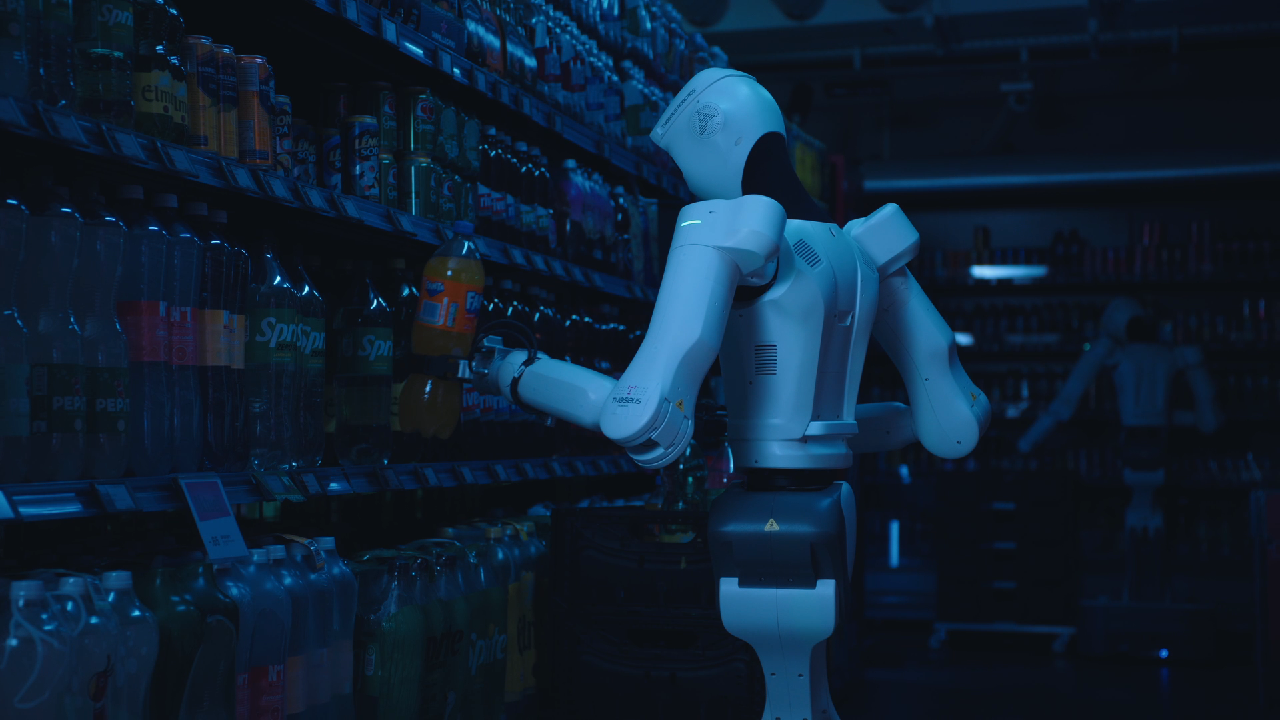
Theseus Robotics, a Zurich-based startup building wheeled humanoid robots for grocery stores, has raised $500,000 from Y Combinator as part of the accelerator's Fall 2026 batch, according to startupticker.ch. The company, founded by CEO Samarth Malhotra with CTO Kristóf Floch, Chief Research Officer Jianwen Cao and CPO Ádám Weinhardt Kovács, previously raised undisclosed amounts from Swiss and European backers including Founderful Campus, S2S Ventures, Earthling VC and Caesar Ventures. The new funding, confirmed in November 2026, follows pilot deployments with supermarket and pharmacy retailers across Europe and the US.
Theseus's robot, named Theo, works overnight: it picks online grocery orders until 9 p.m. and then restocks shelves until 9 a.m., moving up to 400 units an hour while picking roughly 40 units an hour. Force sensors let it handle fragile items, and its software checks shelf layouts against retailer planograms before placing products. Two unnamed major US online delivery platforms are among its pilot customers, alongside European grocery and pharmacy chains.
Why Retail Is a Testbed for Humanoid Robots
Supermarkets are an unusually forgiving environment for a young humanoid robotics company: aisles are structured, lighting is consistent, and the task of moving boxed and bagged goods between a cart and a shelf is repetitive enough to automate without the dexterity challenges that trip up robots in homes or hospitals. That makes grocery restocking a plausible first commercial wedge, the same logic several warehouse-robot makers have applied before attempting harder manipulation tasks. Running overnight, when stores are closed and foot traffic is zero, also sidesteps the safety-certification hurdles that slow humanoids working alongside shoppers or staff during the day.
It also means Theseus can collect real operating data - units per hour, error rates, planogram accuracy - from paying pilot customers rather than lab demonstrations, data that matters more to retail buyers than a robot's ability to walk on two legs.
A Small Check in a Crowded Humanoid Market
Half a million dollars is a token amount next to the raises recently closed by humanoid makers like RobotEra, which raised $140.8 million in a Series A, or Simplexity Robotics, which closed $100 million in a pre-Series A round at a $1.6 billion valuation. The gap reflects Theseus's early stage rather than its ambition. Its closest competitive comparison isn't other humanoid builders but narrower retail automation players such as Bossa Nova Robotics and Simbe Robotics, which used fixed shelf-scanning robots rather than general-purpose humanoids to attack inventory problems a decade earlier, with mixed commercial results.
Theseus is betting that a wheeled humanoid, rather than a purpose-built cart or arm, will be cheaper to redeploy across different store layouts without custom integration. That bet only pays off if Theo's throughput holds up outside pilot stores and if grocery chains are willing to pay for a general-purpose robot instead of cheaper fixed automation. The company's own roadmap - broader pilots in Switzerland, Germany and the US in the first quarter of 2027, plus its first full US grocery deployment in Silicon Valley - will be the next signal of whether that wager is working.