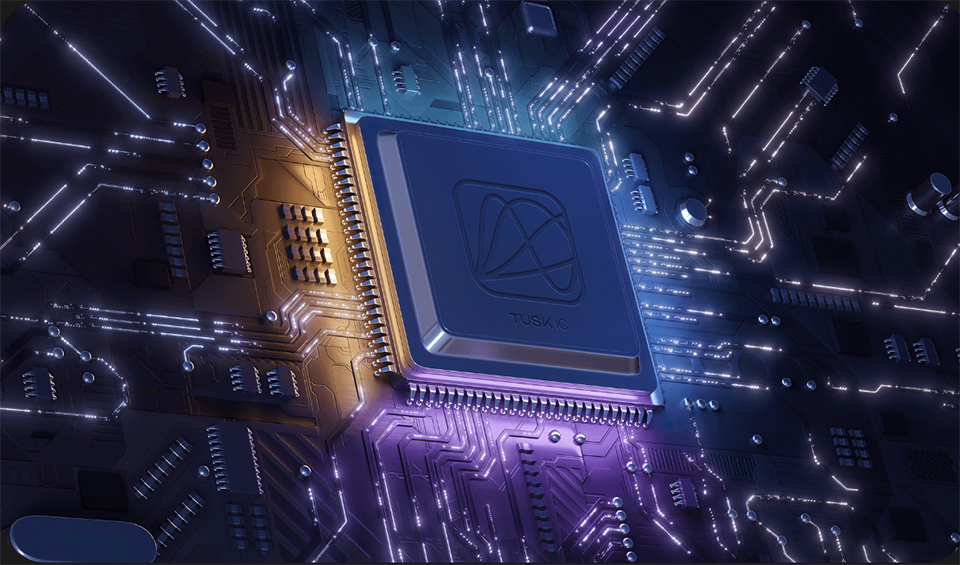
Belgian mmWave semiconductor startup TUSK IC has closed a €15 million Series A led by Matterwave Ventures and Forward.one, joined by the Flanders Future Tech Fund and members of the Schaubroeck family, to push its Ka-band beamformer chips from lab prototype into mass production for the next wave of flat-panel satellite terminals.
What the chips do
Spun out of KU Leuven's MICAS research group in 2018, TUSK IC designs the RF silicon that lets a flat-panel antenna aim itself electronically at a fast-moving low- or medium-Earth-orbit satellite, replacing the motorised dishes still used across VSAT, in-flight connectivity and defence terminals. Its catalogue centres on three Ka-band ICs — the TUSK-BC1103 transmit beamformer, TUSK-BC2103 receive beamformer and TUSK-LN0101 low-noise amplifier — packaged with active antenna tiles into a scalable ConnecTile reference platform.
From 100 prototype chips to volume
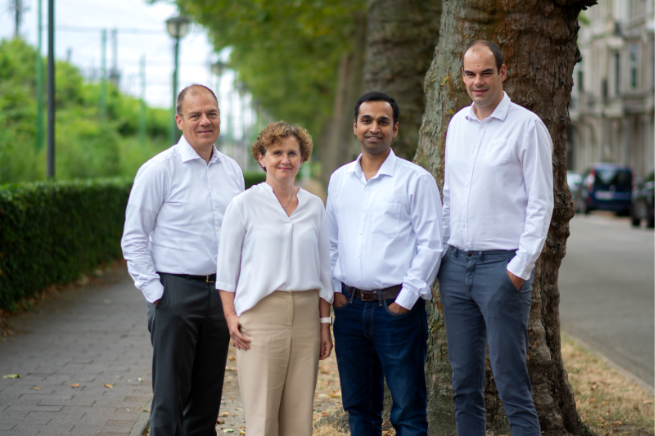
The company had already booked a European Space Agency development contract in July to commercialise the design; today's Series A is what finances the leap from roughly one hundred prototype units in customer hands to true production volumes. Matterwave partner Silviu Apostu called it "leading-edge mmWave innovation with the economics and scalability of standard CMOS," while chief executive Kathleen Philips said the money "gets us from prototype chips to high-volume production."
Why now
Silicon-based active antennas are the piece Europe's satcom stack has been missing as LEO capacity ramps and terminals move toward user-installable, motor-free hardware. TUSK IC sits alongside a growing list of European deeptech chip bets — from EUCLYD's $231M for AI silicon to Circuits Integrated Hellas' Ka-band pre-seed — that are trying to relocate the physical-layer parts of the internet onto European wafers before the next satellite generation locks in its suppliers.
Reporting based on coverage from IO+, Bits&Chips, TechStartups and TUSK IC.