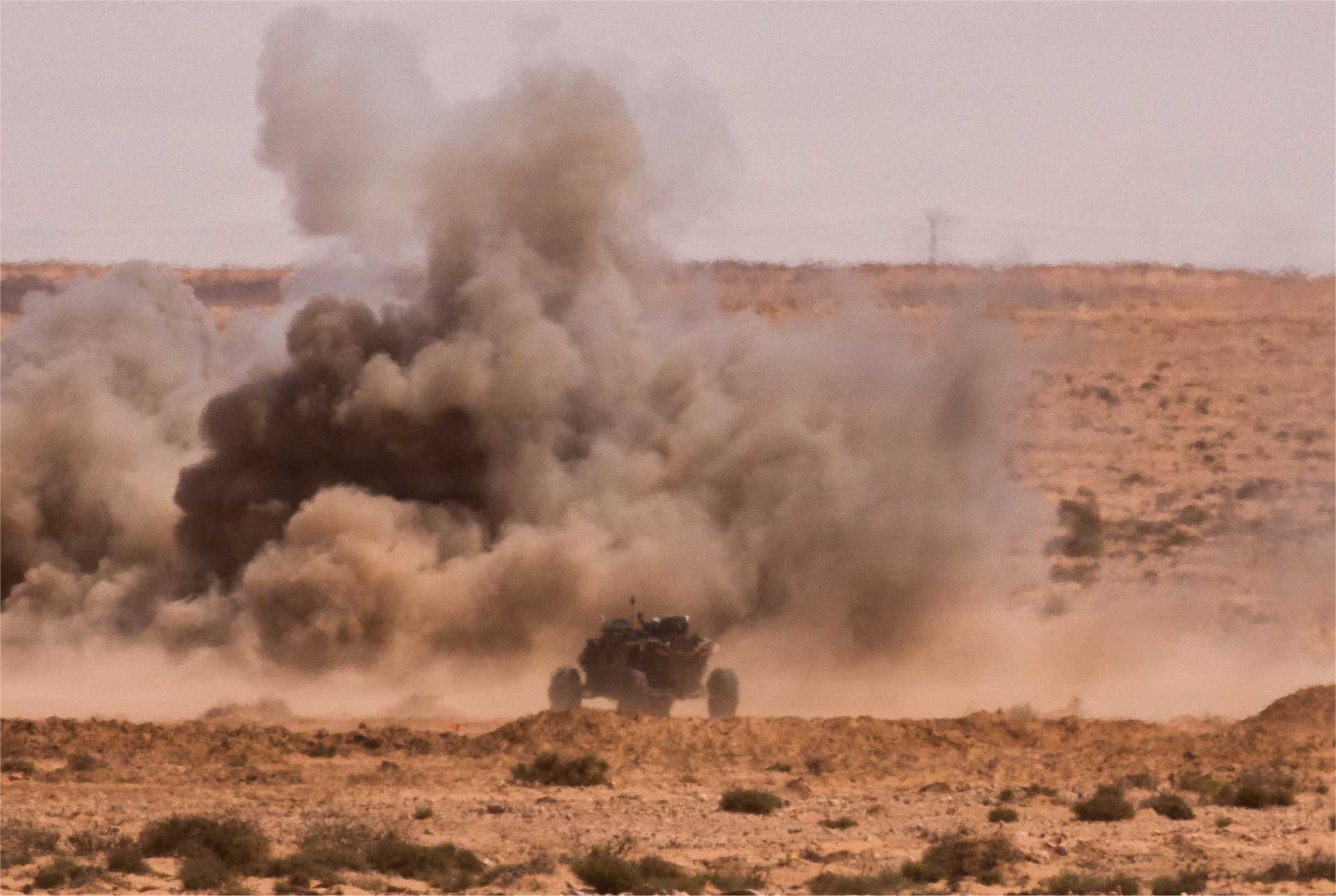
The U.S. Army has staged its first major robot-assisted assault exercise inside African Lion 26, the Pentagon's largest annual exercise on the African continent. Paratroopers from the 173rd Airborne Brigade Combat Team teamed with Moroccan forces to execute a live counterattack at Cap Draa, Morocco, using unmanned ground vehicles to lead the assault while soldiers maneuvered behind them under cover.
Robots Take The First Risk
The exercise combined robotic platforms with maneuver forces in a coordinated assault designed to extend battlefield reach, improve survivability and accelerate decision-making in modern combat. Unlike traditional airborne infantry drills, the African Lion 26 lane emphasized stand-off operations enabled by autonomous battlefield systems capable of reconnaissance, route clearance, sensor emplacement and forward support tasks ahead of human troops. The unmanned ground vehicles synchronized with maneuver units so commanders could distribute risk across both autonomous and conventional forces.

Lessons From Ukraine Driving U.S. Doctrine
Army planners cited hard lessons from Ukraine, where inexpensive UAVs and ground robots have transformed modern combat. Pentagon strategists are accelerating efforts to embed robotic systems into frontline formations that must survive in highly transparent battlespaces where massed infantry movement without autonomous support carries growing risk. For airborne units that deploy fast with limited armor and logistics, robots that can scout, resupply ammunition, evacuate casualties or run electronic surveillance offer real operational endurance.
Beyond Lab Demos, Into Tactical Doctrine
The drill is part of a broader U.S. Army shift away from siloed robotics demonstrations toward direct integration of unmanned systems into tactical decision-making cycles. Robotic combat support, AI-enabled targeting, unmanned logistics and human-machine teaming programs are now considered core to maintaining overmatch against peer adversaries. African Lion 26 provided a live multinational environment for the U.S. to test those concepts under realistic field conditions with Moroccan partners.
Where Robotic Warfare Fits In 2026
The Cap Draa exercise lands in a particularly active month for autonomous defense systems, alongside the Pentagon's Drone Dominance Phase II gauntlet at Camp Grayling, the AUKUS Pillar II undersea drone project and Ondas' MODUS counter-drone and IRON WAVE robot combat suite.
Reporting based on coverage from Army Recognition and U.S. Department of War releases.