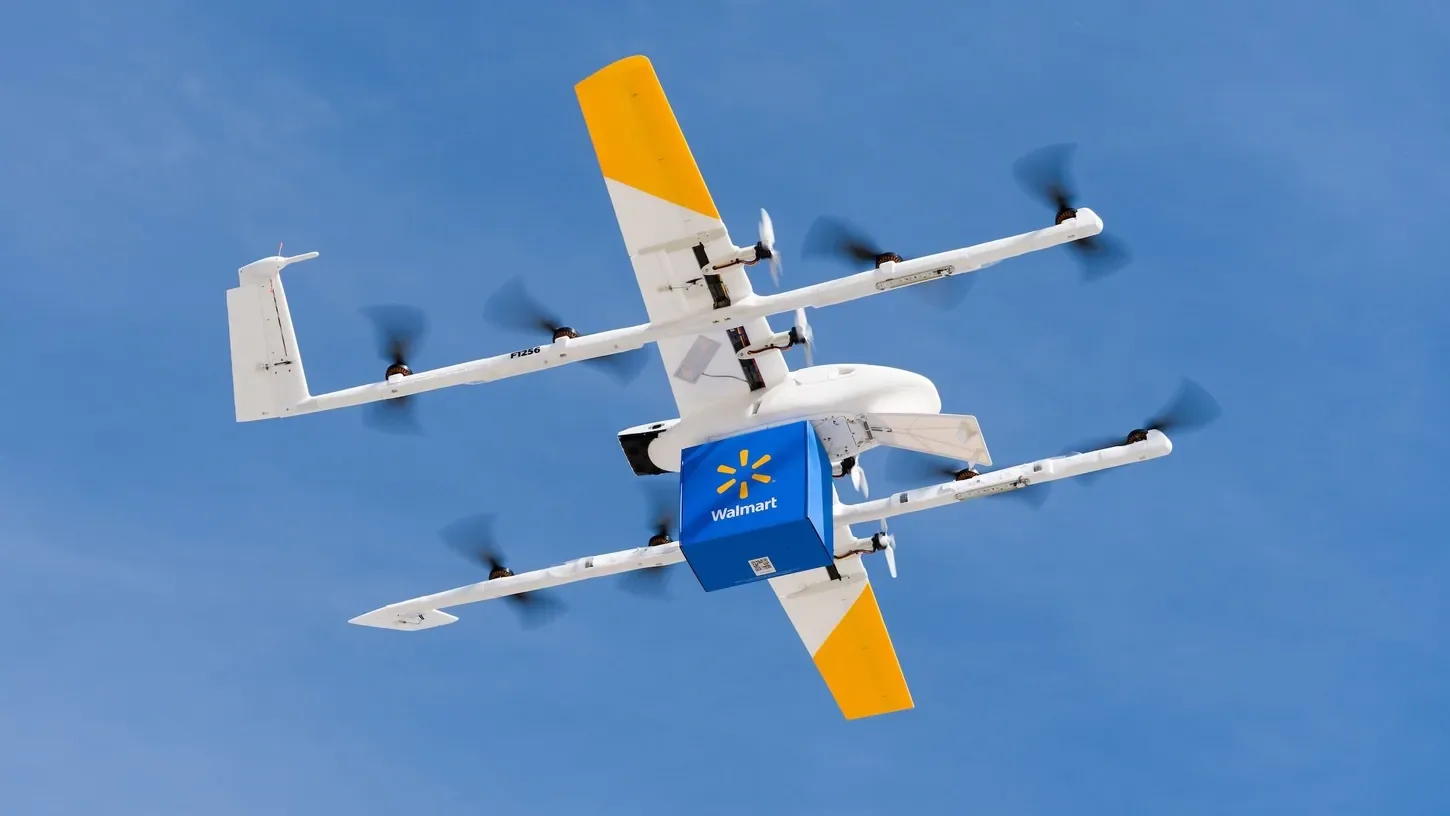
Walmart and Alphabet-owned Wing flew a demonstration drone delivery through Los Angeles' Little Tokyo neighborhood on November 26, dropping a small package outside the Japanese American National Museum as a preview of commercial service the two companies plan to switch on across the city in 2027, according to DroneXL. Los Angeles will become one of the newest additions to a drone-delivery network Wing says will cover more than 270 Walmart stores and reach upward of 40 million Americans once the 2027 rollout is complete.
The companies have not released an exact launch date, a list of which Walmart stores will host drone hubs, or pricing for the service. What is confirmed is the scale of the ambition: Los Angeles joins St. Louis, Cincinnati and Miami on Wing's list of newly announced markets, on top of cities already running the service, including Dallas-Fort Worth, Houston, Atlanta, Charlotte, Orlando and Memphis.
How does Wing's drone delivery actually work?
Wing's drones do not land in a customer's yard. They fly at roughly 150 to 200 feet, cruise at up to 60 miles per hour, and then hover in place while lowering the package to the ground on a tether — a method that avoids the noise and risk of touching down on unfamiliar terrain like decks, pools or parked cars. Today's drones carry up to 2.75 pounds, enough for a bag of groceries, a phone charger or a bottle of medicine; Wing says a heavier version capable of carrying 5 pounds is coming, which would open the door to bulkier household items.
Orders get placed through the Walmart app like any other delivery, then routed to the nearest participating store, where a drone launches, flies the package to the customer's address and returns for the next order — all without a pilot physically steering the aircraft. Wing's planes fly pre-mapped routes under remote supervision, with human operators watching multiple flights at once rather than controlling a single drone stick-by-stick.
Why is Walmart betting on drones now?
Walmart has framed the expansion as a response to demand it is already seeing: the retailer says adoption of drone delivery in its existing markets has been strong enough to justify tripling the service's footprint. For a company competing against same-day delivery from Amazon and instant-delivery apps, a drone that can drop a forgotten ingredient or a phone charger at a doorstep in minutes is a way to win the "I need this right now" purchases that otherwise go to a convenience store or a rival app.
The move also puts Walmart ahead of a crowded field angling for the same airspace. DoorDash's drone unit, DoorDash Air, has told reporters it would rather partner with Wing in Los Angeles than build a competing network from scratch — DoorDash Air head Harrison Shih has described the market as a "multiplayer game" where several delivery brands can share the same drone infrastructure. Wing has already run joint operations with DoorDash in Virginia and North Carolina, so a three-way arrangement in Los Angeles, splitting the same fleet of drones across Walmart and DoorDash orders, is a realistic next step.
What's left before launch?
Drone delivery still needs sign-off from the Federal Aviation Administration for each new market, plus local permitting for the physical launch pads Wing installs at participating stores. Los Angeles' dense skyline and busy airspace around LAX make it a tougher test than suburban markets like Charlotte or Orlando, so the exact 2027 start date will likely hinge on how quickly those approvals clear rather than on the technology itself.