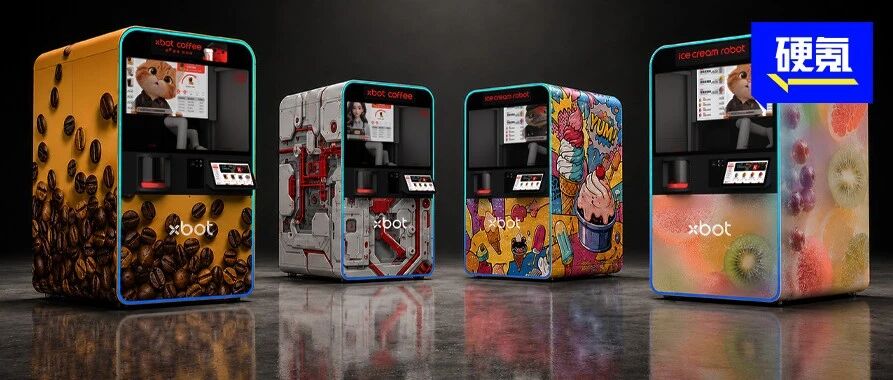
Chinese catering-robotics startup Yingzhi XBOT has closed roughly $56 million in a Series B round, cementing its position as the best-funded pure-play in the coffee-robot niche as global operators race for unmanned kiosk formats. The round of 300 to 500 million yuan is anchored by government funds, US-dollar funds and industrial investors, and follows a $28 million Series A from Hong Kong's GPTX.
From Kingsoft and Xiaomi to Coffee Robots
Founder Tang Mu is a rare product-manager-turned-CEO in the robotics industry, with prior stints running Kingsoft Software and Tencent CDC's experience design teams before serving as vice president of the Xiaomi Ecosystem Chain, where he shipped the Mi router and Mi Smart Speaker. Yingzhi XBOT was founded in Shenzhen in 2022 to attack what Tang calls the largest addressable commercial workflow that is also high-frequency and highly standardised: coffee. Angel backers include Tencent SVP Zhang Xiaolong, Xiaomi co-founder Li Wanqiang, Xiaomi's Lin Bin and HKUST executive vice president Guo Yike.
XOS 3.0 and a Four-Product Vertical Portfolio
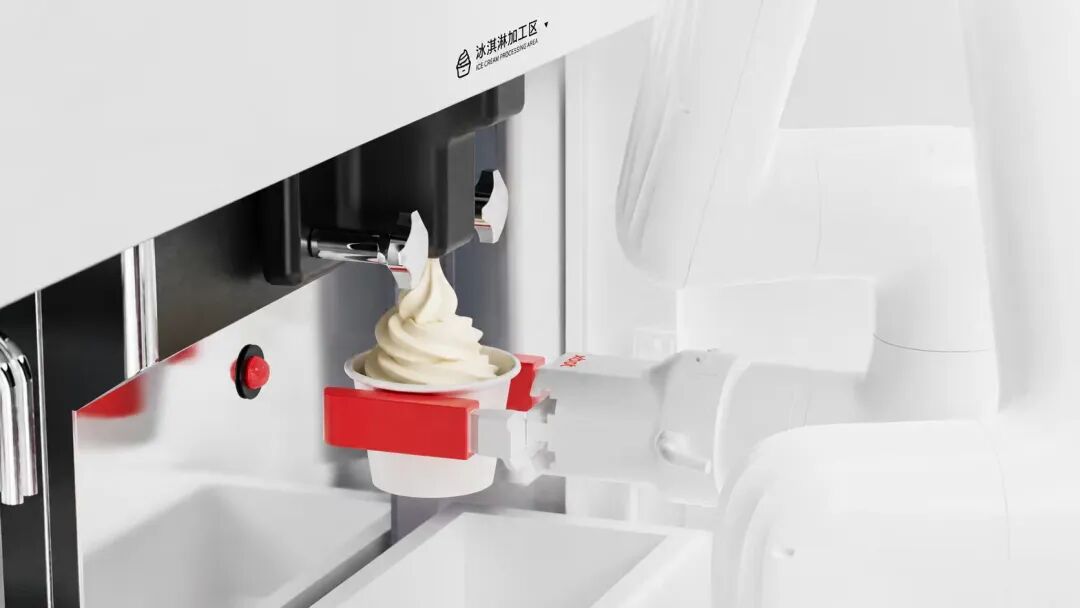
Rather than chase the generalist humanoid narrative that has driven mega-rounds for peers like AI2 Robotics, Yingzhi XBOT bets on a vertical stack. Its XOS 3.0 embodied operating system pairs the Zhiwei catering large model with a cerebellum layer that turns semantic instructions into joint-level commands in under 10 milliseconds. The company now ships four products: the XBOT C3 compact single-arm coffee kiosk priced at 219,000 yuan, the XBOT Lite dual-arm flagship, the XBOT IC60 ice-cream and dessert station at 179,000 yuan, and the XBOT X1 general-catering humanoid slated for late-2026 mass production. A mobile XBOT CUBE food-truck sits alongside them.
1,000 Robots, 4 Million Cups, RaaS Economics
More than 1,000 coffee robots are now deployed in 100+ cities across 10 markets, having produced over 4 million cups of coffee. Tang reports 2025 revenue exceeded 100 million yuan and 2026 order backlog sits at 300-500 million yuan. Rather than lease hardware, Yingzhi XBOT operates a Robot-as-a-Service model where operators buy the machine outright and then pay ongoing material subscription fees, agent token fees and maintenance charges — a structure Tang argues is better suited to the coffee-robot payback period of six to eight months. Yingzhi XBOT says it holds China's only full-category food business license for a robotics vendor, letting it lock in the entire supply chain from bean to cup.
Race to Corner the Catering Vertical
The Series B lands as Chinese embodied-AI investors accelerate coffee-and-service bets. Meituan and Zhiyuan are both funding vertical service robots, while Zeroth Robotics' $74 million Ant Group-led round targets home companions rather than commercial kiosks. Yingzhi XBOT's decision to skip the humanoid form factor for high-frequency vertical scenarios lines up with the same thesis that drove Keenon Robotics to scale hospitality service robots earlier this decade — and with production bases in Nanjing, Yueyang, Shanghai and Beijing Yizhuang capable of 20,000 units a year, the company has capacity to convert its order backlog into deployments.
Reporting based on coverage from 36Kr (Hard Krypton), Tech Startups and Yingzhi XBOT's own investor materials.