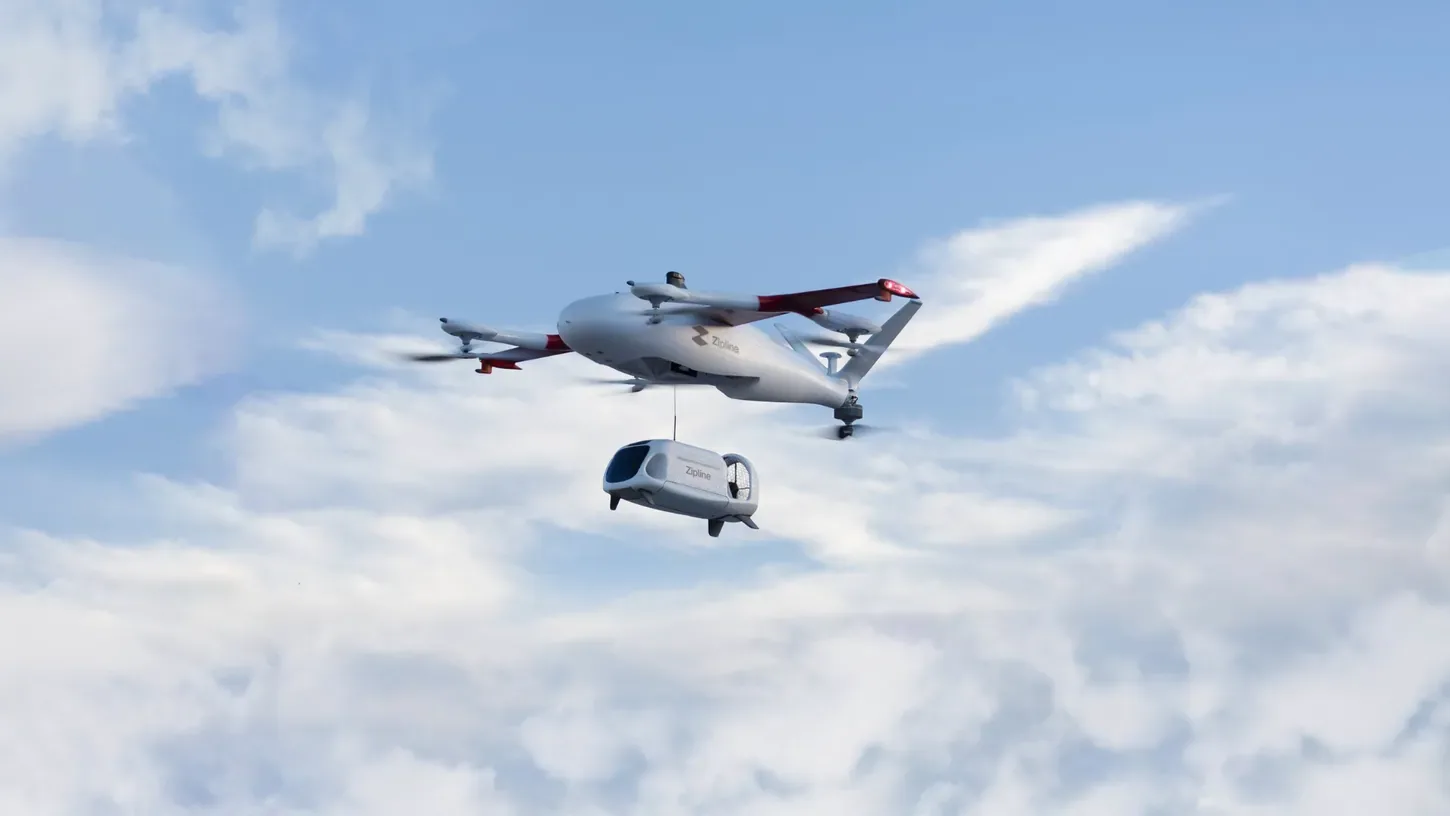
Zipline said on October 27, 2026 that it has rolled out "sound-optimized dynamic flying" across its entire delivery drone fleet, a software change the company says cuts overall sound exposure per flight by 68% and peak loudness by 24% compared with its 2025 fleet. The update also shortened average flight times by 53 seconds and cut energy use by 21%, according to Zipline's own modeling.
The feature runs on Zipline's Platform 2 fixed-wing aircraft, which cruises at roughly 330 feet during deliveries. Rather than flying a fixed speed and altitude profile, the software reads real-time wind data and an acoustic model to adjust the aircraft's flight path, and can shut down all but one motor during cruise to reduce noise further.
How does a software update make a drone quieter without changing the hardware?
Zipline's system treats noise as a function of flight path, not just propeller design. By continuously reading wind conditions, the aircraft can pick flight profiles that favor gliding over powered flight whenever possible, similar to how a cyclist might coast downhill instead of pedaling. Zipline co-founder and chief technology officer Keenan Wyrobek described the goal directly: "We want people to love having Zipline available, not just tolerate it." The approach treats community noise tolerance as a product constraint on par with delivery speed, rather than an afterthought handled through hardware alone.
How solid are the 68% and 24% figures?
Those numbers come from Zipline's internal modeling rather than independent third-party acoustic testing, and the company has not broken out how much of the improvement comes from the new flight-path software versus other hardware and software changes rolled into the 2026 fleet comparison. That distinction matters for regulators and neighborhoods evaluating drone delivery noise complaints, since a modeled improvement is not the same as a measured one under real flight conditions.
Why does drone noise matter so much for delivery companies right now?
Noise complaints have been one of the most consistent friction points for drone delivery expansion in residential areas, arguably more persistent than safety or privacy concerns in neighborhoods where service has already launched. A credible, repeatable reduction in sound exposure gives Zipline a concrete answer to use with municipalities weighing new service areas or renewing existing permits, particularly as competitors like Wing continue to expand into new markets such as Japan. Quieter operations also reduce the odds that a handful of noise complaints trigger restrictive local ordinances that cap flight hours or delivery volume.
What should the industry expect next from acoustic optimization?
Expect other delivery drone operators to publish similar acoustic claims, especially as the FCC's recent spectrum expansions open more flight corridors and put a bigger spotlight on where and how often drones fly over populated areas. Independent verification of these noise-reduction claims, rather than company-run modeling, is likely to become a bigger ask from regulators and residents alike as delivery drone volume scales up nationally.