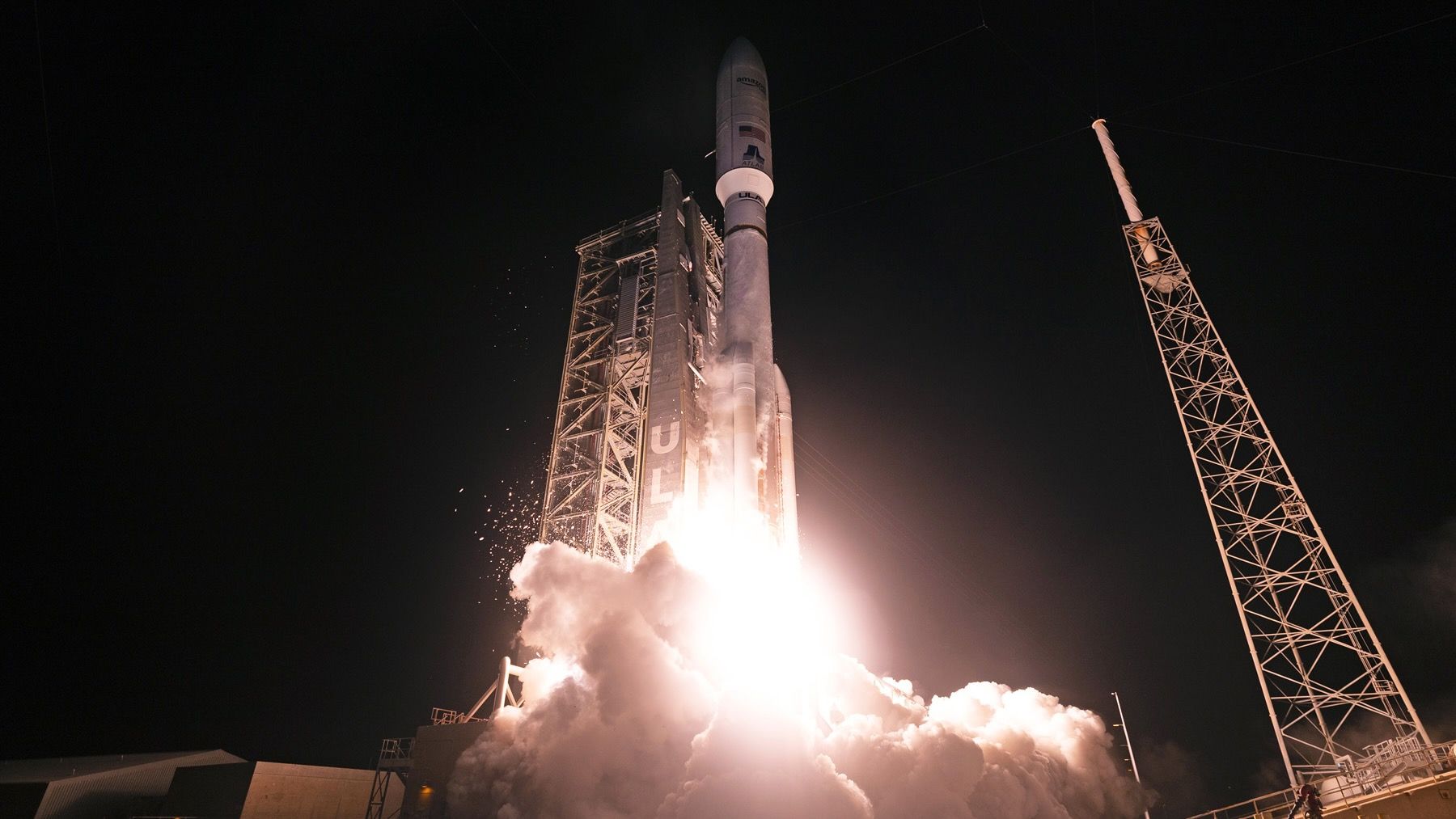
A United Launch Alliance Atlas V rocket thundered off the pad at Cape Canaveral Space Force Station at 12:30 a.m. EDT on Thursday, July 2, carrying 29 Amazon Leo broadband satellites to low Earth orbit. ULA confirmed successful deployment of all 29 spacecraft about 70 minutes after liftoff on the mission designated Amazon Leo 8.
Heaviest-Payload Record Tied Again
The vehicle flew in its most powerful 551 configuration — five solid rocket boosters, a 5-meter payload fairing and a single-engine Centaur upper stage. The 29 satellites weighed a combined 18 tons or so, tying the mark for the heaviest payload ever launched by an Atlas V, a record first set on the Amazon Leo 5 mission in early April and equaled several times since.
Amazon's Answer to Starlink Passes 400 Satellites
Amazon Leo — formerly known as Project Kuiper — is Amazon's broadband megaconstellation, planned to eventually number about 3,200 satellites. Roughly 400 Leo spacecraft have now reached orbit across 15 missions flown on three different rockets: ULA's Atlas V, SpaceX's Falcon 9 and Arianespace's Ariane 6. The Atlas V has been the busiest of the trio with nine constellation flights. Amazon's network will compete head-on with SpaceX's Starlink, which currently counts nearly 11,000 satellites.

A Cadence Story for the Space Economy
The flight extends a rapid-fire launch cadence for the constellation after May's Amazon Leo 7 mission from Cape Canaveral, and it comes in a week of intense orbital activity that also saw Katalyst's LINK servicing robot launch to rescue NASA's Swift observatory and Isar Aerospace sign a launch contract with Planet for its Pelican satellites. For ULA, each Leo flight also draws down the Atlas V's remaining inventory as the company transitions to its Vulcan rocket.
Reporting based on coverage from Space.com and United Launch Alliance.