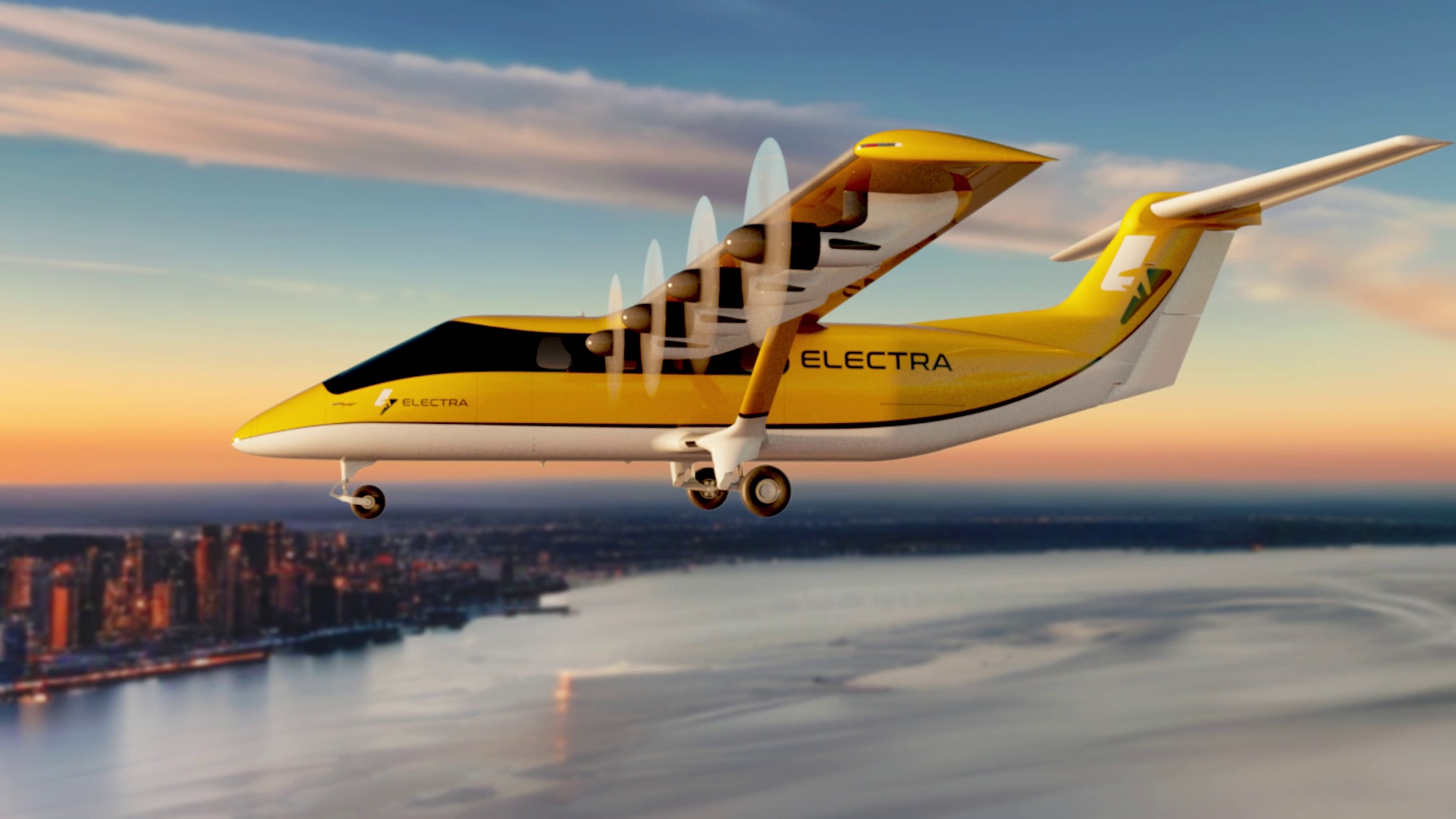
Virginia-based hybrid-electric aircraft developer Electra has published its inaugural Direct Aviation Market Outlook, projecting that the United States could absorb between 12,000 and 16,000 regional aircraft over the next decade to serve a new category of short-haul travel the company calls "Direct Aviation." The May 28 announcement reframes Electra's pitch from a single-aircraft program into a system-level argument for rebuilding regional air mobility around ultra-short takeoff and landing technology.
A 6,000-Route Untapped US Market
Electra's analysis identifies more than 6,000 US regional routes that already carry over 1,000 travellers per day across distances of 50 to 265 miles. About 85% of these high-demand corridors have no practical air service within 40 miles of either endpoint, the company said, forcing passengers onto congested highways or inefficient hub-and-spoke airline itineraries. Americans make more than 35 million daily passenger trips on routes between 50 and 500 miles, accounting for roughly 1.6 trillion passenger-miles annually, yet only about 1% of trips in the 50-to-265-mile band are flown today.
Hours of Door-to-Door Time Savings
The report identifies 1,851 routes where Direct Aviation could save travellers more than one hour door-to-door, 540 routes offering savings of more than two hours, and 227 routes with potential savings of more than three hours. Electra cites Washington, DC to New York as an example, where its proposed EL9 aircraft could shorten the door-to-door trip to one hour 45 minutes versus roughly four hours by car or commercial airline. Other corridors highlighted include Austin-Dallas, Orlando-Miami, Boston-New York, and Los Angeles-San Diego.
EL9 Ultra Short at the Center of the Strategy
The aircraft underpinning Electra's market projection is the EL9 Ultra Short, a nine-passenger hybrid-electric design that combines blown-lift aerodynamics with hybrid-electric propulsion to enable takeoff and landing distances of roughly 150 feet. The EL9 is targeting a maximum range of 1,100 nautical miles, cruise speed of up to 175 knots, and noise levels below 75 dBA at 300 feet during takeoff. Electra positions the hybrid-electric architecture as a lower-risk, longer-range alternative to eVTOL designs entering certification and eVTOL programs progressing through regulatory milestones.
"Aviation is entering a new era, where capabilities that weren't possible before are now fundamentally changing how we move," Electra CEO Marc Allen said in the report's announcement. "Direct Aviation is how that shift shows up in the real world, giving people the ability to go from where they are to where they want to go without the time, friction, and constraints that define travel today."
Building a New Regional Mobility Ecosystem
Electra argues that the aircraft alone is not enough. The company's outlook envisions operations from distributed access points such as repurposed municipal airports, rooftop landing areas, piers, barges, and parking lots, rather than concentrated hub airports. The report points to geographic clusters including the Northeast Corridor, Southern California, Florida, Texas, and the Midwest as the strongest candidates for dense regional shuttle networks, alongside parallel work in eVTOL formation flight and next-generation aerospace propulsion reshaping aviation's near-term roadmap.
Market Viability Still Depends on Regulation
The 12,000-aircraft floor of Electra's projection covers routes with up to 24 daily passengers, while reaching 16,000 aircraft requires capturing thinner routes with as few as 12 passengers per day. Electra acknowledges that such low volumes will require travellers to pay business-class equivalent fares to be commercially viable, and that the broader build-out depends on supportive Advanced Air Mobility regulation, distributed infrastructure, and a manufacturing supply chain that can scale to thousands of aircraft per decade.
Reporting based on coverage from Aerospace Global News and Electra's Direct Aviation Market Outlook.