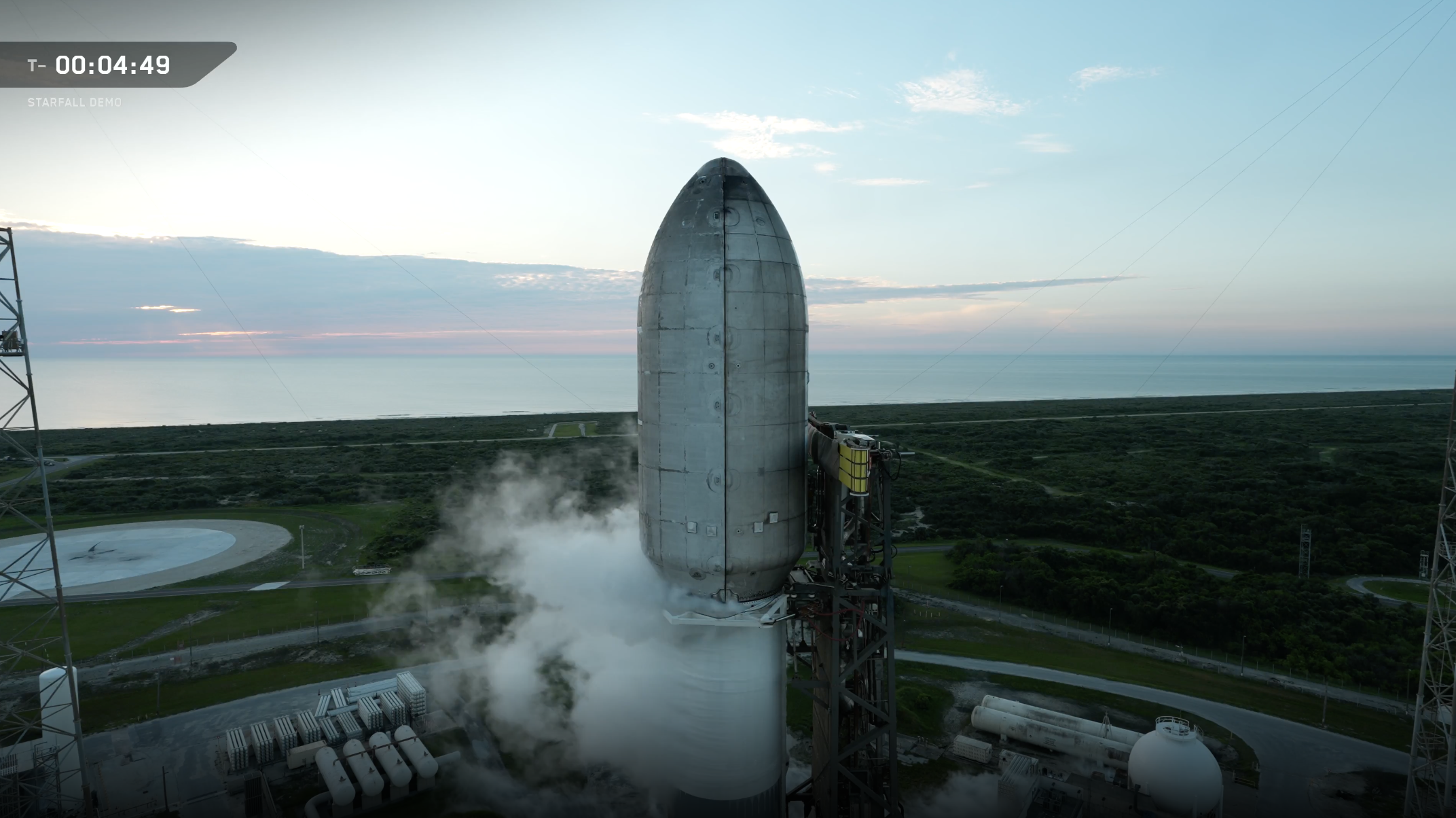
SpaceX has launched the first demonstration of Starfall, an unusual flat, disk-shaped reentry capsule designed to carry cargo to orbit and bring it safely back to Earth, opening a new front in the company's ambitions for what it calls the transport and delivery of goods through space.
A hockey puck for orbit
The roughly 2,100-kilogram vehicle lifted off on a Falcon 9 from Cape Canaveral on 23 June 2026. Starfall looks like little else in spaceflight: about 3.1 metres across but only 0.75 metres tall, a shape often compared to an enormous hockey puck. It consists of an aluminium top plate that houses the payload bay and a detachable carbon-fibre heat shield that protects the cargo during the fiery descent through the atmosphere before a planned ocean recovery.
The flattened geometry is intended to maximise usable cargo volume while keeping reentry heating manageable, a design SpaceX hopes can serve a market that no existing return vehicle has cracked at scale: routinely bringing material back down from orbit.
Targeting the in-space economy
Cheap, frequent cargo return is a missing link for the emerging in-space manufacturing and research economy, where pharmaceuticals, semiconductors and novel materials produced in microgravity must reach Earth intact. A dedicated capsule like Starfall could complement crewed and cargo Dragon flights and reduce reliance on scarce downmass on other vehicles.
Another vehicle in a busy year
The demo adds to a crowded SpaceX manifest as the company pushes ahead on multiple fronts, from the first flight of Starship V3 to back-to-back commercial deployments such as the AST SpaceMobile BlueBird launches. If Starfall proves out, it could give SpaceX a low-cost, high-cadence way to close the loop between orbit and the ground.
Reporting based on coverage from Spaceflight Now, Tech Times and SpaceX.