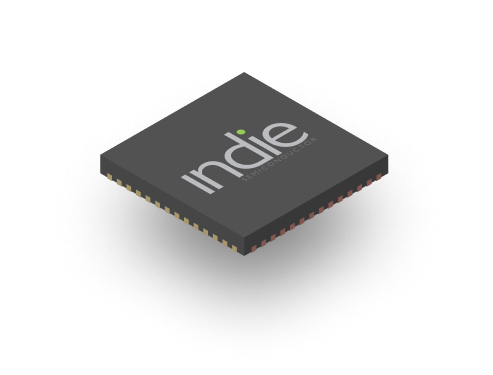
indie Semiconductor has launched the iND881, a new edge AI system-on-chip pairing the company's market-leading multi-camera image signal processor with on-die AI compute, automotive-grade safety and ARM-class performance for next-generation cars and humanoid robots.
Heterogeneous compute, sub-millisecond ISP
Announced June 10, 2026, the iND881 combines an in-house neural network processing unit, a versatile digital signal processor and a quad-core Arm Cortex-A53 CPU, alongside indie's low-latency ISP supporting multi-camera systems with sub-1 millisecond processing latency and an H.264 encoder for compressed video offload. The device is ASIL-B compliant and automotive-qualified, with samples available now ahead of a public demonstration at AutoSens and InCabin USA 2026.
Driver monitoring meets humanoid perception
indie is targeting two markets it views as adjacent: in-cabin sensing—driver and occupant monitoring plus electronic mirrors with blind-spot detection—and autonomous mobile robots that need real-time vision. The pitch is that humanoid platforms increasingly need automotive-grade silicon as they move from labs into factories, and iND881 lets robot designers reuse the same ISP and safety architecture that ships in modern ADAS stacks.

An edge-AI arms race
The launch follows a wave of perception-focused silicon, including Netrasemi's A2000 edge AI SoC and NVIDIA's foundation-model acquisitions. By coupling AI compute directly to its ISP, indie is betting that perception pipelines will move closer to the sensor as humanoids and ADAS systems both demand lower latency and better thermal headroom.
Roadmap and customers
indie disclosed that the iND881 is shipping into Tier-1 supplier evaluation programs and that the platform will anchor future variants targeting electronic mirrors, surround-view systems and humanoid hand-eye stacks. Combined with a strategic backlog the company has publicly pegged above $7 billion, the launch positions indie as an emerging supplier for both production-grade physical AI and next-generation automotive cameras.
Reporting based on coverage from indie Semiconductor, Businesswire, Automotive World and Investing.com.