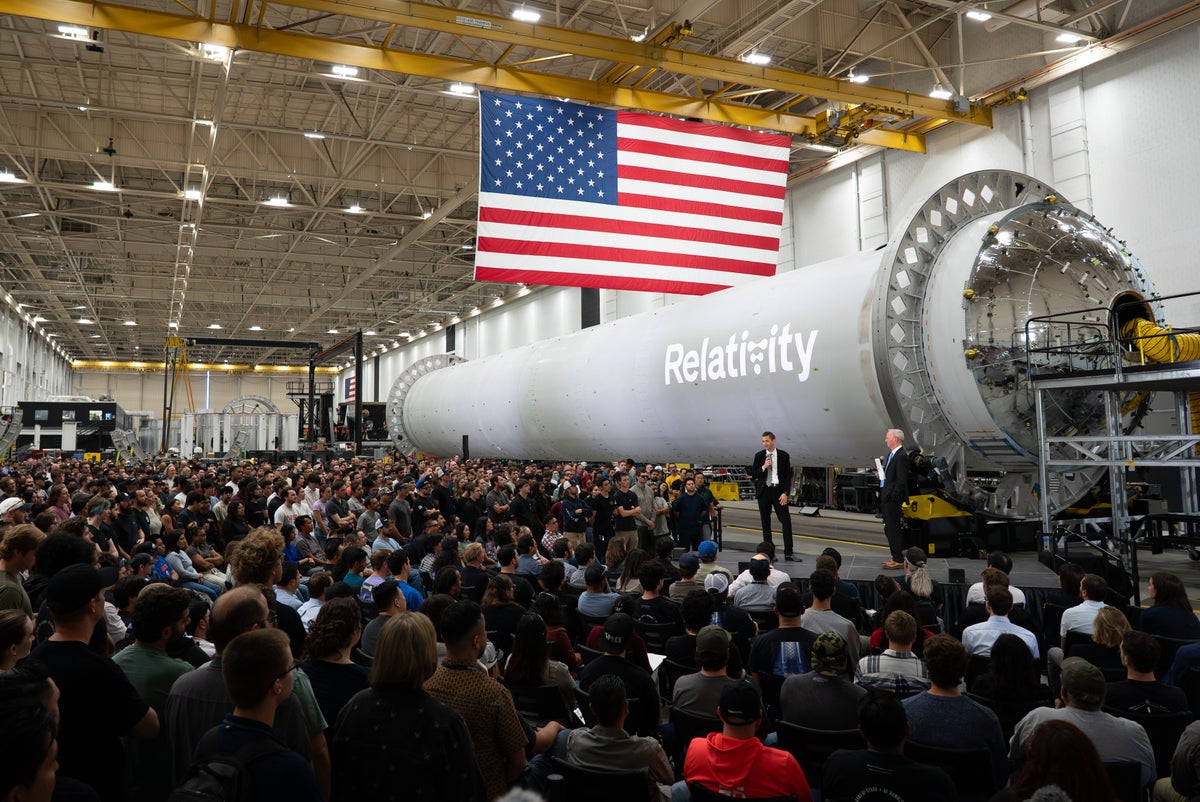
NASA is turning to a private rocket maker to keep watch over the Martian atmosphere. The agency announced on June 17, 2026 that Eric Schmidt's Relativity Space will build and launch Aeolus, a Mars orbiter targeted for a 2028 departure, in a public-private partnership designed to deliver planetary science faster and at lower cost.
A commercial ride for NASA science
Under the agreement, NASA supplies the four science instruments while Relativity provides the spacecraft, the rocket and the cruise to Mars. The Aeolus probe will measure dust, winds, temperature and cloud conditions across the Red Planet, returning daily global data intended to reduce risk for future robotic and crewed landings. NASA says it will support the instruments for at least one Martian year, roughly 1.88 Earth years, while Relativity operates the orbiter.
"Public-private partnerships like this are a force multiplier for science," NASA administrator Jared Isaacman said in a statement, arguing that pairing the agency's instruments with commercial investment can deliver "more science, more often."

Riding on the 3D-printed Terran R
The mission is a marquee assignment for a company whose rockets have yet to reach orbit. Relativity's reusable, two-stage Terran R, built heavily with the firm's Stargate metal 3D printers, is scheduled to fly for the first time in late 2026. Founded in 2015 and now led by former Google chief executive Eric Schmidt, Relativity has long pitched additive manufacturing as the key to building rockets faster and cheaper than rivals.
Filling a gap above Mars
The deal lands just weeks after NASA permanently lost contact with MAVEN, its long-running Mars atmosphere orbiter, which also served as a communications relay for surface missions. Aeolus is designed to double as a relay, helping restore the orbital infrastructure that landers and rovers depend on. The award also reflects NASA's broader push to lean on commercial partners for exploration, echoing the model now reshaping satellite constellations and on-orbit services seen in efforts like Open Cosmos's Atlantic constellation and automated collision-avoidance partnerships in orbit.
If Terran R debuts on schedule and the 2028 launch holds, Aeolus would mark Relativity's first interplanetary mission and one of the first privately built, privately operated science orbiters at another planet.
Reporting based on coverage from Scientific American, SpaceNews and NASA.