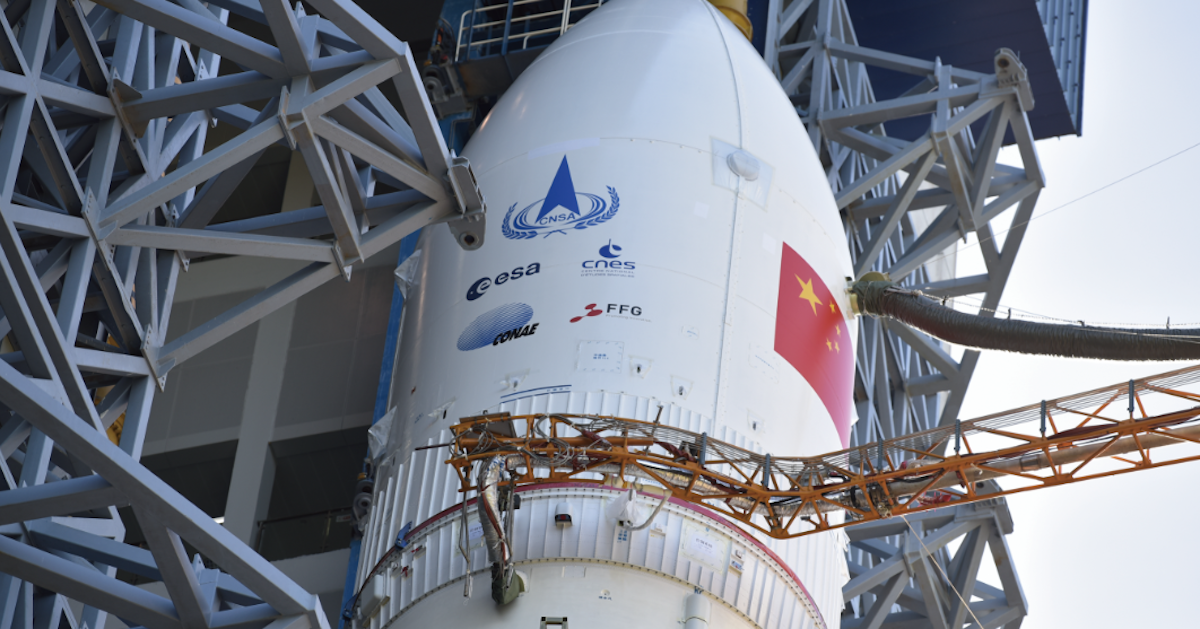
China's Tianwen-2 spacecraft is scheduled to enter orbit around the near-Earth quasi-satellite asteroid 469219 Kamoʻoalewa on Sunday, June 7, 2026, completing a 13-month interplanetary cruise that began with its launch from Xichang in May 2025. The orbit insertion will make China the fourth space agency to rendezvous with an asteroid for sample collection, following Japan's Hayabusa missions and NASA's OSIRIS-REx.
A Quasi-Moon With A Suspicious Spectrum
Kamoʻoalewa, formally designated 2016 HO3, is between 40 and 100 meters across and is the smallest asteroid ever visited by a spacecraft. It loops around the Sun in a path that keeps it perpetually near Earth without being gravitationally captured — an orbital configuration that will last only about three centuries. What makes it a priority target is its reflectance spectrum, which closely matches space-weathered lunar silicates rather than the carbonaceous or stony compositions typical of near-Earth objects. A 2024 study in Nature Astronomy and a follow-up paper in 2025 both argue the asteroid is a fragment ejected from a giant lunar impact, with Giordano Bruno crater on the far side and the near-side Tycho crater each proposed as the source.
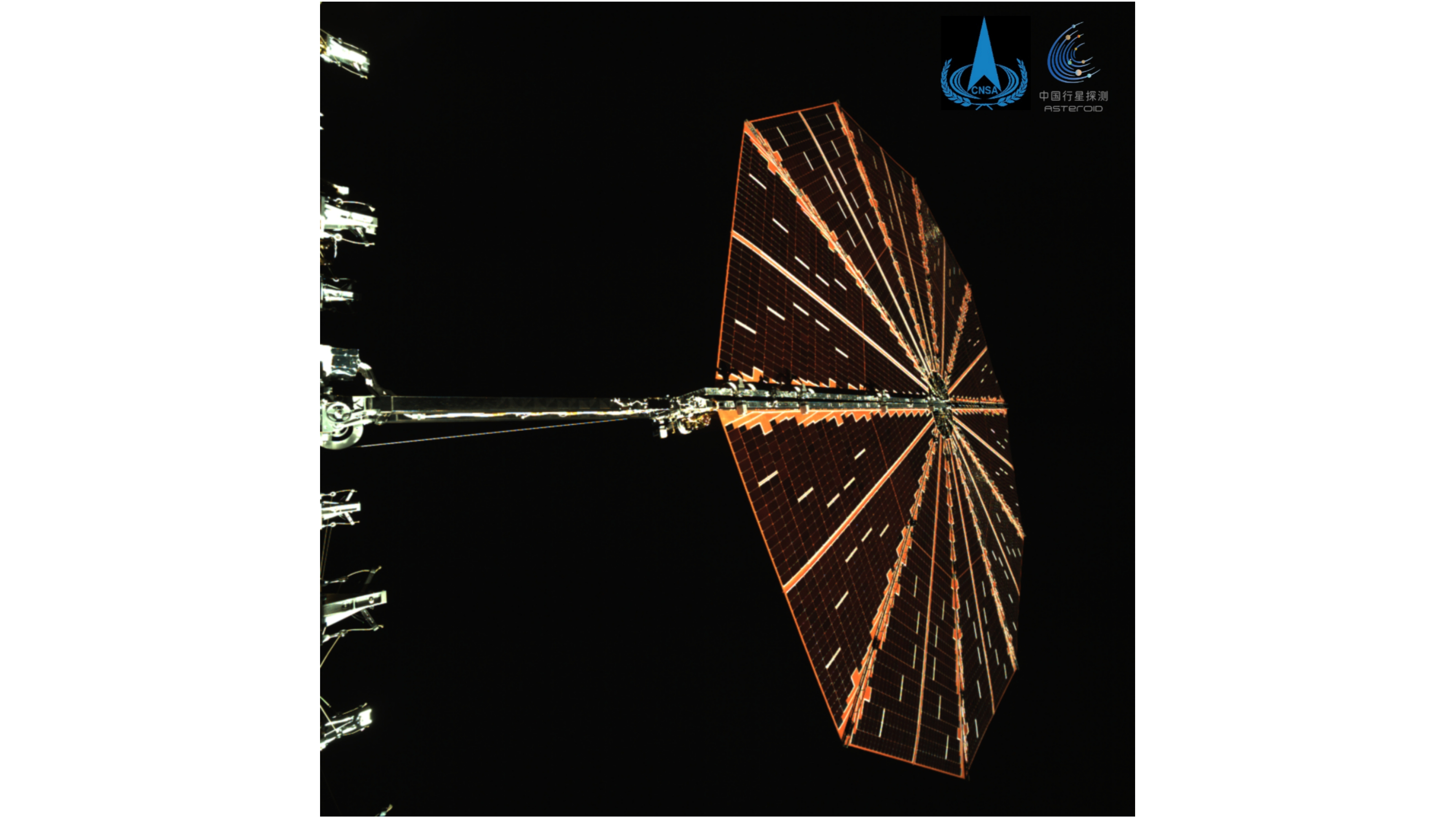
The Smallest, Fastest-Spinning Rock A Probe Has Tried To Touch
Sampling Kamoʻoalewa presents challenges that none of the previous asteroid missions faced at equivalent scale. Its gravity is essentially negligible, and it rotates once every 28 to 29 minutes — faster than any previously visited asteroid — meaning the China National Space Administration probe must autonomously match the object's rotation during approach and contact. Tianwen-2 carries two distinct sampling strategies: a touch-and-go method comparable to those used by OSIRIS-REx and Hayabusa2, and a novel anchor-and-attach approach using four robotic arms with drill tips that latch onto the surface — a technique never before attempted in deep space. The mission aims to return a minimum of 100 grams of material to Earth.
A Year Of Science, Then A Long Cruise Home
Orbit insertion opens approximately a year of close-proximity study at progressively lower altitudes, from 20 kilometers down to 600 meters, using 11 science instruments including a visible-infrared imaging spectrometer, a thermal radiation spectrometer, a multispectral camera and a detection radar capable of probing the asteroid's subsurface structure. Sample collection is scheduled to begin July 4, 2026, with the spacecraft departing on April 24, 2027. The sample return capsule will separate from the main spacecraft on November 29, 2027, for a parachute-assisted landing in China's Gobi Desert.
An Extended Mission To The Asteroid Belt
After delivering its Kamoʻoalewa samples, Tianwen-2 will use Earth's gravity for a slingshot maneuver and set a course for main-belt active asteroid 311P/PanSTARRS, where it is scheduled to enter orbit on January 24, 2035. In a notable side story, amateur radio teams at the Dwingeloo telescope in the Netherlands and AMSAT-DL's Bochum dish in Germany have independently decoded the spacecraft's X-band telemetry at 8,428.19 MHz over the past two weeks, the first public reception of Tianwen-2's downlink since launch — a quiet sign that deep-space monitoring is no longer the exclusive preserve of national agencies.
The mission deepens China's deep-space portfolio alongside the Chang'e lunar program and continues a busy stretch for global asteroid science detailed in our coverage of Katalyst's Pegasus XL Swift Observatory rescue and the AST SpaceMobile BlueBird triple launch. For broader context on the agency, see our earlier piece on global space and energy regulators.
Reporting based on coverage from Tech Times, Space.com, the China National Space Administration and peer-reviewed studies in Nature Astronomy and Communications Earth & Environment.