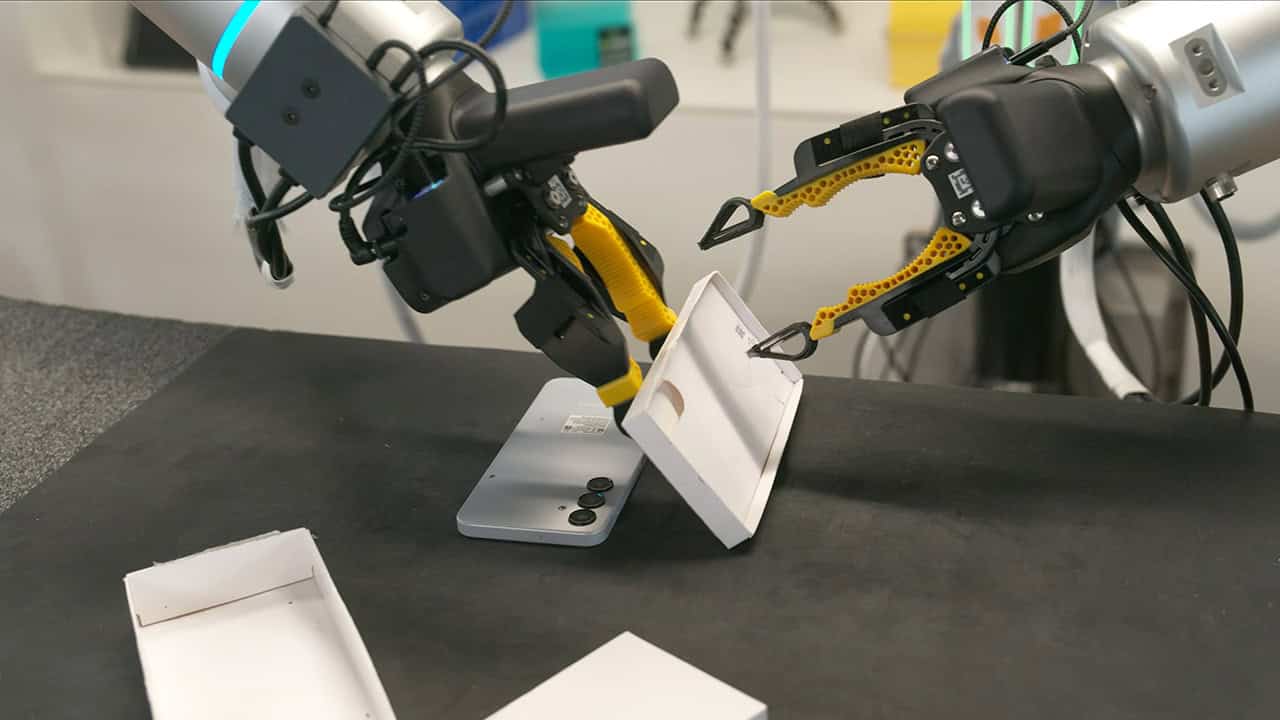
Scientists have developed an AI system that replicates muscle memory, allowing robots to perform delicate manual tasks with unprecedented precision and adaptability. The breakthrough framework enables machines to learn and retain motor skills similar to how humans develop unconscious physical responses through repetition.

Revolutionary Learning Approach
The new system combines neural networks with sensorimotor learning algorithms to create artificial muscle memory. Unlike traditional robotic programming, this approach allows machines to adapt their movements based on tactile feedback and environmental changes, mimicking the human brain's ability to automate complex physical tasks.
Testing showed the AI system successfully performed intricate operations including surgical suturing, electronic component assembly, and delicate material handling with 94% accuracy rates. The system demonstrated improved performance over time, developing smoother and more efficient movement patterns through continuous learning.

Industrial and Medical Applications
The technology promises significant advances in manufacturing precision and surgical robotics. Initial trials in automotive assembly showed 35% reduction in component damage compared to conventional robotic systems. Medical applications include microsurgery assistance and rehabilitation therapy, where the AI's adaptive responses could provide more natural patient interactions.
Researchers plan to expand the framework to include multi-limb coordination and complex tool manipulation. Commercial deployment is expected within 18 months, targeting high-precision manufacturing and specialized medical procedures.