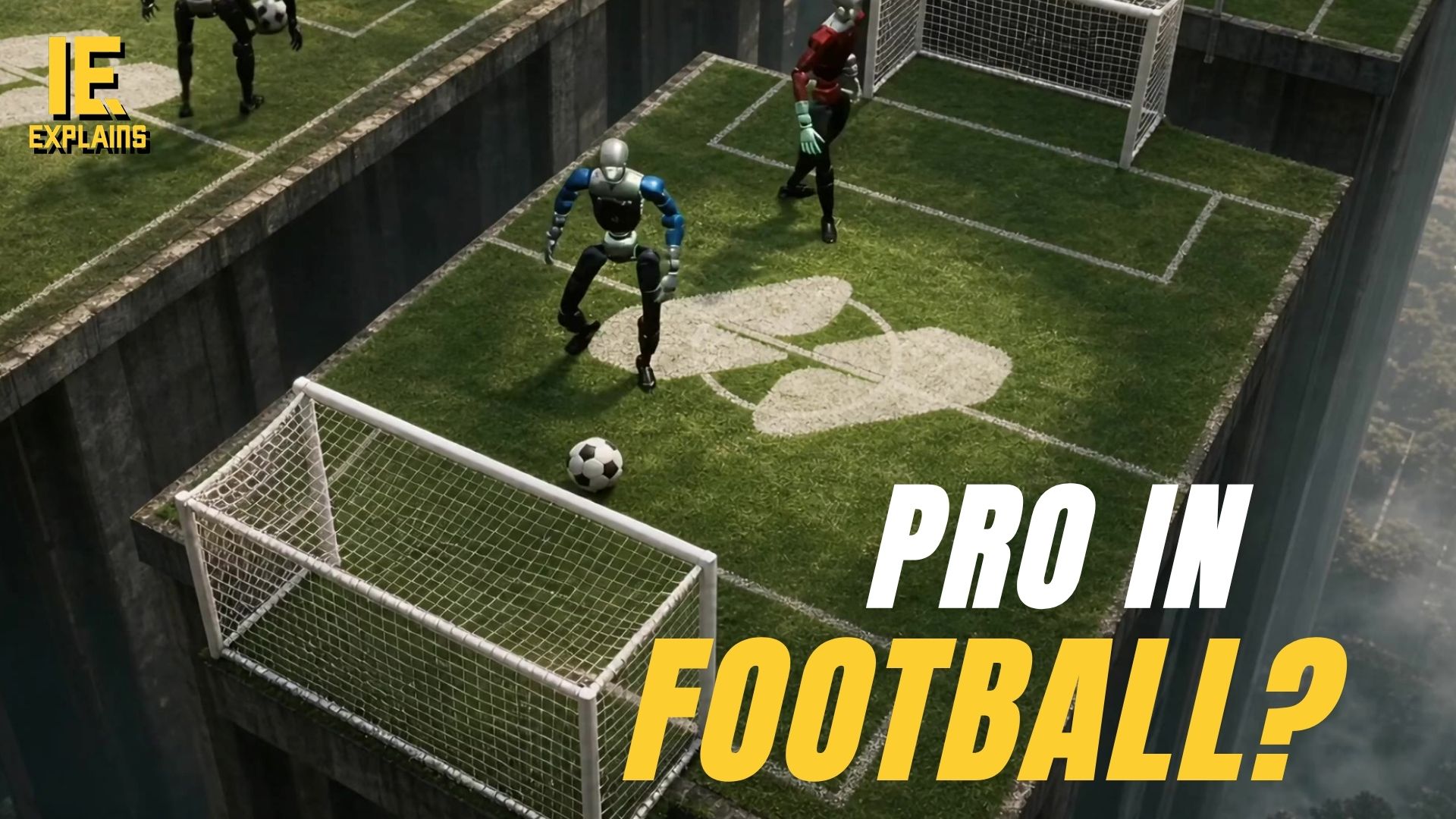
Skild AI, the Pittsburgh-based robotics foundation-model startup, released research on September 24, 2026 showing that its S1 model taught itself to play four-a-side football through 140 simulated years of physical self-play in NVIDIA's Isaac Sim - and then successfully transferred the resulting policy onto a real humanoid robot.
No human demonstrations, no hand-crafted rewards
Skild's team framed the training as a soccer game with a single objective: score. Each generation of the S1 policy competed against earlier versions of itself. For its first few simulated months, the agent could barely walk. By its "college years" it could recover from a fall. By 140 years it could dribble past defenders, shield the ball, tackle, and pass in four-player games.
From sim to a real humanoid
The most striking result came at the end: Skild loaded the trained policy into a real humanoid robot for an on-field match. The transfer worked with no domain-randomisation gimmicks reported and no motion-capture data - a milestone for the "physical self-play" thesis that Skild has been arguing since its stealth exit last year.
Why this matters for a robotics foundation model
Skild's premise is that a single policy can transfer across bodies - the "omni-bodied" brain it developed with NVIDIA. Football is a proxy for the same skills that show up on factory floors and in warehouses: balance, contact, multi-agent coordination and long-horizon planning. Skild says the same self-play recipe will next target virtual factories, construction sites and homes.
Context: a race for physical-AI foundation models
The paper follows a slew of physical-AI releases this month, including Black Forest Labs' FLUX 3 Action world-action model, NVIDIA Isaac ROS 5.0 and Google's Intrinsic Core open-source stack.
Reporting based on coverage from Interesting Engineering, GamesBeat and Skild AI's own physical self-play post.