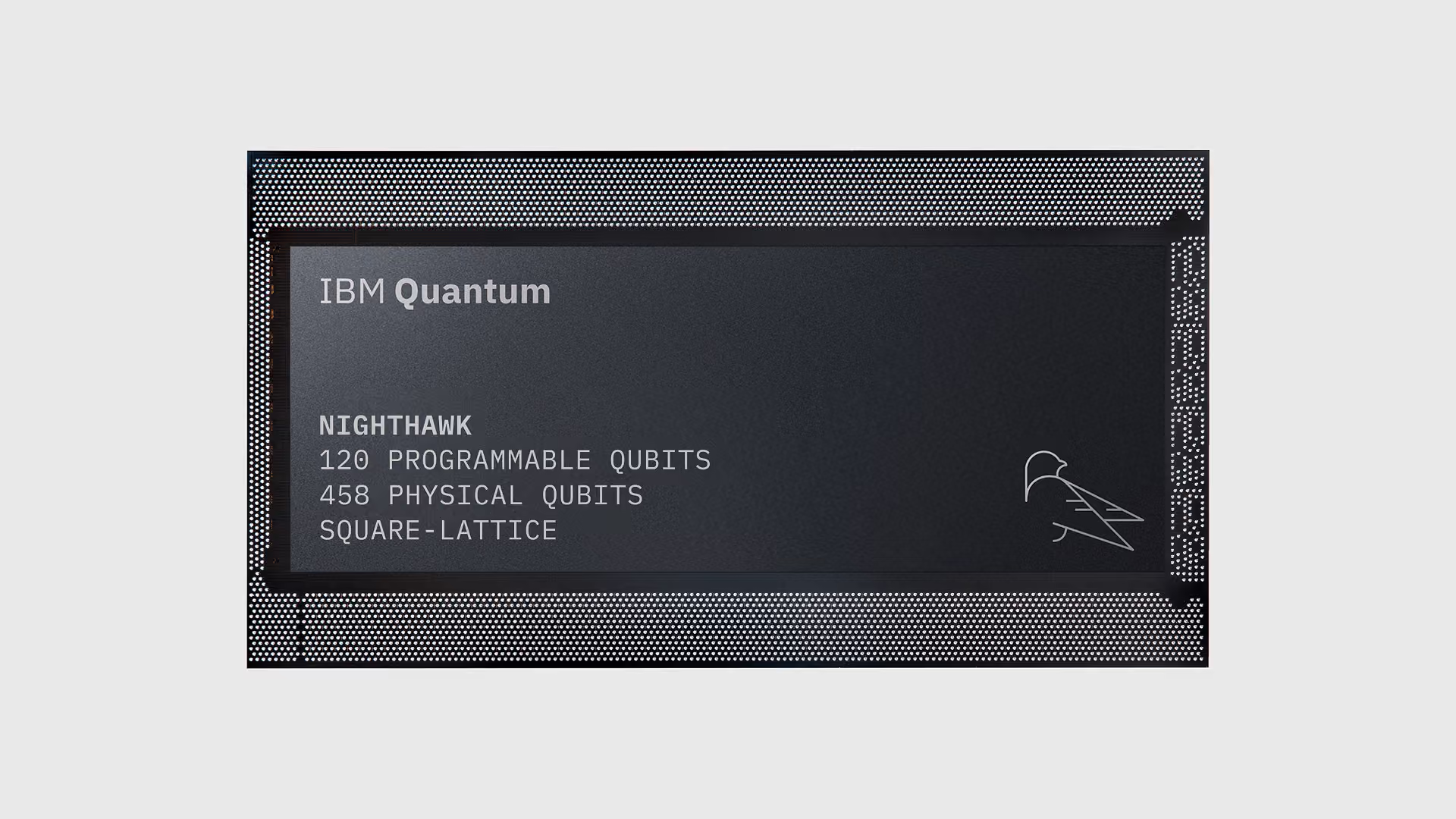
Q-CTRL says its Fire Opal software stack now runs a 60-qubit fermionic simulation on IBM's Quantum Nighthawk R2 processor 12 times faster than the same workload on IBM's previous-generation Heron R3, and more than 400 times faster than an equivalent classical GPU pipeline — all with less than 1% loss in fidelity.
What the benchmark actually measured
The setup is a 30-site fermionic simulation compiled to 60 qubits, 2-qubit circuit depth 152, and 4,497 two-qubit gates after compilation. Q-CTRL's staff product manager Justin Davis wrote in a 24 September 2026 blog post that Fire Opal cut end-to-end pipeline runtime from 4 minutes 25 seconds on Heron R3 to 23 seconds on Nighthawk R2, with a root-mean-square error of 7.895×10⁻³ averaged across sites. The classical-GPU-cluster comparison run was more than 400x slower for the same accuracy budget.
Where the speed comes from
Fire Opal is doing more than passing a Qiskit circuit through: it stacks automated crosstalk suppression, error-aware compilation, layout selection, readout-error mitigation and zero-shot error prevention on top of the native Qiskit runtime. "Fire Opal automates this entire pipeline behind the scenes," Davis wrote.
Q-CTRL's earlier 100-qubit convolutional QFT work on Heron R3 and its March 2026 crosstalk-suppression paper laid the groundwork — pushing coherence times on individual Nighthawk qubits from 24 μs to 368 μs — and this month's numbers show how those hardware wins translate into an end-user speedup on production algorithms.
Timing with IBM's own Nighthawk push
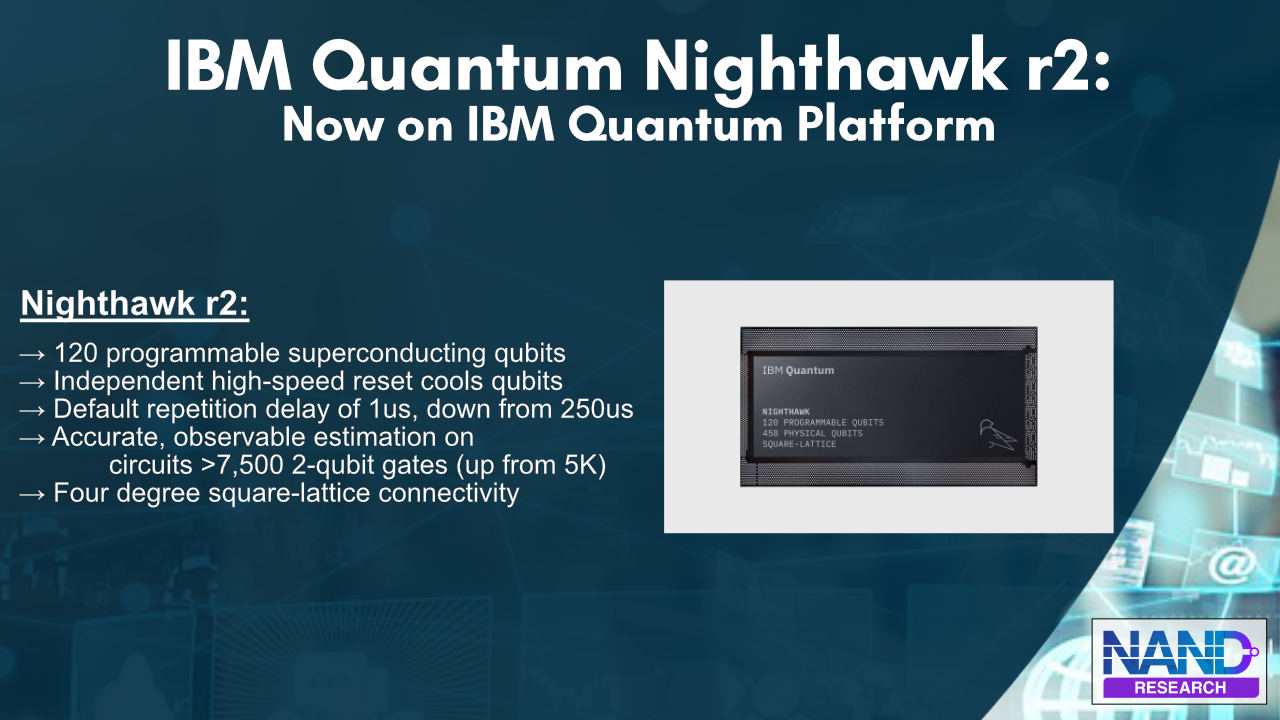
The announcement lines up with IBM's early September rollout of Nighthawk R2, a 120-qubit machine on a square lattice with four-degree connectivity that also promised 25x higher raw circuit throughput than Heron. Q-CTRL is effectively confirming that at the application layer, and giving IBM a fresh third-party benchmark it can point Federal customers and joint deployments like the Swiss Quantum Innovation Hub at.
Practical takeaway
For workloads that already fit inside 60 qubits — quantum chemistry primitives, fermionic simulations, some optimisation kernels — Nighthawk R2 plus Fire Opal is now inside the runtime envelope that makes real quantum-vs-classical comparisons interesting rather than academic. The remaining question is whether Q-CTRL can hold the pattern as circuits push toward the ~7,500-gate ceiling IBM says Nighthawk R2 is targeted for by year-end.
Reporting based on coverage from Q-CTRL and IBM Quantum announcements.