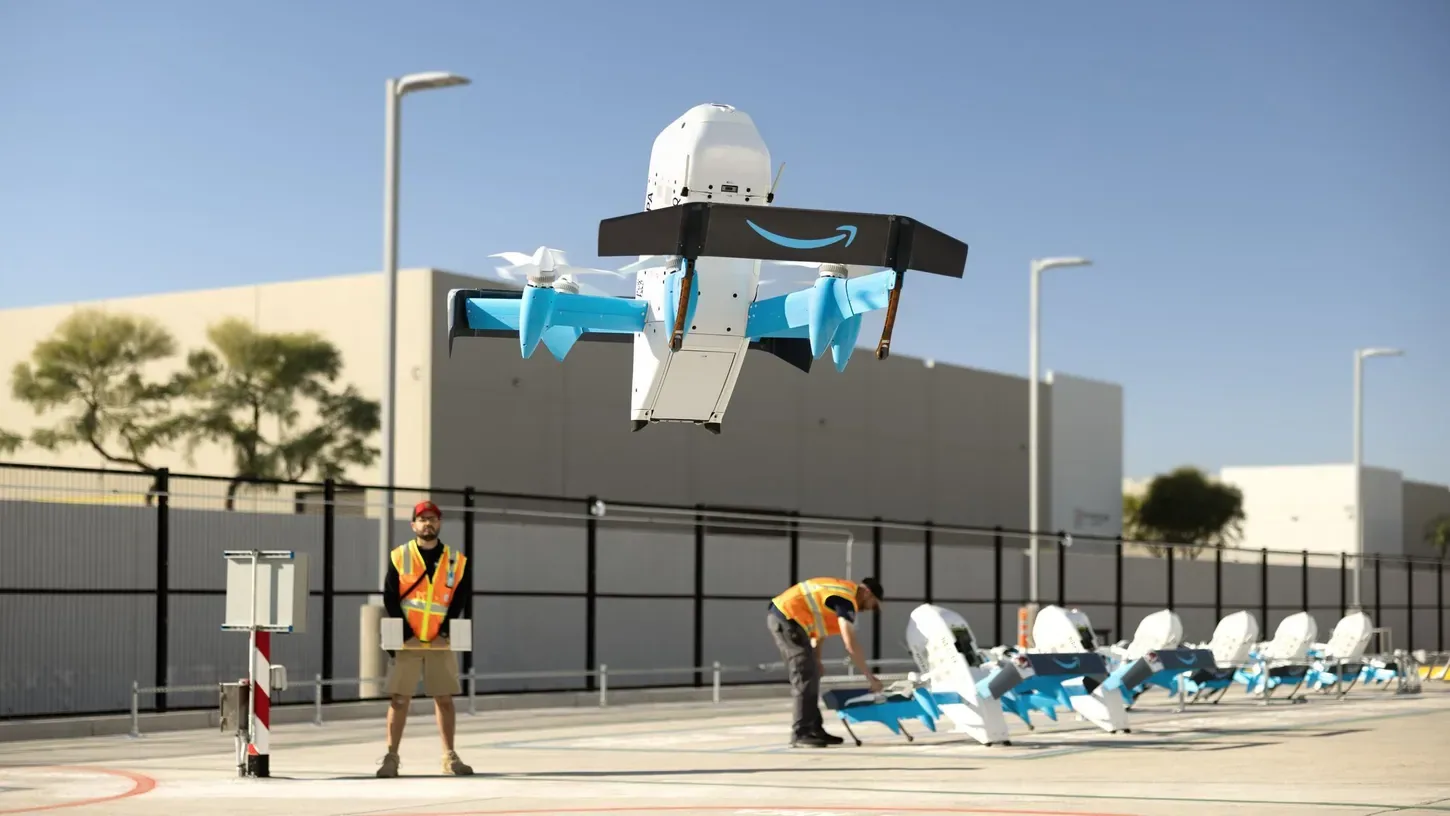
Amazon switched on Prime Air drone delivery from a fulfillment center in Rossford, Ohio, on November 22, covering central Perrysburg, Maumee and downtown Toledo within a 7.5-mile radius of the warehouse. The Rossford site is Amazon's third Ohio drone hub in 59 days, following a launch in North Randall near Cleveland on September 24 and one in Etna, east of Columbus, on November 17.
The service relies on Amazon's MK30 aircraft, which can carry packages weighing up to 5 pounds, with the company saying some orders arrive in about 30 minutes. Prime members pay nothing on orders of $50 or more and $2.99 on smaller orders, while non-members pay $4.99 per delivery, according to DroneXL.
A compressed rollout
Three hub openings inside two months is an unusually fast pace for Amazon's drone business, which spent its first several years confined to a handful of test markets in Texas and California before expanding more broadly. Ohio's flat terrain, its mix of suburban and small-city zip codes, and Amazon's existing ground-logistics footprint in the state appear to have made it an efficient place to stack launches rather than spread them across multiple states.
The density of hubs also lets Amazon cover a meaningful swath of northern and central Ohio with overlapping 7.5-mile service rings, giving the company a larger contiguous test area than a single-city launch would provide. That matters for a service still trying to prove it can scale past novelty status: more overlapping coverage means more order volume, more flight hours and more operational data on how drones behave across varied suburban layouts.
Paperwork lags the flights
The expansion has outpaced its public documentation trail. Reporting found no Amazon filings in the FAA's public environmental review index for any of the three Ohio sites, even though equivalent filings exist for Amazon drone operations in other states. That gap doesn't necessarily mean a required review was skipped, since review timelines and disclosure practices vary by site and by FAA office, but it leaves residents and local officials with less advance visibility into noise, flight-path and safety assessments before aircraft start flying over their neighborhoods.
Amazon has faced similar criticism elsewhere this year, including a launch in Atlanta that proceeded without a public environmental review and a drone that clipped a fiber line and crashed into a Michigan garage roof. Those incidents have made local reaction to new hubs sharper, and some communities have already pushed Amazon to adjust flight paths and operating hours after noise complaints.
Competitive positioning
Amazon's hub count still trails the broader reach of rivals that have been flying longer. Zipline, which partners with Walmart, and Alphabet's Wing have each built out delivery networks gradually over several years and across more states, leaning on lower per-flight noise profiles to ease local approval. Amazon's approach instead favors speed and density within a smaller number of states, betting that rapid market saturation will generate the usage data and public familiarity needed to justify broader expansion later.
For Toledo-area shoppers, the practical effect is a new delivery option on items under 5 pounds, arriving faster than standard ground shipping. For Amazon, Rossford is another data point in a strategy that treats individual Ohio launches less as standalone markets and more as pieces of a regional network the company can point to when it seeks approval to add new hubs elsewhere, including in states where local pushback has been stronger.