Apple has published deeper technical detail on the third generation of Apple Foundation Models (AFM 3), the five-model family it built in collaboration with Google to power the next wave of Apple Intelligence — including the newly launched Siri Expressive Voices that Apple's ML research team documented on July 28, 2026.
Five models, two of them running on the phone
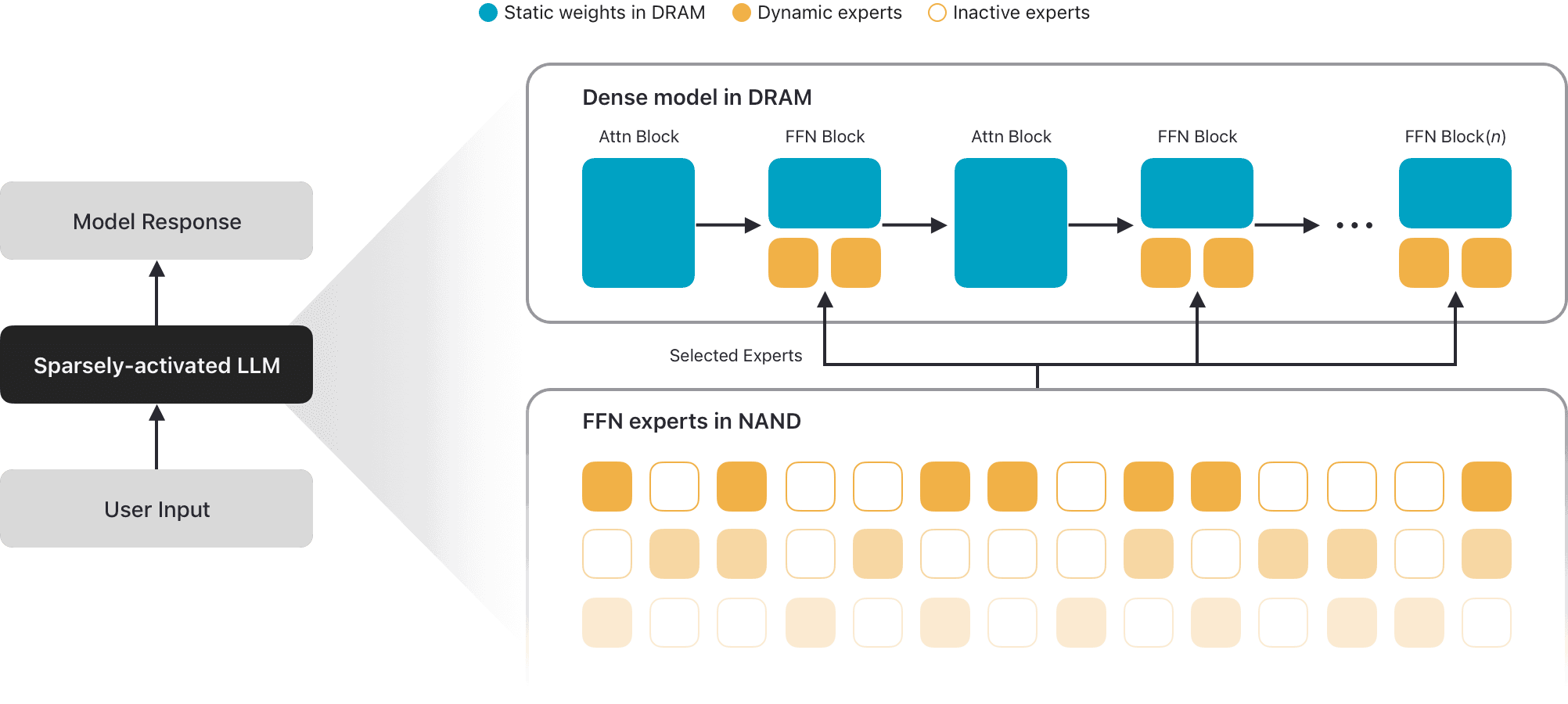
The family splits across on-device and Private Cloud Compute tiers. On the device sit AFM 3 Core, an upgraded 3-billion-parameter dense model, and AFM 3 Core Advanced — Apple's most powerful on-device model, a 20-billion-parameter sparsely activated architecture that activates only 1 to 4 billion parameters per request. In Private Cloud Compute, Apple runs AFM 3 Cloud, an image generator ADM 3 Cloud, and AFM 3 Cloud Pro for agentic tool use and complex reasoning.
Instruction-Following Pruning, and NVIDIA GPUs on Google Cloud
AFM 3 Core Advanced uses a novel Instruction-Following Pruning technique — patents on which were developed by Apple's own researchers — to store the full model in flash and load only a small set of "routed experts" into DRAM at inference time, blended with a large pool of always-active shared experts. For AFM 3 Cloud Pro, Apple worked with Google and NVIDIA to extend its Private Cloud Compute confidential-compute guarantees to NVIDIA GPUs running inside Google Cloud.
Siri Expressive Voices, all on-device
Apple's July 28 audio-synthesis paper detailed the memory-efficient detokenizer that pairs with AFM 3 Core Advanced to synthesise the new Siri Expressive Voices entirely on the device, within the tight compute budget of the Apple Neural Engine. In human MOS evaluations, AFM 3 Core Advanced text-to-speech scored 4.15 versus Apple's current TTS at 3.87, with the gap widening to 4.24 vs 3.82 on conversational text. Dictation improvements landed similarly: preference for AFM 3 Core Advanced on 44.7% of prompts against 17.6% for Apple's existing system.
Reasoning and image gains, and no user data in training
Apple reports AFM 3 Cloud is preferred by graders on 64.7% of general-text prompts versus 8.7% for last year's AFM Server model, and that AFM 3 Cloud Pro adds roughly 10% relative improvement on text satisfaction and 14% on image understanding over Cloud, with a 14% jump on math tasks. Apple reiterated that it does not train on user private personal data or user interactions, and that it honours publisher opt-outs.
The disclosures land the same summer as fresh scrutiny of Apple's AI strategy, including the company's trade-secrets lawsuit against OpenAI and the WWDC 2026 reveal of Gemini-powered Siri. AFM 3 is Apple's own answer to that pressure: a stack built to run on the iPhone first, and to lean on Google's cloud and NVIDIA silicon only where it must.
Reporting based on Apple Machine Learning Research and Apple's Security Research site.