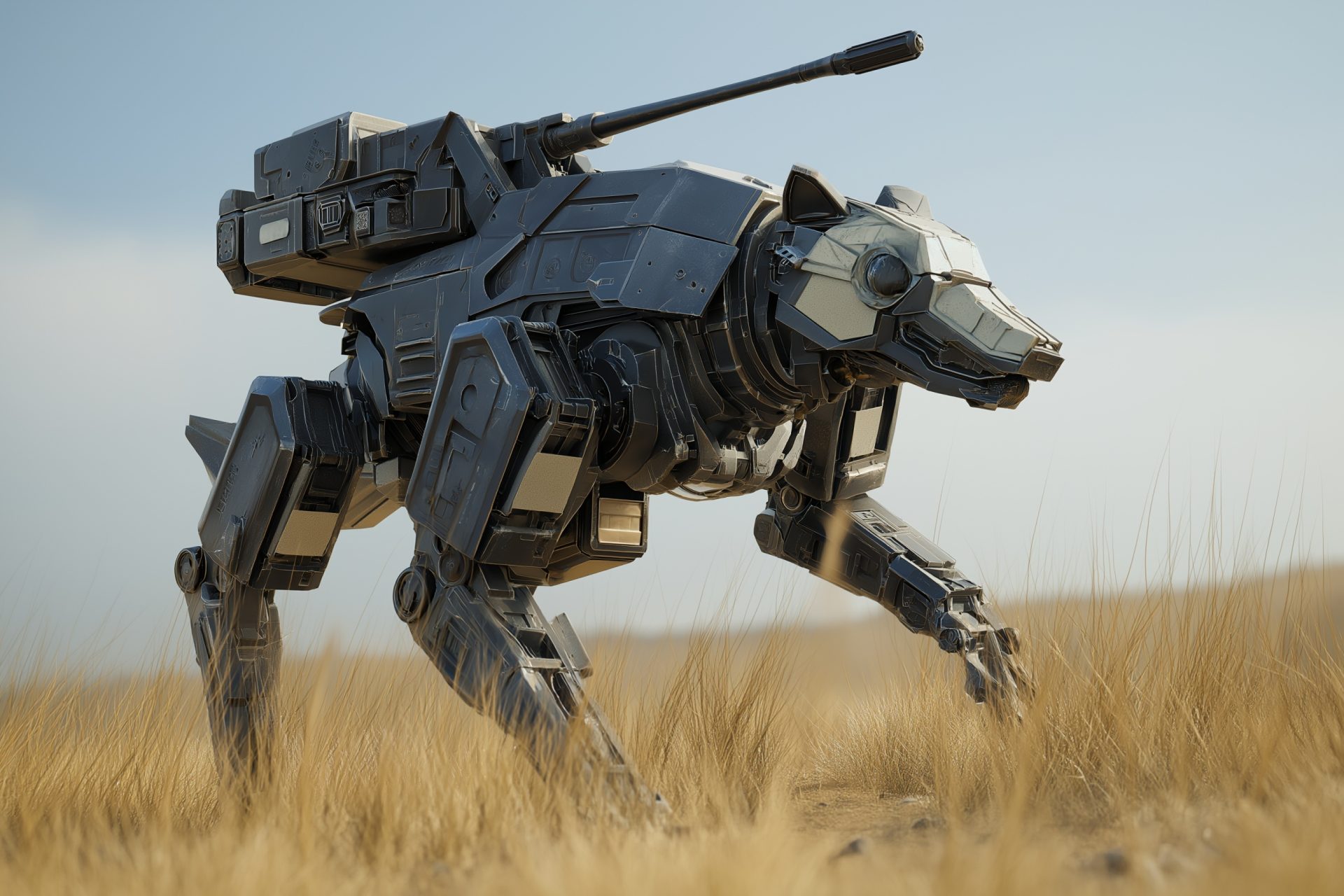
Military forces worldwide are deploying quadruped robots equipped with mounted weapons systems, advanced AI navigation, and all-terrain mobility capabilities. These four-legged combat units represent the first large-scale implementation of autonomous weapon platforms in active service.
Technical Capabilities and Engineering Breakthroughs
The combat quadrupeds feature dynamic stabilization systems that maintain weapon accuracy while moving across uneven terrain. Engineers solved critical power management challenges to support extended 8-12 hour field operations while carrying 50-100 pound weapon payloads.
Key innovations include biomechanically-inspired locomotion systems that provide superior mobility compared to wheeled vehicles, modular armor configurations for mission-specific protection levels, and integrated shock absorption technology that enables precise targeting during movement.
Dual-Use Applications Beyond Military
The same core technologies are accelerating development in civilian sectors. Search and rescue operations benefit from the all-terrain mobility, while industrial inspection applications leverage the stable platform technology for precision tasks in hazardous environments.
Defense contractors report that quadruped platform costs have decreased 60% over the past three years due to mass production scaling. The robots currently operate in semi-autonomous modes, requiring human oversight for weapon engagement decisions, though fully autonomous variants are under development for 2025 deployment.