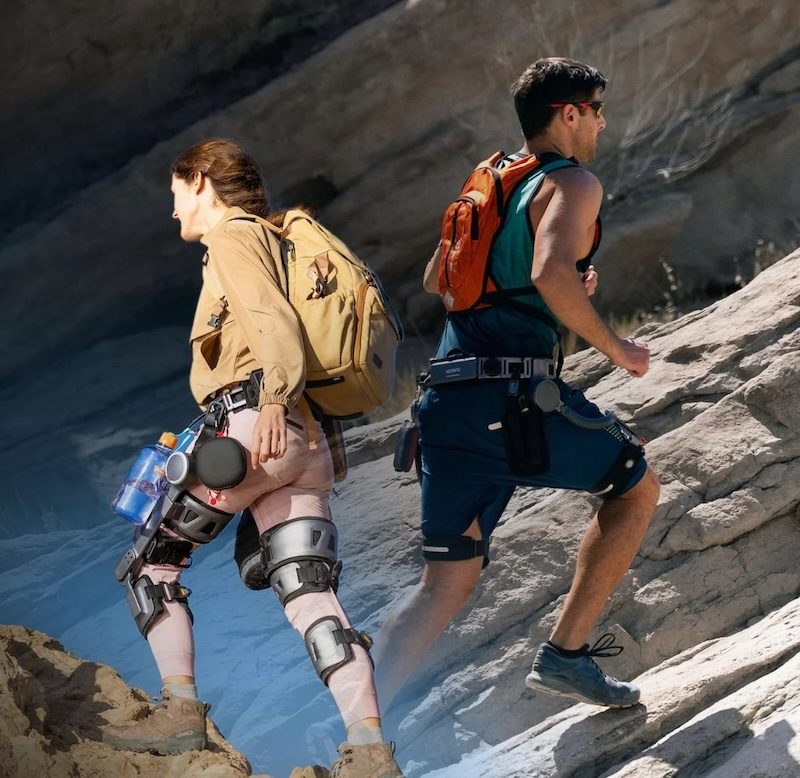
Climbing a hill shouldn't burn like a sprint, and TÜV SÜD has now put a number on how much an exoskeleton can soften that climb. The German testing body announced on November 25, 2026, that it awarded its Human-Machine Performance Certification to Ascentiz's Pro and Ultra modular hip exoskeletons, following joint testing with China's CAICT CTTL lab.
The evaluation measured physical workload reduction, fatigue relief, operating range and noise across seven activities: walking, running, ascending and descending stairs, walking uphill, cycling and squatting. During uphill walking, the exoskeletons cut exertion in key muscle groups by more than 44 percent, with metabolic expenditure reductions ranging from 16.71 percent to 44.87 percent depending on the activity tested.
What the Certification Actually Measures
Unlike a basic safety mark, the Human-Machine Performance Certification is built around how an exoskeleton behaves on a human body across varied, real movement rather than in a single controlled test. Ascentiz's devices delivered peak hip extension torque of 22.5 Newton-meters per side, with less than a 1 percent difference in assistance output between left and right sides, a consistency metric that matters for devices worn for extended periods.
On range, the Ultra and Pro models reached more than 6 kilometers under the most demanding conditions, maximum assistance combined with an incline, and a theoretical range exceeding 25 kilometers under normal operating conditions. Cody Kou, Ascentiz's VP of International Business, called the certification an honor, while Radu Gosav, TÜV SÜD North Asia's VP of EMC/RF Services, said exoskeletons warrant this kind of scrutiny precisely because they interact directly with the human body.
A Crowded, Fast-Growing Wearable Robotics Market
Ascentiz's certification lands amid a broader surge in consumer and industrial exoskeletons, from Lenovo's sub-$1,000 walking exoskeleton in China to WIRobotics' exosuit, which has sold 4,000 units and is now expanding into North America through Ottobock. Most of that activity has targeted either industrial workers or mobility-impaired users; Ascentiz is positioning its Pro and Ultra lines for everyday outdoor use, including hiking, running and cycling.
Independent certification matters more in this segment than marketing specs alone, since buyers have no easy way to verify a manufacturer's own torque or range claims. A third-party body cross-testing with a separate lab, as TÜV SÜD did with CAICT CTTL, gives Ascentiz a comparability advantage over rivals that only publish self-reported figures. Whether that translates into sales will depend on pricing, which Ascentiz has not disclosed for the newly certified models, according to Robotics & Automation News.