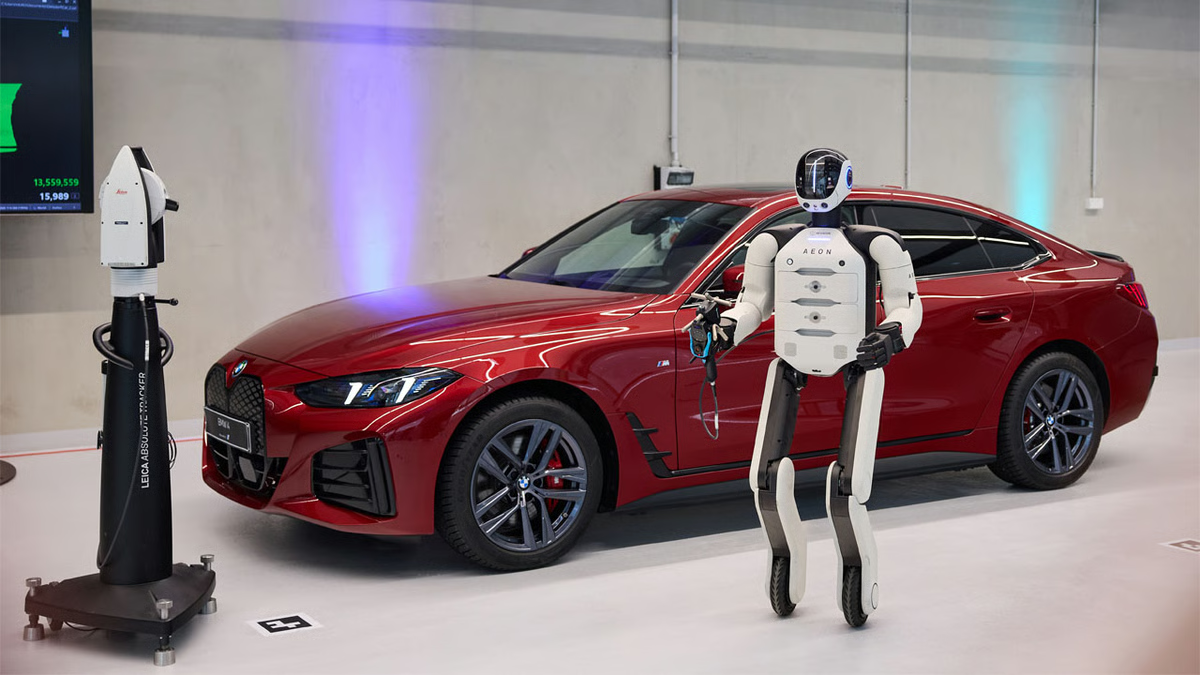
BMW is testing humanoid robots for car manufacturing, partnering with robotics companies to integrate advanced machines into their assembly lines. These robots are designed to work alongside human workers, handling complex assembly tasks with enhanced precision and adaptability.
Manufacturing Flexibility Over Traditional Automation
Unlike fixed industrial robots, humanoid robots offer manufacturers the ability to perform diverse tasks without requiring complete production line overhauls. This flexibility represents a shift toward Industry 4.0 manufacturing systems that can learn and adapt to changing production requirements.
The humanoid design allows these robots to use existing tools and workstations built for human workers, reducing infrastructure costs and implementation time compared to traditional automation solutions.
Impact on Automotive Production
The integration of humanoid robots addresses labor shortages in manufacturing while maintaining production quality. These machines can operate in conditions that may be challenging for human workers, improving workplace safety metrics.
The technology builds on existing automotive robotics trends, with companies like Tesla already implementing advanced automation in vehicle production. BMW's humanoid robot testing represents the next evolution in automotive manufacturing technology.