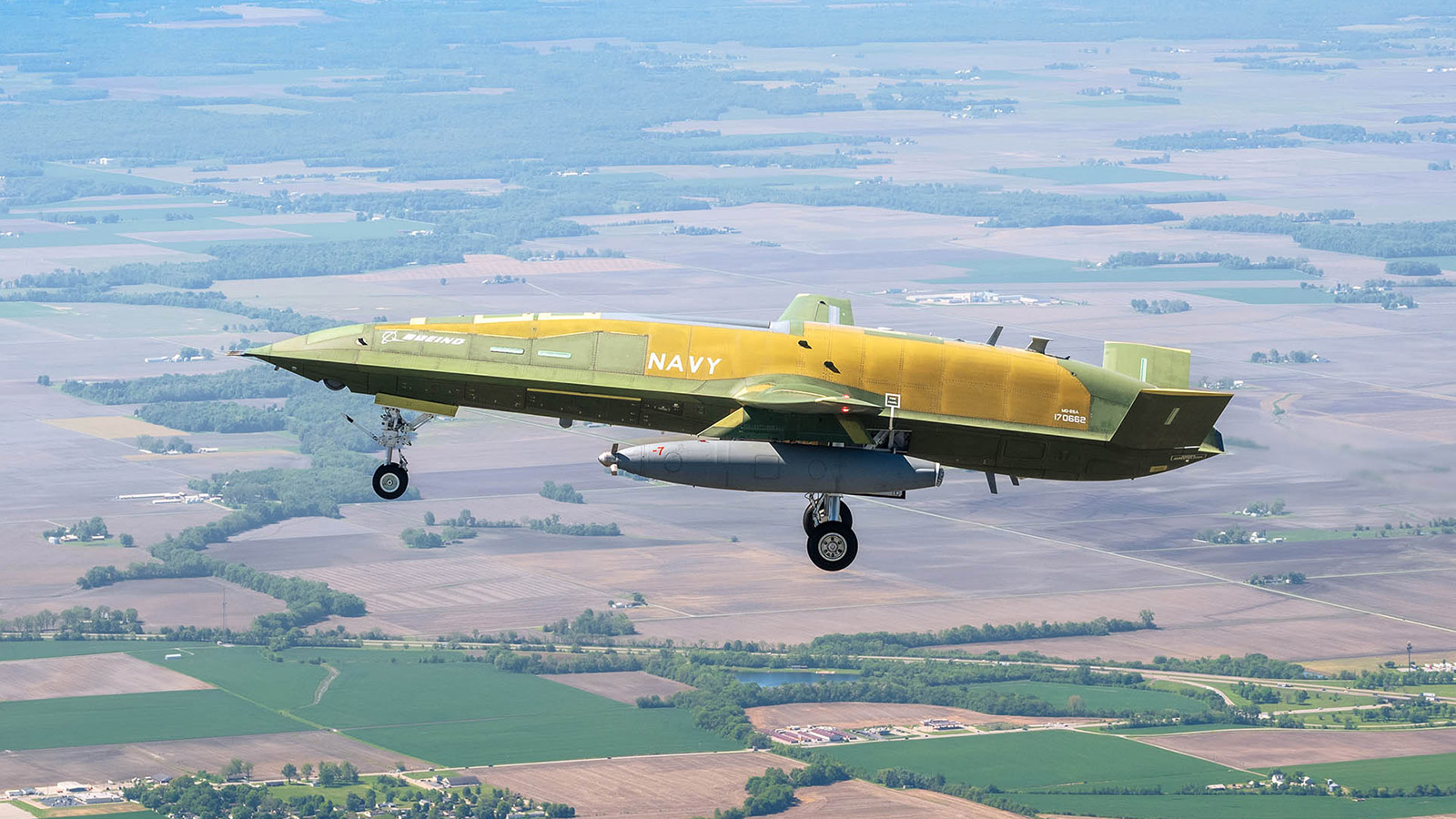

The U.S. Navy cleared Boeing's MQ-25A Stingray for low-rate initial production (LRIP) on May 19, 2026, an announcement made by Acting Secretary of the Navy Hung Cao that follows Milestone C approval for the program. The decision authorizes Boeing to begin producing the carrier-based uncrewed aerial refueling aircraft at limited rates and marks the most significant near-term milestone for the U.S. Navy's first operational unmanned combat aviation program.
Milestone C in context
Milestone C is the formal Defense Department gate that authorizes a program to leave engineering and manufacturing development and enter the production phase. For the MQ-25, the decision rests on a Defense Acquisition Board review of test data from the System Demonstration Test Article aircraft and the production-representative MQ-25A that completed its maiden flight on April 25, 2026, from MidAmerica St. Louis Airport. That two-hour flight validated autonomous taxi, takeoff, basic handling and landing characteristics.
Contract structure
The first LRIP contract is expected this summer and covers three MQ-25A aircraft, with priced options for three additional aircraft under Lot 2 and five aircraft under Lot 3, according to Navy budget documents. The Navy intends to procure roughly 76 MQ-25s in total, supporting initial operational capability in 2029 — a slip from earlier targets. Boeing will continue final assembly in St. Louis at the facility expanded for the program in 2024.
Why the MQ-25 matters
The Stingray is designed to deliver up to 15,000 pounds of fuel at 500 nautical miles from a carrier, extending the unrefueled combat radius of the F/A-18E/F Super Hornet, EA-18G Growler, F-35C and E-2D Advanced Hawkeye by hundreds of miles. That tanker mission frees Super Hornets currently used as buddy tankers for strike, electronic-warfare and air-superiority sorties, and it becomes especially valuable in distributed maritime operations across the Indo-Pacific. The aircraft will also serve as a testbed for carrier-deck integration of larger uncrewed platforms in the future.
Broader autonomous combat trajectory
LRIP for the MQ-25 lands as the Pentagon continues to scale uncrewed combat aviation programs, including the Air Force's Collaborative Combat Aircraft effort, where Anduril and General Atomics are designing autonomous wingmen for crewed fighters, and the Navy's own MUSV expansion covered in the recently announced seven-vendor prototype phase. Each of these efforts shares the same underlying bet: autonomy moves from procurement curiosity to programmatic backbone.
Reporting based on coverage from USNI News, Boeing, Breaking Defense and The Aviationist.