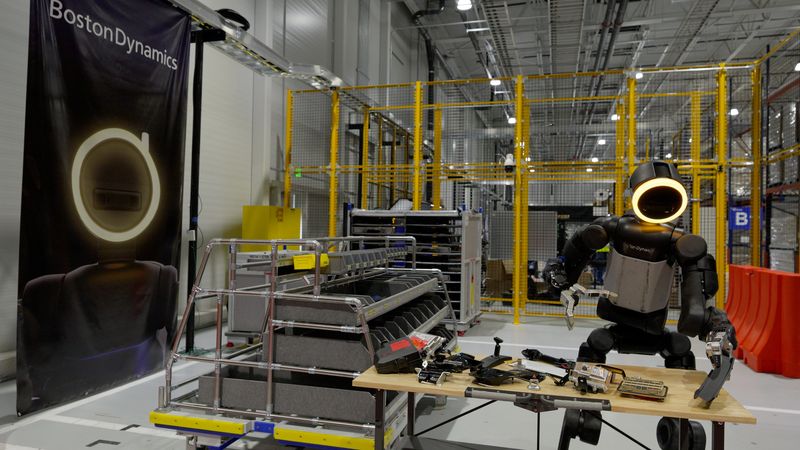
Boston Dynamics generated 136 billion won, roughly $95 million, in revenue over the first nine months of 2026, up 29% from the same period a year earlier, according to financial filings from Hyundai Glovis disclosed this week. The robotics maker's net loss also widened, to 626.6 billion won, as it spends heavily to move its Atlas humanoid from prototype to factory floor.
The results arrived alongside confirmation that Hyundai Motor Group has finished buying out SoftBank's remaining 9.65% stake in Boston Dynamics. SoftBank exercised a put option tied to the companies' original 2021 acquisition agreement, and Hyundai Glovis spent 46.5 billion won in the third quarter to absorb those shares, lifting its own stake in the robotics company from 11.39% to 12.47%. Chairman Euisun Chung and other Hyundai Motor Group affiliates now hold all of Boston Dynamics between them, according to Financial News.
Why is a Hyundai-owned robotics company still losing money?
Boston Dynamics is mid-transition from research prototypes to mass-manufactured products, and that shift costs more than it currently earns back. Its reliable revenue today comes from Spot, the yellow quadruped sold mainly for industrial inspection, and Stretch, a trailer-unloading robot used in warehouses. Atlas, the electric humanoid shown performing backflips and parkour in demo videos, has not yet shipped at any meaningful volume.
Hyundai is treating the losses as a bet it is willing to carry alone now that SoftBank is fully out. The automaker wants Atlas running in its own Metaplant America factory in Georgia starting in 2028, first on simple jobs such as sequencing parts for the line, before expanding into assembly tasks by 2030. Hyundai has said it wants capacity for roughly 30,000 Atlas units a year once that plant is running, with the large majority destined for Hyundai and Kia's own facilities rather than outside customers.
How does this compare to rivals chasing the same factory-humanoid market?
Boston Dynamics is not alone in burning cash to get a humanoid onto a production line. Figure AI has a commercial deal with BMW's Spartanburg plant, Apptronik is running pilots with Mercedes-Benz and GXO, and Agility Robotics now trades on Nasdaq as a pure-play humanoid company. All of them are selling the same pitch to automakers and logistics firms: robots that can lift, carry and sort in spaces built for human workers, without retrofitting the whole facility.
What sets Boston Dynamics apart is that its biggest customer and its owner are now the same company. Where Figure and Apptronik have to win new contracts deal by deal, Hyundai can simply order Atlas units into its own plants and treat the expense as internal capital spending rather than a sales target. That gives Boston Dynamics a guaranteed first customer at scale, but it also means outside observers have less visibility into whether Atlas can actually win business on the open market.
Hyundai has previously floated the idea of an eventual Boston Dynamics stock listing, something that would likely require the company to show a credible path to profitability first. For now, the 29% revenue growth suggests early commercial traction from Spot and Stretch sales, even as the widening loss shows how expensive it still is to get a humanoid robot ready for a real assembly line.