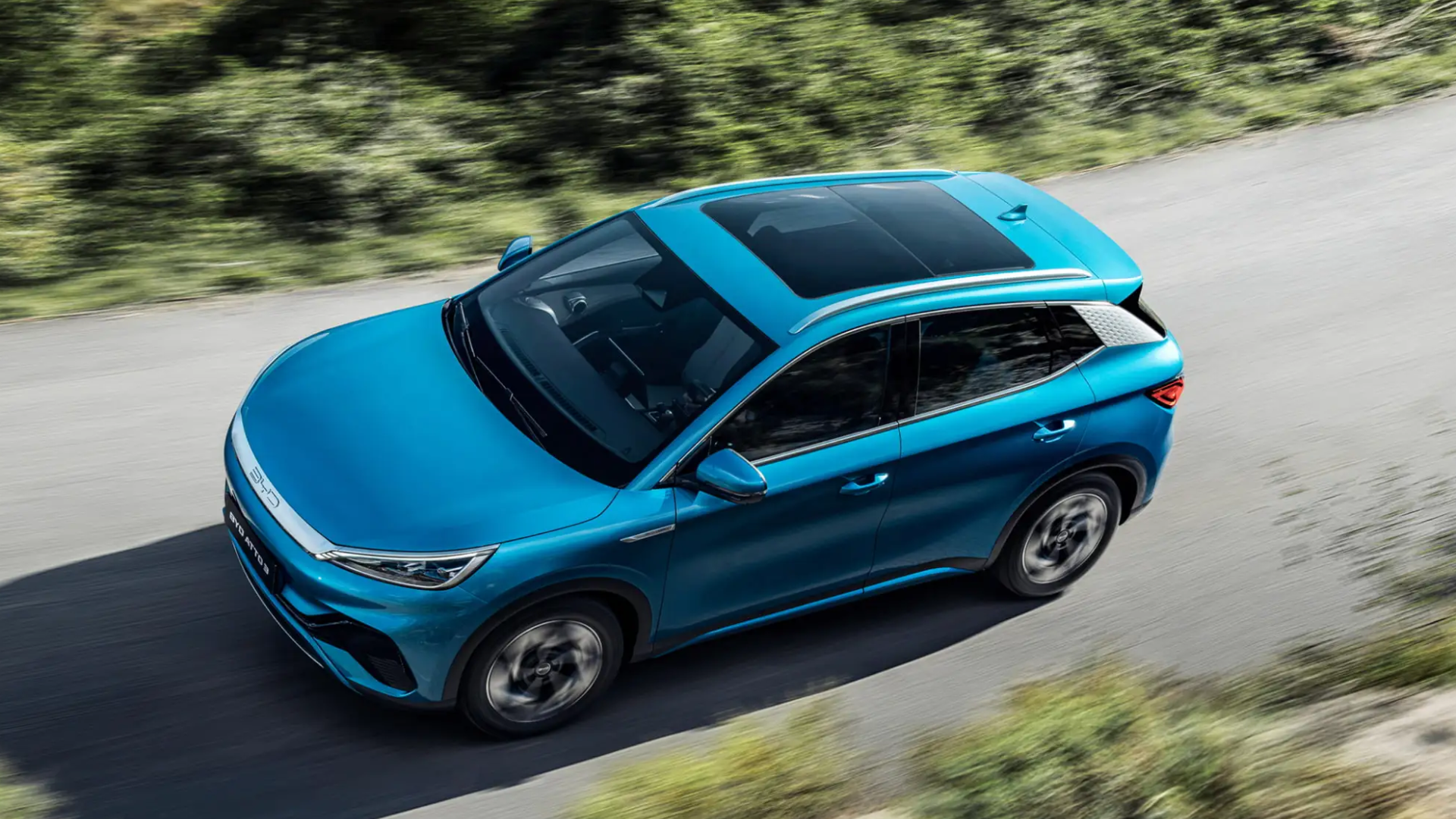
Chinese automaker BYD says its assisted driving systems are sharply reducing accidents across its fleet, with the company claiming severe crash rates have fallen to roughly one-sixth of human-driven levels. Speaking at a recent event, BYD Group senior vice president Yang Dongsheng, who heads the Automotive New Technology Research Institute, outlined a rapid rollout of intelligent driving features now available across more than 60 models.
Big claims on safety
Yang said BYD accelerated the rollout of intelligent driving at the start of 2025, and Level 2 assisted driving is now offered on nearly all of its passenger vehicles. Usage data presented at the conference showed navigation-assisted driving activation rates above 50%, while parking-assistance systems were used in 86% of cases. The company says scratches and minor parking collisions have dropped to around one-fiftieth of the rate seen in human-driven parking, results it links to its "God's Eye" platform and a parking-assistance guarantee program launched in July 2025. According to CarNewsChina, BYD's severe-accident claim spans roughly 3 million vehicles.
The figures are BYD's own and have not been independently verified, but they land amid a broader Chinese push into automated driving, including XPENG's rollout of its first mass-produced Level 4 robotaxi.
118 million miles of data a day
Yang said BYD relies on cloud-based world models and reinforcement learning to train its assisted-driving systems through long-tail scenario simulations, generating roughly 118 million miles of driving data every day. That volume, he said, lets engineers update and iterate driving algorithms every three days. The company says it also runs physical-AI models inside the vehicle to support predictive driving behavior and real-time defensive-response calculations.
BYD credits its Xuanji Architecture, which combines electronic systems with core electrification technologies, for enabling faster coordination between software and hardware across its growing lineup of smart vehicles. The data-driven approach mirrors moves by other automakers to build AI vehicle platforms, such as the expanded Stellantis-Qualcomm partnership.
What comes next
For parking, BYD says its system combines visual occupancy-network detection with lidar-based occupancy sensing to spot suspended or hollow obstacles that conventional parking systems can miss. The remarks arrive just days before a dedicated intelligent-driving strategy event, where observers expect announcements on an expanded rollout of upgraded God's Eye systems and deeper integration across more models. The cautious, safety-first framing contrasts with operational setbacks elsewhere, such as Waymo's decision to halt freeway robotaxi rides in several cities.
Reporting based on coverage from Interesting Engineering and CarNewsChina.