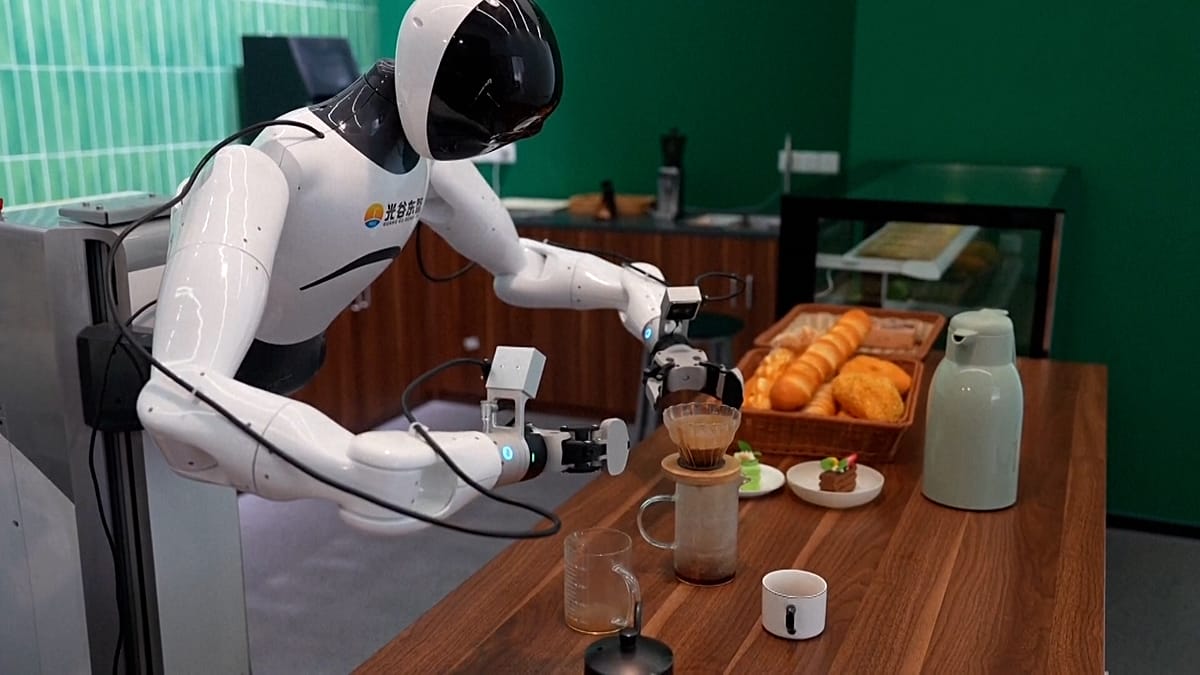

In a groundbreaking facility in Wuhan, China, researchers have developed what could be described as the world's most advanced "robot school," where humanoid machines learn everyday tasks through innovative virtual reality training methods. Located in the East Lake High-tech Development Zone, also known as the "Optics Valley of China," this cutting-edge laboratory is reshaping how we approach robotic education and artificial intelligence development.
VR-Powered Training Revolution
The training methodology represents a significant leap forward in humanoid robotics. Human trainers equipped with VR headsets and controllers act as virtual instructors, guiding robot movements in real-time. "We wear VR glasses and have controllers in hand. Our left and right hands are like the robot's left and right arms," explains Qu Qiongbin, an AI robot trainer at the facility. This immersive approach allows for precise data collection as robots mirror human movements and gestures.

Massive Data Collection for Machine Learning
The training process involves extraordinary repetition and dedication. According to Yang Xinyi, project leader at Data Fusion Technology, trainers may repeat single actions "hundreds, thousands, or even tens of thousands of times" to build comprehensive datasets. These carefully curated environments include realistic living rooms and factory workshops where robots practice tasks ranging from coffee preparation to complex household chores.

Industry Implications and Public Access
This innovative approach to robot training has significant implications for the future of humanoid robotics and artificial intelligence. The facility's methodology addresses one of the industry's biggest challenges: creating robots capable of operating effectively in unpredictable real-world environments. The emotional connection trainers develop with their mechanical students, as Qu describes feeling "like teaching my own child," highlights the human element in advancing AI technology.

The impact extends beyond the laboratory walls. The 7S Humanoid Robot Store in Wuhan now offers public demonstrations where visitors can interact with trained robots and observe their responses to commands. This transparency in development marks a new era of public engagement with advanced robotics technology, potentially accelerating adoption and acceptance of humanoid assistants in daily life.