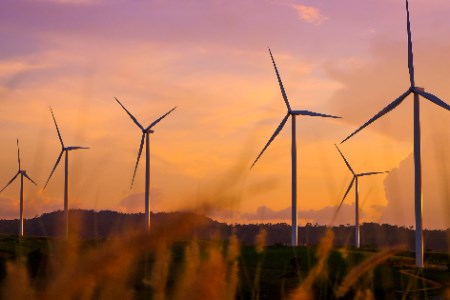
Copenhagen Infrastructure Partners has reached financial close on Gawara Baya, a 408 MW onshore wind farm paired with a 104 MW grid-forming battery, after buying the North Queensland hybrid project from Australian developer Windlab and lining up an AUD 1.7 billion senior debt facility from a syndicate of 10 banks.
What CIP just bought
Acting through its Copenhagen Infrastructure V flagship fund, CIP is taking Gawara Baya through to construction on Gugu Badhun Country south-west of Ingham. The site will host 68 turbines and a co-located 104 MW grid-forming battery designed to firm the wind output into the National Electricity Market. CIP said the project has all major approvals in hand and the fund has now taken a final investment decision, clearing the way for main works.
How the AUD 1.7bn deal is anchored
Revenue certainty for the project comes from long-dated offtake with government-owned Stanwell and UK-headquartered SmartestEnergy, backstopped by participation in the Australian Government's Capacity Investment Scheme. CIP partner Thomas Wibe Poulsen framed the deal as a chance to deploy near-term capital from the fifth flagship vintage, while colleague Yi-Hua Lu highlighted local job creation and regional supply chain spend expected to top AUD 200 million.

Why this matters for Queensland's grid
At full capacity Gawara Baya is expected to power up to 240,000 homes and displace about 1.2 million tonnes of carbon emissions a year, feeding directly into Queensland's growing renewables backbone. Construction begins immediately, with full operations targeted for 2030 alongside a projected 500 direct and indirect regional jobs.
The transaction extends CIP's Australian portfolio and slots alongside recent moves such as its 500 MW / 1 GWh Coalburn 1 BESS in Scotland, its German gigabattery pipeline, and the wider grid-scale storage buildout reshaping how integrated wind-plus-battery hybrids are financed.
Reporting based on coverage from Energy Global, Copenhagen Infrastructure Partners and Windlab.