
Cowboy Space Corporation, the newly rebranded outfit previously known as Aetherflux, announced a $275 million Series B financing at a $2 billion valuation led by Index Ventures, with participation from new investors IVP, Blossom Capital and SAIC, alongside existing backers Breakthrough Energy Ventures, Construct Capital, Andreessen Horowitz, NEA, Interlagos and founder Baiju Bhatt.
From Aetherflux to a Vertically Integrated Rocket-and-Compute Company
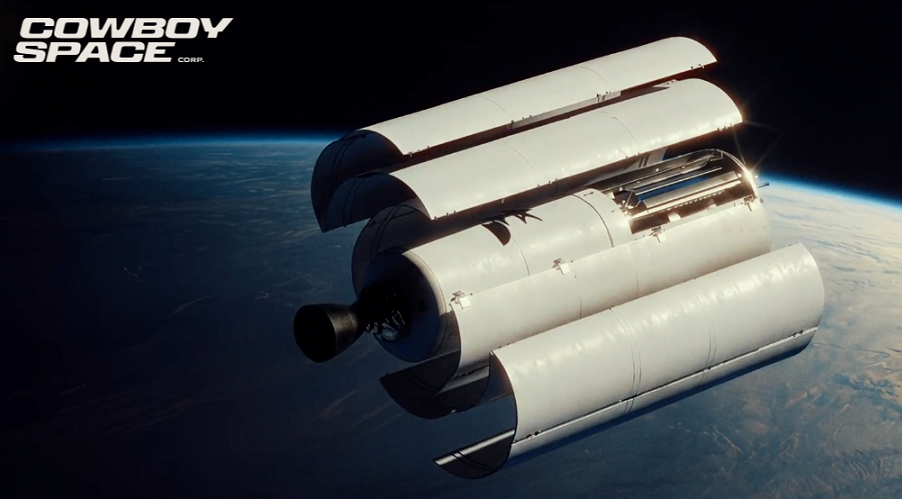
Founded in 2024 by Robinhood co-founder Baiju Bhatt, the company is leaning into a pitch that AI compute will need to leave the planet. The new name and brand come with a fresh thesis: rather than just selling satellite bus designs, Cowboy Space wants to operate its own launch vehicle and bolt a one-megawatt data center into every upper stage that reaches orbit. The rocket's top stage and data center payload are designed as a single vehicle, eliminating redundant mass and optimizing the power and compute delivered to orbit.
Galactic Brain Constellation and Megawatt Nodes
Cowboy plans to deploy its first "Galactic Brain" data center node by early next year and target the first proprietary rocket launch carrying a 1-megawatt orbital compute payload by the end of 2028. The full architecture is a constellation of low-Earth-orbit satellites that harness solar energy, a purpose-built launch vehicle to lift them, and compute payloads designed specifically for the radiation, thermal and power constraints of space.
Why Investors Are Betting on Orbital Compute
The pitch is partly physical and partly economic. Hyperscalers are planning to spend nearly $700 billion on data center capacity in 2026 alone, and terrestrial sites are running into power, water and permitting walls. Cowboy is arguing that solar-powered, vacuum-cooled compute in LEO can grow without those constraints if the launch cadence is high enough.
The capital and storyline echo similar themes in adjacent space and AI-infrastructure rounds, including Observable Space's $90M Series A for laser satellite communications and EdgeCore Digital's $1.5B financing for hyperscale data centers. Investors are increasingly willing to fund vertically integrated stacks that own both the bottleneck (launch capacity, power) and the workload that justifies it (AI training and inference).
Talent and Timeline Risk
Cowboy is competing for engineers against SpaceX, Blue Origin and a flotilla of in-space servicing startups, including efforts like Redwire's MANUS lunar robotic arm work. Building a brand-new launch vehicle to a 2028 debut, while also fielding compute payloads, is one of the more ambitious schedules in the sector. Series B investors are effectively betting that Bhatt's team can compress timelines the way SpaceX did with reuse, but for a market segment that did not exist three years ago.
What to Watch Next
Near-term milestones include a first Galactic Brain test node, contract wins with hyperscale and government customers, and clarity on whether Cowboy will partner with existing launch providers for early flights or wait for its own vehicle. With $275 million in fresh capital and a $2 billion valuation, the company now has the runway to find out which of those bets it can deliver on first.
Reporting based on coverage from Business Wire, TechCrunch, SpaceNews and SiliconANGLE.