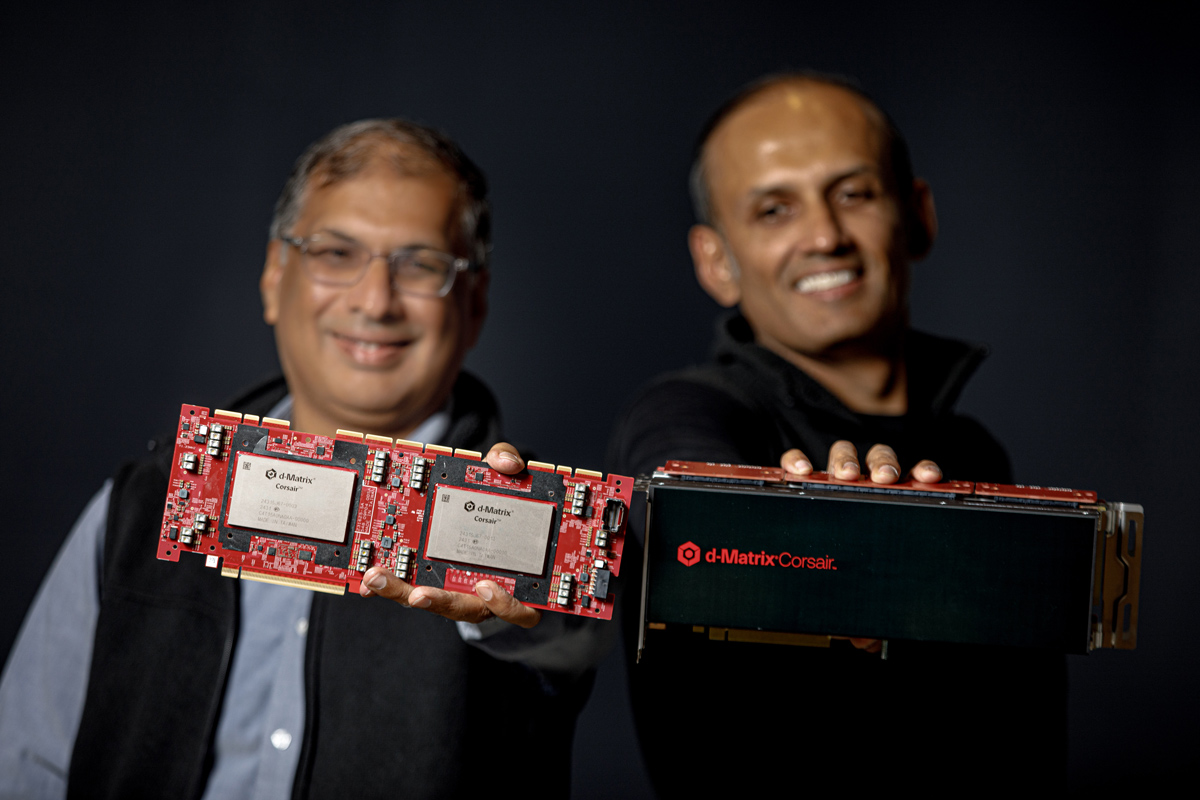
AI chip startup d-Matrix has put its Corsair inference platform into full production, ramping volume shipments to priority customers as demand for cheaper, faster generative-AI inference outpaces what GPU-only data centers were built to handle.
A memory-centric challenger to the GPU
Announced on June 9, 2026, the move marks d-Matrix's transition from sampling to scale manufacturing. Rather than the HBM-based packaging used by mainstream accelerators, Corsair uses an SRAM-based in-memory compute chiplet architecture on organic substrates, a design d-Matrix says streamlines the supply chain while attacking the memory bottleneck that throttles modern inference. The accelerator ships in a standard PCIe form factor so it can slot into existing data-center configurations.
10x speed-ups for the agentic era
In independent testing by Gimlet Labs, pairing Corsair accelerators with GPUs in a disaggregated pipeline cut a baseline 24-second response time to under two seconds, roughly 10x the performance of a GPU-only setup. d-Matrix says demand has surged as agentic AI workloads push inference far beyond what general-purpose GPUs were designed for. The platform is manufactured with TSMC on its N6 process node alongside packaging partner Alchip, and the company counts Microsoft among its backers.
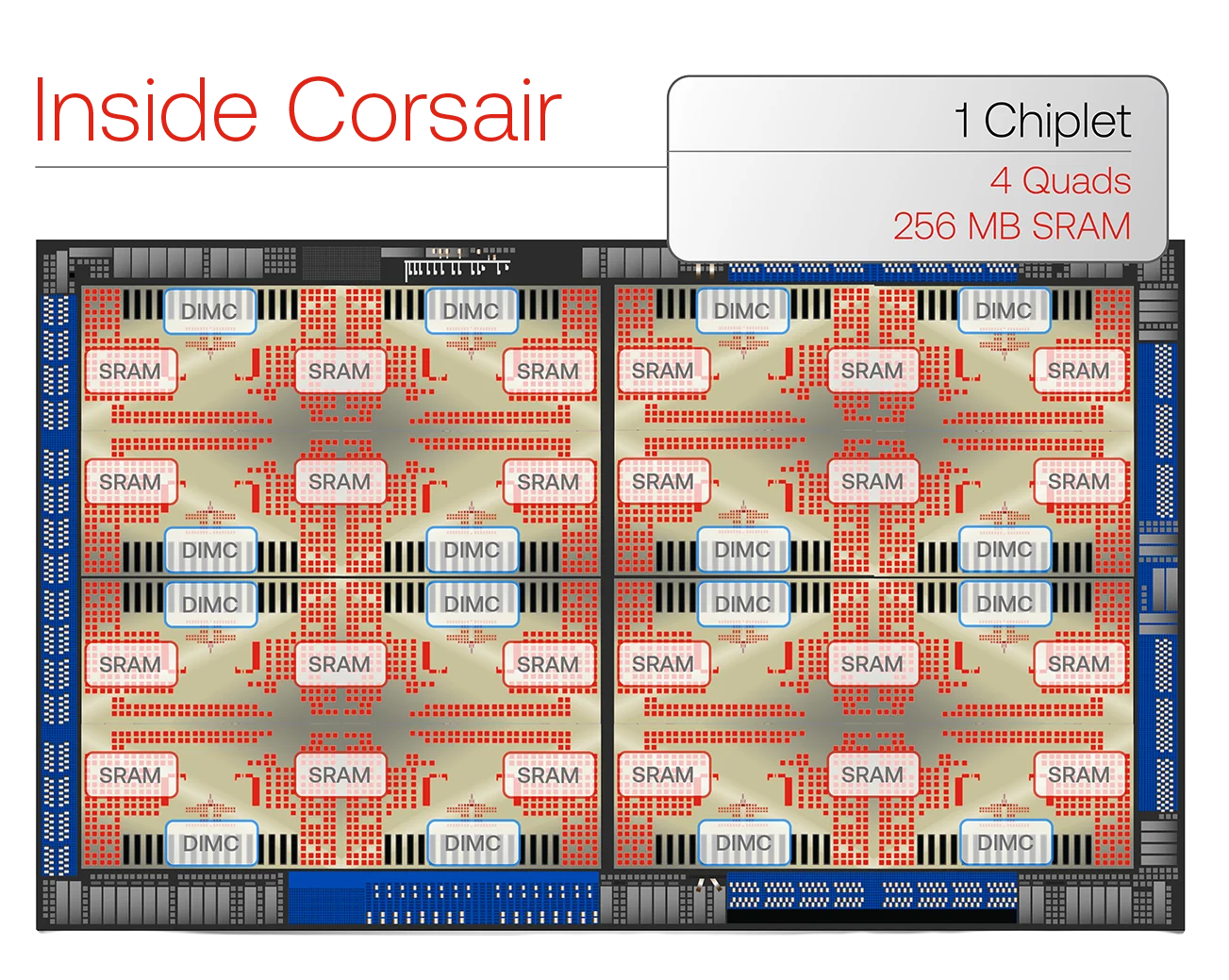
Racing into the inference moment
With production underway and volume product available beginning this summer, d-Matrix is positioning Corsair for the shift in AI economics from training to inference. The launch lands amid a broader surge in custom silicon, from OpenAI and Broadcom's Jalapeño inference chip to IBM's sub-1 nanometre nanostack technology and Qualcomm's software-stack expansion, as hyperscalers hunt for alternatives to GPU-only infrastructure.
Reporting based on coverage from d-Matrix and PR Newswire.